Cosplay Color Contact Lenses can transform a character’s look, from a vivid red iris to a cool, clouded gray. Yet the right choice is not only about matching a reference image. Fit, material, vision needs, and safe wear matter just as much. Eyes are not costume props.
The U.S. Centers for Disease Control and Prevention reported that about 40.9 million adults in the United States wore contact lenses, based on 2015 survey data. Its report also found that risky hygiene habits were common among lens wearers. These figures describe contact lens use broadly, not cosplay lenses specifically. The U.S. Food and Drug Administration likewise classifies decorative lenses as medical devices, not ordinary accessories. FDA optometrist Bernard Lepri’s published guidance emphasizes the need for professional fitting; that is a paraphrase, not a direct quotation. A verifiable verbatim quote from him about cosplay lenses could not be confirmed, so it should not be invented.
This guide will help you compare color, opacity, and design while keeping comfort and eye health in view. Think about how the lens looks in daylight, how long you plan to wear it, and whether your prescription and fit have been checked by an eye-care professional. Small details matter. A striking pattern is no bargain if it blurs your vision or irritates your eyes.
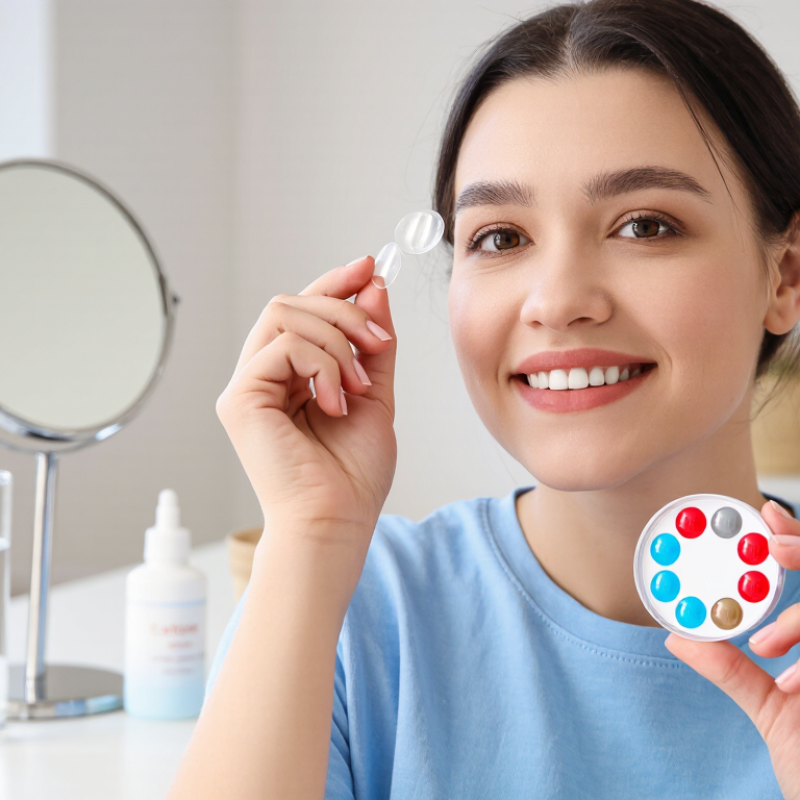
What Cosplay Color Contact Lenses Are and How They Change Eye Appearance
Cosplay color contact lenses are thin, tinted lenses that sit over the cornea and change the visible appearance of the iris. Some use a subtle tint to enhance natural eye color; others have opaque patterns designed to create a more dramatic effect. The clear opening in the center allows the pupil to see through. Still, the printed design may look different across eyes. Lens fit matters, too.
On light-brown eyes, a blue lens may create a muted gray-blue effect, while a more opaque design can look brighter. On dark-brown eyes, the same lens may appear deeper or less vivid. Lighting changes everything. A window, a warm stage spotlight, and a camera flash can each shift the color. Costume details matter as well: a pale wig may make a cool-toned lens seem more striking. A common planning mistake is choosing from a product photo alone. Photos can use lighting and editing that do not reflect real wear.
Colored lenses are medical devices, even when worn only for a costume. Have an eye-care professional assess fit and provide appropriate guidance before wearing them. Poorly fitting lenses can irritate or injure the eye. Wash and dry your hands before handling lenses, follow the recommended cleaning instructions, and never share them. If your eyes become painful, red, or unusually sensitive to light, remove the lenses and seek professional advice.
| Selection Dimension | What It Means | Typical Appearance or Effect | How to Choose |
|---|---|---|---|
| Lens type | Cosmetic color lenses alter the visible appearance of the iris. They may be made with a vision-correction prescription or without one (often called plano lenses). | Both types can change eye color; a plano lens does not correct vision. | Use the prescription specified by an eye-care professional. Do not treat a non-prescription lens as automatically safe or suitable. |
| Color opacity | Color patterns range from relatively translucent enhancement tints to more opaque designs. | Translucent designs tend to blend with the natural iris. More opaque designs can create a more noticeable change, especially on darker eyes. | For a subtle effect, look for a blending or enhancement style. For a stronger character effect, consider a more opaque style, while remembering that results vary by eye color and lighting. |
| Natural eye color | The starting iris color affects how a colored lens appears because the lens pattern and the wearer’s iris are seen together. | A color may look different on light eyes than on dark eyes; product images cannot guarantee the same result for every wearer. | Compare examples shown on eyes with a similar natural color, and treat them as a guide rather than a precise prediction. |
| Color choice | Common cosplay color families include blue, green, gray, violet, brown, and character-specific mixed colors. | Light or saturated shades may create a conspicuous change; brown and other muted shades can look more natural, depending on the pattern and opacity. | Choose a shade that suits the character and the intended setting. Check the result under the lighting in which the costume will be photographed or worn. |
| Pattern and limbal ring | The printed iris pattern may include radial details, blended color zones, or a darker outer ring. | Fine patterns can appear more understated, while high-contrast patterns or a strong outer ring can make the iris look more defined. | Match the pattern’s visual intensity to the character design. A printed pattern does not change the natural structure of the eye. |
| Graphic diameter | Graphic diameter describes the portion of the lens pattern that gives the iris its colored appearance. It is not the same as the lens’s overall diameter. | A larger printed color area may make the iris appear more prominent, but the effect depends on the design and the wearer’s eyes. | Use appearance as a style consideration only. Do not use graphic diameter to determine whether a lens will fit or be safe for your eye. |
| Overall diameter and base curve | Overall diameter and base curve are lens measurements related to lens size and curvature. | They affect how a lens sits on the eye; a visually appealing lens can still be unsuitable if it does not fit properly. | Have an eye-care professional assess fit and suitability. Do not choose these measurements by guessing or by copying another person’s lens details. |
| Clear pupil zone and vision | Many colored lenses have a clear central zone so light can pass through the pupil. The printed design and lens position can affect the visible field. | Depending on lens design and fit, a colored pattern may interfere with vision, particularly if it shifts over the pupil. | Test vision and comfort as directed by an eye-care professional before wearing lenses for an event. Remove the lenses if vision becomes blurred or uncomfortable. |
| Wear and care instructions | Replacement schedules, wearing limits, cleaning, and storage depend on the specific lens and its instructions. | Improper handling or wearing lenses longer than directed can increase the risk of eye irritation or infection. | Follow the lens instructions and your eye-care professional’s advice. Wash and dry hands before handling lenses, and never share contact lenses. |
| Eye health and professional fitting | Contact lenses are medical devices, including decorative lenses that do not correct vision. | Incorrect fit, poor hygiene, or unsuitable wear can harm the eye. | Get an eye examination and a proper fitting before use. Stop wearing the lenses and seek prompt eye-care advice if you experience pain, redness, unusual tearing, light sensitivity, or sudden blurred vision. |
FAQS
They are tinted lenses worn over the cornea to change the visible iris color. Some designs look subtle; others appear more dramatic.
No. A blue lens may look gray-blue on light-brown eyes and darker on deep-brown eyes. Lighting also changes the effect.
Compare the character’s eye color in reference images. Check your wig and makeup beside the lenses in natural light. Photos can mislead.
Yes. Decorative lenses are medical devices, even without vision correction. Ask an eye-care professional to check the fit and explain safe use.
Check for sealed, undamaged packaging, clear care instructions, and an unexpired date. Avoid lenses with tears, chips, or cloudy spots.
Wash and dry your hands first. Follow the care instructions and use fresh contact-lens solution as directed. Never share lenses or rinse them with tap water.
Remove them if they feel tight, shift repeatedly, or blur your vision. Pain, redness, or light sensitivity also calls for prompt professional advice. Don’t push through it.
Try the lenses before the event in a calm setting, and check their appearance from several distances. Keep glasses nearby. A perfect color match may not look most convincing.
Conclusion
Cosplay Color Contact Lenses can transform your eye appearance and help bring a character’s look to life, whether you want a subtle change or a striking design. Choose a color and pattern that suit the character, then consider how the lenses will look with your makeup, costume, and natural eye color. The right choice should complement the overall design while still feeling comfortable and natural for you.
Before wearing lenses, check that the size and prescription are appropriate for your eyes, and inspect the lenses for clear labeling, quality, and a comfortable fit. Follow good hygiene practices: wash and dry your hands before handling lenses, use suitable lens-care solution, and never share them. Clean and store the lenses as directed, and stop wearing them if you experience discomfort, redness, or blurred vision. Careful selection and responsible handling can help make your cosplay look memorable while prioritizing eye comfort and safety.