Choosing Natural Colored Contact Lenses requires more than attractive color samples. This introduction explores why China is an important manufacturing base for reliable colored lenses. It considers material selection, optical design, production control, and customer support. Experienced manufacturers study how colors behave under different lighting conditions. They also evaluate edge design, moisture retention, oxygen permeability, and wearing comfort. A lens may look natural in a studio photograph. Real results can differ in daylight, indoor lighting, and close-up use. Small details matter.
The discussion also examines how a professional manufacturer supports quality through documented procedures and traceable inspections. These may include incoming material checks, dimensional testing, packaging reviews, and batch records. Products should follow applicable medical device and cosmetic contact lens requirements in each target market. Users should obtain professional eye-care advice before wearing lenses, even when vision correction is unnecessary. Proper fitting, hygiene, replacement schedules, and clear labeling remain essential. Safety comes before appearance.
No factory should present itself as flawless. Responsible suppliers recognize that production can still improve through audits, customer feedback, and corrective action. That honesty supports trust. A reliable partner communicates material information clearly, avoids exaggerated claims, and provides evidence where available. This article introduces the capabilities, standards, and practical considerations behind China’s Natural Colored Contact Lenses manufacturing sector. It aims to help distributors, brands, and buyers compare suppliers with greater confidence, while remembering that a beautiful lens must also be safe, comfortable, and legally compliant.
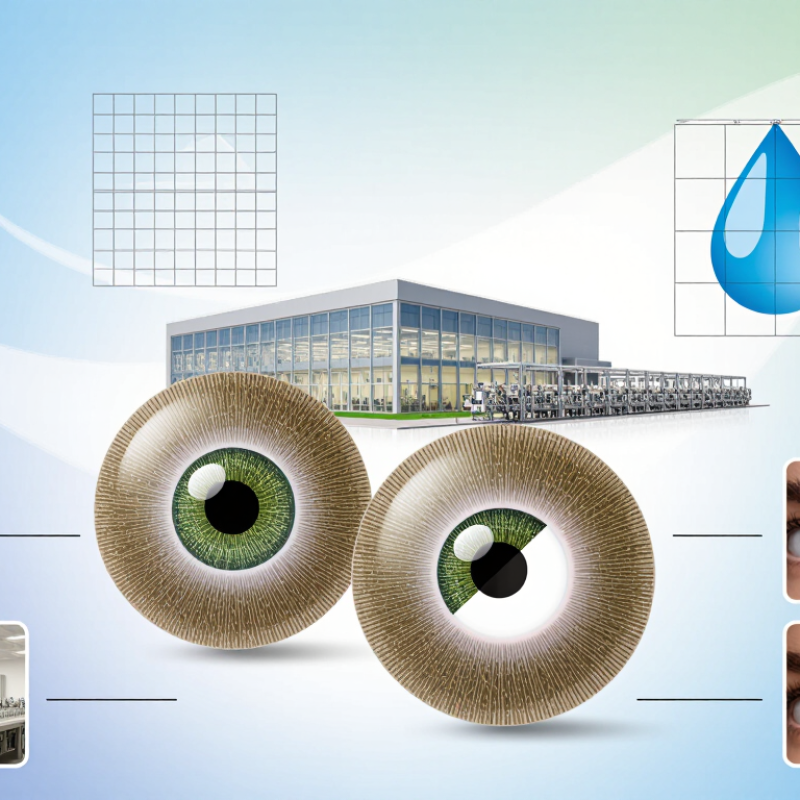
China’s natural colored contact lens manufacturing landscape is broad, but quality varies between facilities. Experienced manufacturers usually control pigment placement, lens geometry, hydration, and edge smoothness. These details affect comfort and visual appearance. A natural design should blend softly, not look like a printed ring. Many factories now use automated molding and digital color matching. Manual inspection remains important, especially for tiny surface defects.
Reliable production depends on more than attractive samples. Buyers should review material specifications, inspection records, batch traceability, and packaging controls. Independent testing can support claims about oxygen transmission, stability, and wearing performance. Production capacity may look impressive, yet communication and consistency can still be weak. That part deserves honest reflection. A factory may pass one inspection and perform unevenly later. Regular audits and sample comparisons reduce this risk.
Tips: Request samples from different batches. Check color under daylight and indoor lighting. Ask how rejected lenses are recorded. Confirm that customer designs remain consistent after scale-up. Do not judge a manufacturer by photographs alone. Clear technical communication often reveals more than a polished showroom.
Key manufacturing dimensions, product characteristics, regulatory requirements, and quality-control practices
| Dimension | Manufacturing Landscape | Verified Technical or Regulatory Fact | Importance to Buyers |
|---|---|---|---|
| Primary Product Types | Manufacturers commonly produce daily disposable, frequent-replacement, and monthly colored soft contact lenses. | Replacement schedules are determined by the product’s approved labeling and are not interchangeable between lens types. | Helps purchasers match inventory planning, packaging, and consumer-use instructions. |
| Lens Materials | Common material categories include hydrogel and silicone hydrogel soft contact-lens materials. | Hydrogel lenses contain water, while silicone hydrogel materials are designed to provide higher oxygen transmissibility than conventional hydrogel materials. | Material selection affects oxygen transmission, water content, modulus, comfort, and wearing recommendations. |
| Natural-Color Design | Natural-looking designs generally use layered iris patterns, low-contrast transitions, and a defined but soft limbal effect. | The appearance is created by integrating or encapsulating color elements within the lens structure rather than relying on exposed surface pigment. | Supports a more realistic visual effect and reduces the risk of direct pigment contact with the eye when properly manufactured. |
| Color Integration | Industrial production may use printed or molded color patterns with controlled placement inside the lens geometry. | Colorants and manufacturing processes must be evaluated for chemical compatibility, extractables, stability, and biocompatibility. | Reduces risks associated with color migration, irritation, uneven appearance, or pattern distortion. |
| Core Production Steps | Typical steps include material preparation, molding or forming, hydration, color-pattern integration, inspection, packaging, and sterilization. | Soft contact lenses are commonly packaged in sterile blister packs containing an approved saline-based solution. | A controlled process sequence is essential for maintaining optical, dimensional, microbiological, and packaging quality. |
| Key Optical Parameters | Product specifications generally include base curve, diameter, spherical power, cylinder or axis where applicable, and visible iris diameter. | Base curve and diameter influence lens fit and movement; corrective power determines the optical correction provided by the lens. | Accurate specifications help importers and distributors select products suitable for their target prescriptions and markets. |
| Quality-Control Tests | Typical controls cover visual defects, dimensional consistency, power verification, color uniformity, package integrity, sterility, and shelf-life stability. | Contact-lens quality systems commonly reference requirements for biological evaluation, sterility, packaging, and physical or chemical testing. | Provides evidence that every production batch meets defined safety and performance specifications. |
| Regulatory Status in China | Colored contact lenses intended to alter appearance are regulated as medical devices in China, even when they have no corrective power. | Manufacturers and products must follow applicable Chinese medical-device registration, production, quality-management, and post-market requirements. | Buyers should verify registration or filing status, approved specifications, and authorized production information before sourcing. |
| International Compliance | Export-oriented manufacturers may prepare documentation for the regulatory market where the lenses will be sold. | Requirements differ by jurisdiction; market access may involve technical documentation, conformity assessment, authorized representatives, labeling, and vigilance obligations. | Compliance must be assessed by destination country rather than assumed from the product’s manufacturing location. |
| Packaging and Labeling | Commercial packaging normally identifies lens parameters, lot or batch information, expiration date, storage conditions, and usage warnings. | Sterile packaging must maintain product sterility and integrity throughout the labeled shelf life when stored under specified conditions. | Clear labeling supports traceability, customs clearance, product rotation, and consumer safety. |
| Customization Capability | Private-label programs may support customized colors, iris diameters, powers, blister artwork, cartons, and order quantities, subject to technical feasibility. | Customization does not remove the need for product validation, approved labeling, traceability, and regulatory compliance. | A documented change-control process helps prevent quality issues when specifications or artwork are modified. |
| Supply-Chain Evaluation | Professional sourcing evaluations typically review facility controls, batch records, incoming-material controls, inspection data, and complaint handling. | Traceability should connect raw materials, production batches, inspection results, sterilization records, and finished-goods distribution. | Improves recall readiness, supplier monitoring, and long-term consistency across purchase orders. |
| Buyer Due Diligence | A responsible sourcing review should include samples, technical files, certificates, test reports, labeling checks, and an assessment of production capacity. | Certificates alone do not replace verification of the specific product, manufacturing site, approved parameters, and destination-market requirements. | Supports safer procurement decisions and reduces the risk of purchasing non-compliant or incorrectly labeled lenses. |
Natural color contact lenses should enhance the iris, not replace it with a flat printed circle. In our design work, we study limbal rings, radial fibers, and subtle color variation under daylight. A soft blend of brown, gray, olive, or hazel can look more credible than a strong central pigment. Diameter and graphic zone matter too. A wide graphic zone may appear dramatic, yet it can reduce the visible white around the iris. Small details change the result.
Material selection affects comfort, moisture behavior, and optical stability. We evaluate hydrogel options, water content, oxygen transmission, surface smoothness, and pigment encapsulation. Pigment should remain isolated from the eye’s surface. The lens edge must be thin, even, and polished. Its base curve and diameter should match the intended fitting range. During production, trained technicians check printing alignment, power, thickness, and hydration. Records support traceability. Still, no design suits every eye. That limitation deserves honest attention.
Tips: Compare samples in daylight, not only under showroom lamps. Check the color transition near the pupil. It should look gradual. Ask for material specifications and inspection records. Follow professional fitting guidance and local requirements. Replace lenses as directed, even when they still look clear. Never share them. A beautiful pattern cannot correct poor fit, rough edges, or careless handling.
China Top Natural Colored Contact Lenses Manufacturer
Step-by-Step Production Process for Colored Contact Lenses
Creating natural colored contact lenses begins with a controlled design process. Our technical team studies iris patterns, color depth, and edge transitions. The pigment pattern must look realistic without blocking the pupil area. We also select medical-grade lens materials for oxygen permeability and wearing comfort. Small design changes can affect the final appearance.
The production line starts with mold preparation and material dosing. Automated equipment places the color layer inside the lens structure. This helps reduce direct pigment contact with the eye. The lens then undergoes polymerization under carefully monitored conditions. After forming, each lens is washed and hydrated in purified solutions. Diameter, base curve, thickness, and optical power are measured. Every batch receives a traceable identification code.
Quality control includes visual inspection, dimensional testing, surface checks, and sterility verification. A lens may look attractive but still fail a critical specification. That is why trained inspectors review automated results. Our process follows applicable medical-device requirements and documented quality procedures. Packaging is completed in a controlled environment before authorized release. Prescription lenses should be fitted by qualified eye-care professionals. Manufacturing is never perfect. We continue reviewing deviations, user feedback, and inspection data to improve consistency.
Representative production-control timeline for soft colored contact lenses. Actual cycle times vary by lens material, mold design, prescription range, and validated manufacturing procedures.
The process commonly includes mold preparation, polymerization or molding, color-pattern integration, hydration, inspection, packaging, and moist-heat sterilization. The 121°C sterilization reference is widely used for steam-sterilized aqueous medical products and must be validated for the finished lens and package.
China Top Natural Colored Contact Lenses Manufacturer
Quality Control, Safety Standards, and Compliance
As a natural colored contact lens manufacturer in China, we treat color as a safety feature, not decoration. Color is not a cosmetic shortcut. Each lens needs stable geometry, smooth edges, and controlled oxygen transmission. Technicians inspect pigment encapsulation, diameter, base curve, and surface defects under magnification. Batch records connect raw materials to curing, rinsing, packaging, and release testing. Our controls align with ISO 18369 contact lens requirements and ISO 13485 quality systems. Biocompatibility assessments may also reference ISO 10993, depending on material and intended use. That process is demanding.
The CDC estimates that about 45 million people in the United States wear contact lenses. Its 2016 MMWR reported that 99% of surveyed wearers practiced at least one risky hygiene behavior. Safety cannot rely on appearance alone. We verify microbial limits, package seal integrity, labeling, and traceability before shipment. Independent laboratories can test irritation, sensitization, optical power, and dimensional stability. Still, no factory should claim zero risk. Human misuse, storage errors, and poor fitting can defeat excellent manufacturing. We sometimes find process weaknesses during audits, especially when records are incomplete or sampling is too narrow. Those findings are uncomfortable. They require corrective action, retraining, and tighter release criteria. Safety improves through evidence, not confidence.
Customization, Private Labeling, and Global Supply Services
Our manufacturing team develops natural colored contact lenses for retailers, optical distributors, and private label projects. We adjust shade, limbal ring, opacity, diameter, and base curve according to approved specifications. Color samples are checked under different lighting. This matters because a soft brown can appear warmer in sunlight.
We support private labeling from artwork preparation to finished packaging. Clients can request custom boxes, blister layouts, instruction leaflets, and carton markings. Our technicians review lens parameters before production. Each batch follows documented checks for appearance, dimensions, packaging, and traceability. Sample approval comes before larger production. Small details often prevent expensive rework.
Global supply requires more than shipping products. We help coordinate production schedules, packing lists, commercial documents, and destination-specific information. Requirements can differ between markets, so buyers should confirm local rules with qualified professionals. We can prepare supporting factory records, but we should not pretend one document fits every country. That assumption causes delays.
We continue refining color consistency between lots. Supply planning also needs honest lead times, especially for customized packaging or seasonal demand. Clear communication, retained samples, and final inspections help reduce surprises from factory floor to customer shelf.
Soft pigment blending, stable geometry, smooth edges, and controlled color density create a natural appearance.
Edge smoothness, lens diameter, base curve, hydration, and oxygen transmission all matter.
Request physical samples, material specifications, inspection records, and packaging details.
Batch comparisons reveal changes in color, diameter, edge quality, and dimensional stability.
Examine samples under daylight and indoor lighting.
Records should connect raw materials with molding, curing, rinsing, inspection, packaging, and release testing.
Checks may include microbial limits, package seal integrity, labeling, traceability, optical power, and dimensional stability.
No. Poor fitting, storage mistakes, and unsafe hygiene can still cause problems.
No. Automation improves consistency, but trained staff can detect tiny surface defects.
Compare new samples with approved samples, review audit findings, and require corrective actions.
China’s natural colored contact lens manufacturing landscape combines advanced production capabilities with flexible services for international buyers. Natural Colored Contact Lenses are developed with careful attention to realistic color blending, pupil clarity, edge design, water content, oxygen permeability, and overall wearing comfort. Manufacturers select suitable lens materials and structures to create balanced products that provide a soft, natural appearance while supporting consistent performance.
The production process generally includes material preparation, precision molding, color application, hydration, cleaning, inspection, sterilization, and sealed packaging. Throughout each stage, quality control focuses on optical accuracy, surface smoothness, dimensional stability, color consistency, and product safety. Reliable manufacturers also maintain documented testing procedures and follow applicable regulatory and quality requirements in target markets. In addition, customization, private labeling, packaging development, and global supply coordination can help customers build product lines suited to different preferences and distribution channels.