Featured CE-Marked Breathable Contact Lens Collections
High-oxygen hydrogel and silicone hydrogel optical solutions engineered for global medical device importers, OEM partners, and e-commerce brand owners.
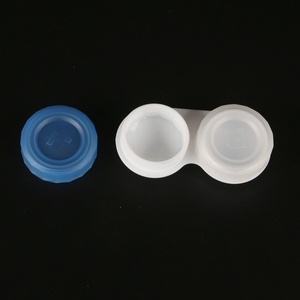
Wholesale Custom New PP-02 Plastic Contact Lens Companion Double Box Simple Korean Style Blue White Color Contact Lenses
Contact Us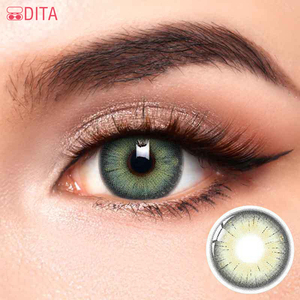
High-oxygen Breathable Silicone Hydrogel Transparent Prescription Contact Lenses Disposable Soft Contact Lenses for Myopia
Contact Us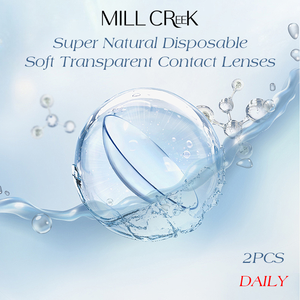
MILL CREEK UV Blocking Daily Clear Contact Lenses with Power Bulk Order Soft Breathable Lenses for Vision Correction
Contact Us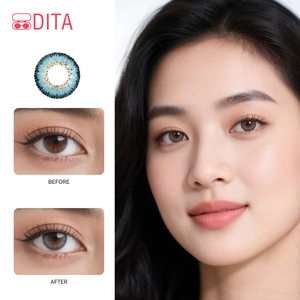
Daily Wear Colored Contact Lenses for Women Natural Enlarging Effect Soft Breathable Material & Long-Lasting Moisture
Contact Us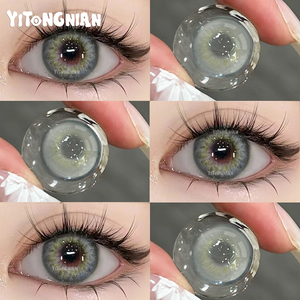
YITONGNIAN Premium Soft Contact Lenses for Daily Use Comfortable Breathable and Moisturizing
Contact Us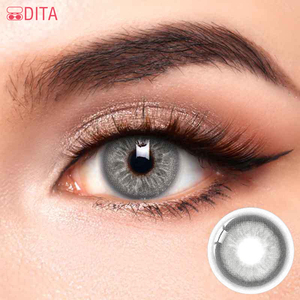
Premium Annual Disposable Contact Lenses - High Water Content (38%) Breathable Lenses Suitable for High Myopia (0-2000 Degrees)
Contact Us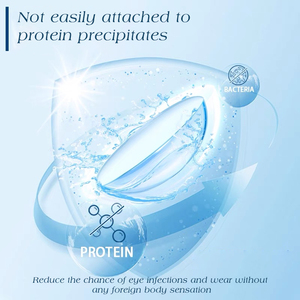
MILL CREEK UV Blocking Monthly Clear Contact Lenses with Power Bulk Order Soft Breathable Lenses for Vision Correction
Contact Us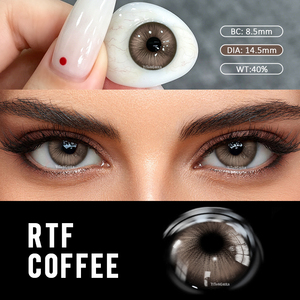
YITONGNIAN Wholesale Optical Soft Contact Lenses in Various Colors Cosmetics Medical Power Contact Lens
Contact Us1. The Physiology of Corneal Oxygenation and $Dk/t$ Engineering Benchmarks
In modern optometric science and contact lens manufacturing, breathability is defined by oxygen transmissibility ($Dk/t$), where $Dk$ represents the intrinsic oxygen permeability of the polymer matrix and $t$ represents the central lens thickness. The human cornea is an avascular structure that derives its requisite oxygen directly from the atmospheric environment across the pre-corneal tear film. When a soft contact lens is positioned on the eye, it acts as a physical barrier to oxygen diffusion.
Standard Hydrogel lenses relying solely on HEMA (hydroxyethyl methacrylate) transport oxygen via the water bound within their molecular matrix. Consequently, their oxygen permeability is strictly capped by the physical limits of water ($Dk \approx 80 \times 10^{-11} (\text{cm}^2/\text{s})[\text{mL O}_2/(\text{mL} \times \text{mmHg})]$). Under the classic Holden-Mertz criteria, a minimum oxygen transmissibility of $24 \times 10^{-9}$ is required for daily wear to prevent corneal hypoxia, epithelial swelling, and stromal edema. For extended or overnight wear, this threshold rises to $87 \times 10^{-9}$.
To exceed these medical benchmarks, export-oriented factories utilize advanced Silicone Hydrogel (SiHy) macromers. By integrating organosiloxane chains into the polymer backbone, oxygen is transported through siloxane channels independently of water content. This chemistry elevates $Dk/t$ values to over $100-147 \text{ units}$, ensuring sustained metabolic health, reduced limbal hyperemia, and extended wearing comfort for end-users across international healthcare markets.
Corneal Oxygen Flux
Delivering over 98% of equivalent atmospheric oxygen to the corneal surface, preventing microcyst formation and corneal neovascularization during 12+ hour daily wearing schedules.
Optimized Elastic Modulus
Balancing structural stiffness (0.4 to 0.6 MPa) for ease of handling with soft mechanical flexibility to minimize papillary conjunctivitis (GPC) and superior epithelial tears.
Wettability & Lubricity
Incorporating embedded hydrophilic wetting agents (such as Polyvinylpyrrolidone / PVP or Hyaluronic Acid) to maintain low contact angles ($\theta < 35^\circ$) without surface plasma treatment breakdown.
2. Material Science Matrix: Hydrogel vs. Silicone Hydrogel Polymers
For procurement directors and medical device importers, evaluating lens performance requires balancing polymer chemistry, water hydration, tear exchange dynamics, and regulatory clearance classifications. The comparison matrix below outlines key engineering metrics across primary contact lens materials manufactured under CE MDR (EU 2017/745) guidelines.
| Polymer Classification | Material Composition | Water Content (%) | Oxygen Transmissibility ($Dk/t$) | Modulus (MPa) | Recommended Wear Cycle | CE MDR Device Class |
|---|---|---|---|---|---|---|
| Silicone Hydrogel (Gen 3) | Fluorosiloxane Macromer + NVP | 45% - 55% | 120 - 147 | 0.5 MPa | Daily / Monthly Disposable | Class IIa / Class IIb |
| Silicone Hydrogel (Gen 2) | Comfilcon A / Senofilcon A Equivalent | 38% - 48% | 100 - 125 | 0.7 MPa | Daily / Monthly Extended Wear | Class IIa / Class IIb |
| Conventional Hydrogel | 2-HEMA + MAA (Group IV) | 55% - 58% | 25 - 30 | 0.3 MPa | Daily Disposable | Class IIa |
| Cosmetic Hydrogel | Polymacon (Group I) | 38% - 42% | 18 - 22 | 0.4 MPa | Monthly / Quarterly / Yearly | Class IIa |
3. Enterprise Manufacturing Capabilities & Cleanroom Infrastructure
BLMG Optical Ltd. operates as a premiere medical-grade contact lens manufacturer integrating advanced research and development, proprietary pattern creation, precision mold synthesis, and automated primary/secondary packaging. Operating under strict ISO 13485 Quality Management Systems, all optical products comply with Class III medical device standards, supporting seamless export to North America, the European Union, East Asia, and the Middle East.


Sandwich Micro-Encapsulation Technology for Cosmetic Lenses
A critical consideration for colored contact lens procurement is pigment isolation and ocular safety. Traditional surface-printed cosmetic lenses carry risks of pigment detachment, causing corneal abrasion or toxic leaching. BLMG Optical utilizes advanced 3-Layer Sandwich Encapsulation technology, where biocompatible FDA-approved pigment layers are embedded securely between two inert hydrogel structural films. This guarantees zero direct contact between colorants and the corneal tissue or palpebral conjunctiva.
Small Batch OEM & Flexible MOQ
To lower capital barriers for emerging eyewear brands and online cosmetic retailers, our Small Batch OEM program starts from just 100 pairs per design. This enables brand managers to evaluate consumer response across diverse color palettes and prescription power ranges before committing to full-scale container orders.
Proprietary ODM Design Library
Distributors can leverage over 500 validated pattern designs ranging from natural single-tone iris enhancements, multi-tone hazel gradients, and enlarging rim effects to theatrical special FX and mini-sclera contacts—all fully clearable under international export certificates.
4. International Regulatory Documentation & Certification Standards
Ocular products are strictly governed as Class IIa/IIb or Class III medical devices across major global jurisdictions. Importing non-compliant contact lenses can lead to customs seizures, heavy fines, and brand reputational damage. Our factories maintain complete technical files (STED format) and certificate suites required for instant regulatory submission and customs clearing.


CE MDR 2017/745 Compliance
Full transition to the updated EU Medical Device Regulation (MDR), providing full clinical evaluation reports (CER), post-market surveillance (PMS) protocols, and Unique Device Identification (UDI) barcode compliance for EU entry.
ISO 13485:2016 Certified Facilities
Comprehensive quality management systems covering design, raw monomer synthesis, cast molding, hydration, automated optical defect inspection, and moist-heat autoclaving processes.
Comprehensive Export Support
Issuance of Certificates of Free Sale (CFS), Certificates of Analysis (CoA) per batch, ISO 10993 Ocular Biocompatibility testing reports, and custom private-label packaging compliant with regional labeling laws.
5. Future Sourcing Trends in the Global Contact Lens Industry (2025–2030)
As the international vision care and cosmetic contact lens markets expand toward an estimated USD 15.2 Billion valuation by 2030, B2B procurement strategies are shifting rapidly. Importers and brand owners must adapt to changing consumer preferences, environmental regulations, and technological breakthroughs in contact lens manufacturing.
A. Dominance of High-Dk/t Daily Disposables
Ocular health awareness is accelerating the migration from annual and quarterly reusable lenses toward single-use daily disposables. Daily disposables eliminate risks associated with lens care non-compliance, solution toxicity, and protein deposit buildup. Modern B2B buyers are prioritizing high-water, high-oxygen daily hydrogel and silicone hydrogel formulations to capture premium subscription e-commerce segments.
B. Eco-Friendly Sustainable Packaging
Traditional blister packs generate plastic waste from polypropylene (PP) cups and aluminum foil lids. Leading export manufacturers are introducing recycled PP blister designs, bio-degradable solution baths, and reduced secondary paper packaging. Sustainability credentials are increasingly required during vendor qualification audits by major European optical retail chains.
C. Smart Functional Contact Lenses
Next-generation optical developments include lenses with built-in HEV Blue-Light filtering for digital screen users, photochromic UV-reactive tinting, and embedded moisture reservoirs utilizing hyaluronic acid-matrix technology. Importers partnering with technologically advanced factories gain high-margin differentiation against commodity optical sellers.
6. B2B Procurement FAQ: Essential Guidance for Buyers & Importers
Below are authoritative responses to the most critical technical, legal, and operational questions asked during factory audits and initial vendor negotiations.
What is the difference between CE certification under MDD vs. the new CE MDR (EU 2017/745)?
The transition from the Medical Device Directive (MDD 93/42/EEC) to the Medical Device Regulation (MDR 2017/745) significantly elevates requirements for contact lens manufacturers exporting to the EU. MDR enforces stricter clinical data evaluation, compulsory Unique Device Identification (UDI) assignment, direct traceability across supply chains, and continuous post-market surveillance. Importing lenses manufactured under fully compliant MDR technical documentation protects distributors from regulatory halts at EU customs ports.
How does Silicone Hydrogel differ from traditional HEMA Hydrogel in daily wear performance?
Traditional HEMA hydrogel relies entirely on water content to transport oxygen through the lens matrix. High water content in HEMA can cause lens dehydration late in the day as moisture evaporates from the eye. Silicone Hydrogel incorporates siloxane monomer chains that transport oxygen directly, independent of water content. This allows SiHy lenses to provide up to 5x higher oxygen transmissibility ($Dk/t$) while maintaining low water evaporation rates, making them far superior for long hours and dry environments.
What is the minimum order quantity (MOQ) for custom private label OEM contact lenses?
Through our specialized Small Batch OEM program, the minimum order quantity starts from just 100 pairs per design for existing ODM patterns. For full custom OEM projects featuring unique client-designed pattern artwork, customized base curves ($BC$), specific diameters ($DIA$), or custom printed blister packaging, opening MOQs typically range from 500 to 1,000 pairs per SKU depending on production line tooling parameters.
How do you guarantee pigment safety in colored and cosmetic contact lenses?
All cosmetic lenses produced by BLMG Optical utilize Sandwich Micro-Encapsulation Technology. The color pigments are locked entirely inside an inner layer between two biocompatible, transparent polymer structures. This structural design ensures that pigments never come into contact with tear fluid, the cornea, or eyelid tissues, guaranteeing complete ocular safety, vibrant color depth, and smooth surface wettability.
What are the standard lead times for OEM sampling and mass production shipments?
Sampling from our existing library of over 500 validated patterns typically takes 7 to 10 business days. For mass production orders with verified artwork and private label packaging design, standard manufacturing lead time is 25 to 35 days post-sample approval. Accelerated scheduling is available for repeat contract orders with pre-printed packaging materials on file.
What quality inspection standards are applied during batch manufacturing?
Every single contact lens undergoes 100% automated optical inspection (AOI) to detect edge tears, surface inclusions, power deviations, and concentricity flaws. Batches undergo rigorous ISO 18369 optical testing, bio-burden testing, endotoxin screening, and final moist-heat autoclave sterilization validation ($SAL = 10^{-6}$) prior to release.
Partner with a Leading CE Certified Contact Lens Factory
Launch or scale your private label contact lens brand with high-oxygen formulations, 500+ proven patterns, and full regulatory documentation support for global markets.
Contact Us