Featured Certified Lens Equipment & Private Label Collections
Explore high-precision optical resin lenses, industrial lens ultrasonic processing machinery, and custom cosmetic contact lenses compliant with CE and ISO standards.
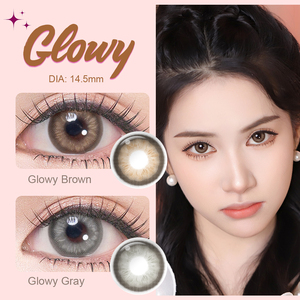
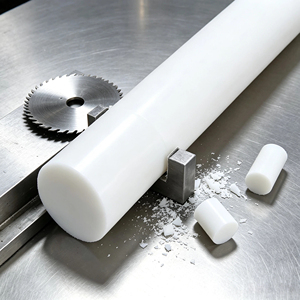
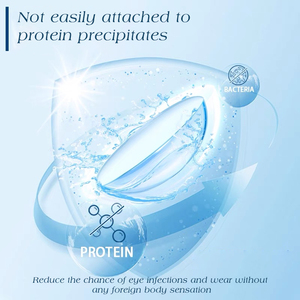
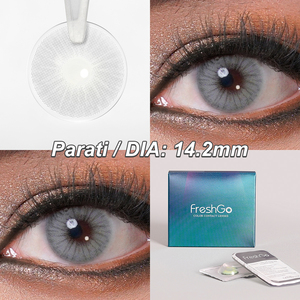
Navigating CE Certified Private Label Lenses Sourcing: Technical Benchmarks & Manufacturing Excellence
In the global optical and ophthalmic product supply chain, qualifying a **CE Certified Private Label Lenses Factory** demands rigorous scrutiny beyond surface-level pricing. Soft contact lenses, prescription optical resins, and specialized cosmetic lenses are classified under stringent medical device frameworks globally—most notably the European Union Medical Device Regulation (EU MDR 2017/745) and the US FDA 510(k) pathway. Contracting with a manufacturer that possesses verified CE certification, ISO 13485:2016 quality management, and advanced automation ensures brand protection, zero batch-to-batch variation, and rapid market penetration.
Under the revised EU MDR 2017/745 framework, cosmetic colored contact lenses without vision correction diopters are regulated under Annex XVI as non-corrective lenses, subjecting them to the exact same high-level Class III medical device oversight as prescription lenses. Working with an uncertified or improperly audited factory exposes brands to catastrophic customs seizures, product recalls, and severe compliance liability. Real CE certification requires full Technical Documentation Files (TDF), biocompatibility assessment according to ISO 10993 standards, and continuous Post-Market Surveillance (PMS).
BLMG Optical Engineering Capabilities & Manufacturing Superiority
At BLMG Optical.Ltd., we bridge the gap between complex ophthalmic polymer engineering and scalable private-label brand production. Our manufacturing matrix combines fully automated high-precision cast molding with proprietary color encapsulation technologies to deliver unmatched optical clarity, mechanical durability, and wearer comfort.
Micro-Encapsulation Sandwich Technology
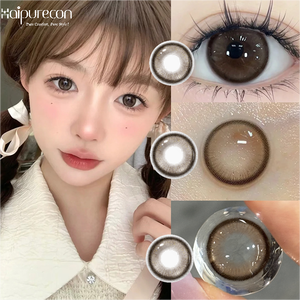
Our colored contact lenses utilize a multi-layer sandwich printing process where bio-compatible color pigments are completely locked within the inner hydrogel matrices (PolyHEMA or Silicone Hydrogel). Pigments never contact the human cornea or conjunctiva directly, guaranteeing zero pigment oxidation and eliminating dye leaching hazards.
Class 100,000 Cleanroom Automation
All cast molding, demolding, hydration, blister packaging, and secondary autoclave sterilization are performed in Class 100,000 cleanrooms operating under clean air pressure systems (ISO Class 5 environment). This eliminates micro-particle contamination and guarantees sterile barrier integrity for long-shelf-life distribution.
High DK/t Oxygen Permeability Optics
By optimizing the cross-linking density of PolyHEMA monomers and incorporating modern Silicone Hydrogel chemistry, BLMG lenses achieve elevated oxygen transmissibility (DK/t) and optimal water retention (38% to 58%). This design minimizes corneal hypoxia, prevents eye dryness, and allows comfortable 8 to 12-hour wear schedules.
Technical Comparison: Sourcing Pathways for Private Label Lenses
Understanding the parameters of material selection, wear cycles, and compliance paths enables procurement managers to calculate Total Cost of Ownership (TCO) and maximize brand margins.
| Evaluation Parameter | Small Batch OEM Model | Full ODM Pattern Customization | Standard Wholesale Procurement |
|---|---|---|---|
| Minimum Order Quantity (MOQ) | 100 - 500 Pairs / Design | 1,000 - 5,000 Pairs / Design | 50 - 100 Pairs (In-Stock) |
| Pattern & Color Design | Select from 500+ Validated Library Designs | Fully Custom Artwork & Layered Dot Matrix | Factory Pre-set Colors Only |
| Primary & Secondary Packaging | Custom Blister/Vial Foil + Brand Box | Custom Die-cut Packaging & Solution Kits | Generic Factory Packaging |
| Regulatory Documentation Support | Full CE MDR Technical File & ISO 13485 COA | Full Brand Registration Support (FDA/CE/NMPA) | Basic Commercial Invoice & Packaging Slip |
| Target Buyer Profile | E-commerce Startups & Niche Boutiques | Established Global Brands & Retail Chains | Regional Resellers & Trial Distributors |
Future Sourcing & Manufacturing Trends in the Lens Industry
As consumer demand shifts toward ocular health, premium aesthetics, and eco-friendly medical consumables, private label lens brands must align with next-generation manufacturing capabilities.
1. Silicone Hydrogel Dominance in Cosmetic Segment
Historically limited to clear prescription lenses, silicone hydrogel materials are rapidly capturing market share in colored contact lenses. Silicone hydrogels offer up to 5x higher oxygen permeability than standard hydrogels, making high-oxygen cosmetic lenses a major product differentiator for premium direct-to-consumer (DTC) optical brands.
2. Digital Rapid Prototyping & AI Pattern Design
Contract factories are using high-resolution digital micro-printing and AI-assisted iris iris mapping algorithms. This allows brand managers to turn digital graphic concepts into physical sample lenses within 10 business days, drastically shortening sample approval cycles from months to days.
3. Sustainable Medical Packaging & Reduced Plastic Footprint
Global regulations and eco-conscious shoppers are driving demand for sustainable blister packaging. Modern factories are transitioning to recyclable polypropylene blister containers, ultra-thin aluminum foil seals, and FSC-certified secondary paper boxes to minimize landfill waste.
Frequently Asked Questions: Sourcing from CE Certified Lens Factories
Key answers prepared by optical compliance officers and manufacturing engineers to help procurement directors streamline supplier qualification.
What specific documents confirm that a lens factory holds genuine CE Certification under EU MDR?
A legitimate CE Certificate for medical devices must be issued by an officially accredited EU Notified Body (identified by a 4-digit Notified Body number, e.g., NB 0123, NB 0459). The certificate must explicitly state compliance with Regulation (EU) 2017/745 (MDR) or valid IVDR frameworks, list the scope of contact lenses/optical devices, and be accompanied by the factory’s ISO 13485:2016 certificate and Declaration of Conformity (DoC).
What is the difference between OEM and ODM contact lens manufacturing?
ODM (Original Design Manufacturing) allows brand owners to select from the factory’s pre-existing, production-validated library of over 500+ iris patterns and market them immediately under private label branding. OEM (Original Equipment Manufacturing) involves custom engineering, where the factory manufactures unique lenses based on the buyer's custom pattern artwork, specific color diopters, base curve (BC) dimensions, or proprietary polymer formulations.
How does BLMG prevent color pigment leaching in private label colored lenses?
We utilize Advanced Sandwich Micro-Encapsulation Technology. The color pigments are micro-printed and fully enclosed between two protective layers of hydroxyethyl methacrylate (HEMA) hydrogel polymer. This creates a smooth optical surface where color pigments are never exposed to the ocular tissue, guaranteeing 100% biocompatibility and long-term color stability.
What is the minimum order quantity (MOQ) for starting a private label contact lens brand?
To support brand incubation and rapid market testing, BLMG Optical offers a Small Batch OEM Program starting at just 100 pairs per pattern design. For full custom ODM pattern development with custom-printed blister foils and secondary color box packaging, standard production MOQs range between 1,000 and 3,000 pairs depending on power range and wear replacement cycle.
Which lens wear cycles are available for bulk manufacturing?
We manufacture across all standard wear replacement schedules: Daily Disposable (1-Day), Monthly Disposable (30-Day), Quarterly (3-Month), and Yearly Disposable (12-Month). Daily disposables are recommended for hygiene-centric markets, whereas yearly disposables are highly popular for cosmetic, cosplay, and costume lens collections.
How are quality assurance testing and sterilization conducted before export shipping?
Every production batch undergoes automated optical power verification, dimensional measurement (Diameter, Base Curve, Thickness), and cosmetic defect scanning via high-resolution vision system software. Sealed blister packs and glass vials undergo high-pressure moist heat steam autoclaving. Batch samples are subjected to bioburden testing, sterility testing, and endotoxin monitoring prior to release.
Can BLMG assist with customs registration in foreign target markets?
Yes. We provide complete technical documentation packages, including Free Sale Certificates (FSC), ISO 13485 Certificates, CE Declarations of Conformity, Chemical Safety Material Data Sheets (MSDS), Biocompatibility Test Reports, and Stability Data. Our regulatory team works closely with your local importer of record to ensure smooth product registration.
What prescription diopter range can be manufactured for private label lines?
Our automated cast-molding lines accommodate non-prescription Plano (0.00) lenses as well as prescription corrective powers ranging from -0.50D to -10.00D (in 0.25D and 0.50D steps). Custom prescription mold tooling for hyperopia (+) or astigmatism (toric) can be configured upon request.
What lead time is required for private label order fulfillment?
For standard ODM catalog orders with stock patterns and standard packaging, turnaround times are typically 14 to 21 business days. Custom OEM orders requiring new pattern plate etching, custom color matching, and custom printed packaging generally require 30 to 45 days from artwork sign-off to final dispatch.
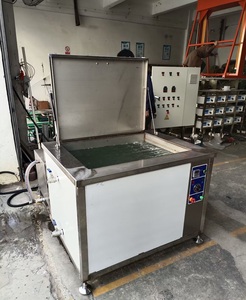
How do industrial ultrasonic cleaners benefit precision optical lens manufacturing?
Industrial ultrasonic cleaning equipment (such as our 264L CANDOSONIC system) utilizes high-frequency sound waves to generate microscopic cavitation bubbles. This process thoroughly removes mold-release agents, monomer residues, microscopic dust, and polishing pastes from glass casting molds and optical resin lenses without causing surface scratches or optical distortion.