Featured OEM/ODM Blister Pack Contact Lenses
Explore our core catalog of medical-grade blister packed cosmetic and clear vision contact lenses engineered for global brand owners, optical chains, and distributors.
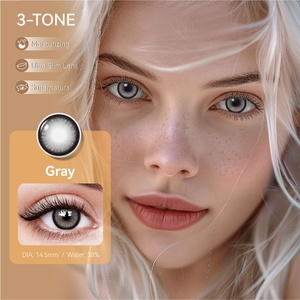

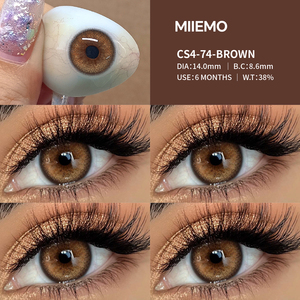
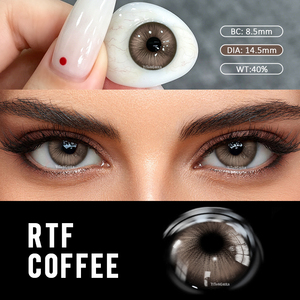
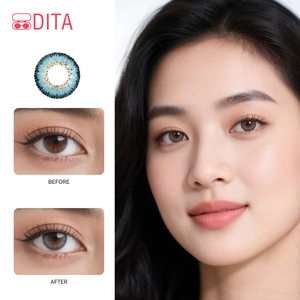
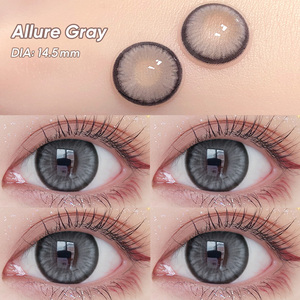
1. Executive Overview: China's Role in Global Blister Pack Lens Manufacturing
The global contact lens industry has undergone a paradigm shift over the past decade. Traditional glass vial packaging—once the industry standard for annual and long-cycle contact lenses—has rapidly yielded market share to single-use primary packaging: **Blister Packs**. China’s manufacturing ecosystem, led by advanced medical optical plants such as BLMG Optical Ltd., sits at the epicenter of this modern industrial evolution.
Blister packaging represents far more than a simple shift in container geometry. It is a highly engineered, automated process involving **thermoformed polypropylene (PP) shell cavities**, multi-layer medical grade aluminum/polyethylene lidding foils, automated micro-dosing of buffered saline solution, and terminal moist-heat steam autoclaving. For global optical brands, e-commerce direct-to-consumer (DTC) players, and clinical distributors, securing a top-tier Chinese blister pack contact lens manufacturing partner is paramount for scalability, margin preservation, and international regulatory compliance.
Information Gain Metric: Modern high-speed blister sealing lines in Tier-1 Chinese facilities achieve micro-leakage failure rates below 0.001%, executing automated optical inspection (AOI) for edge integrity, hydration parameters, and micro-particle contamination at speeds exceeding 12,000 units per hour per line.
Sterility & Barrier Superiority
Polypropylene blister cavities sealed with peelable Tyvek® or lidding foil create a hermetic bacterial barrier capable of maintaining a 5-year sterile shelf life without leachables compromising the hydrogel matrix.
Logistical & Freight Optimization
Blister packs reduce primary packaging volumetric weight by up to 72% and gross weight by 85% compared to glass vials, drastically cutting international air and sea freight logistics costs per unit.
2. Engineering & Production Standards of Blister Pack Lenses
Contract manufacturing of Class III medical contact lenses requires precise environmental control, polymer chemistry, and automated packaging lines. Understanding the multi-tier engineering stack enables brand managers to evaluate factory capabilities thoroughly during supplier audits.
2.1 Material Selection & Cast-Molding Technology
Leading Chinese contact lens factories employ **fully automated double-sided cast-molding processes**. High-purity monomers—such as 2-Hydroxyethyl Methacrylate (HEMA), Polymacon, or advanced Silicone Hydrogel formulations—are injected into single-use optical molds produced on-site via precision injection molding tooling.
- Hydrogel Monomers (38% to 58% Water Content): Offer exceptional initial comfort, smooth surface hydration, and cost-effective mass production.
- Silicone Hydrogel Monomers (High Dk/t 80-120): Deliver superior oxygen transmissibility to the cornea, ideal for extended daily wear, premium daily disposables, and high-margin product lines.
- Sandwich Color Printing Technology: For cosmetic colored contacts, non-toxic bio-compatible color pigments are embedded between two transparent hydrogel polymer layers. This prevents direct pigment contact with corneal tissue, satisfying US FDA and EU CE safety mandates.
2.2 Automated Primary Packaging Flow (Blister Dosing & Sealing)
| Manufacturing Stage | Technical Process Parameters | Quality Control & Inspection Protocol |
|---|---|---|
| 1. Cavity Thermoforming | Medical-grade Polypropylene (PP) thermoformed at 180°C - 210°C into ergonomic lens holding wells. | Optical dimension checks; cavity wall thickness uniform measurement (±0.05mm). |
| 2. Lens Hydration & Transfer | Demolded polymerized lenses undergo extraction and hydration in ultrapure RO water tanks. Automated robotics place lenses into blister wells. | Automated Vision Inspection (AVI) verifying lens presence, edge tearing, and foreign debris. |
| 3. Saline Micro-Dosing | Isotonic buffered saline solution (pH 7.2 - 7.6, osmolality 280-320 mOsm/kg) dispensed at 0.65ml ±0.05ml. | High-precision peristaltic dosing pumps monitored via in-line load cells. |
| 4. Lidding Heat Sealing | Multi-layer foil lidding heat-sealed to PP cavity rims at controlled temperature, pressure, and dwell time. | Peel strength testing (ASTM F88); 100% online optical inspection of thermal weld seal width. |
| 5. Terminal Sterilization | Moist-heat steam autoclaving at 121°C (250°F) for a minimum F0 value of 15 minutes. | Biological indicator (Geobacillus stearothermophilus) validation & physical pressure log verification. |
3. China Blister Lens OEM/ODM Business Models & Cost Engineering
Sourcing contact lenses from specialized Chinese factories offers flexible entry options tailored to brand scale, regulatory maturity, and speed-to-market goals. BLMG Optical Ltd. structures production into three primary framework agreements:
1. ODM Service (Fast-Track)
Access over 500+ pre-validated color patterns, fixed diameter (14.0mm - 14.5mm), and base curve (8.5mm - 8.6mm) options. Ideal for swift launch under your own brand with minimal tooling investments.
2. Small Batch OEM
Low MOQ programs starting from 100 pairs per design allow boutique brands and optical startups to test custom private label colorways without burdening cash flow with massive inventory minimums.
3. Specialized & Custom FX
Tailor-made optical engineering for theatrical, cosplay, mini-sclera (15.0mm-17.0mm), and full sclera (22.0mm) lenses with bespoke print masks, toric power corrections, and custom packaging boxes.
Unit Cost Breakdown in Blister Pack Lens Procurement
When requesting quotes from China blister pack lenses factories, evaluating the **BOM (Bill of Materials)** structure ensures transparency and prevents hidden costs during mass production escalation:
- Raw Monomers & Pigment Formulation: Represents approximately 25-30% of unit production cost. Silicone hydrogel carries a higher raw monomer cost than HEMA.
- Primary Packaging Materials (PP Cavity + Lidding Foil): 20-25% of unit cost. Foil printing, custom aluminum micro-embossing, and high-barrier polymers influence this component.
- Secondary Packaging (Carton Box, Blister Card Sleeves, Leaflets): 15-20% depending on foil stamping, UV spot coatings, and anti-counterfeiting serialization elements.
- Quality Inspection, Autoclaving, & Regulatory Compliance: 15-20% covers automated camera inspection runs, sterility testing, batch record archiving, and cleanroom operation power overheads.
4. Strategic Trends: Future Sourcing & Tech Innovations
The global contact lens market is evolving rapidly driven by changing consumer lifestyle habits, eco-conscious packaging demands, and technological breakthroughs. Procurement teams must align with factories actively investing in next-generation manufacturing tech.
Trend A: High-Dk/t Silicone Hydrogel Dominance
Consumer preferences are rapidly shifting toward Daily Disposable Silicone Hydrogel lenses. Next-generation Chinese factories are deploying non-solvent wet-process polymerization lines that deliver oxygen transmissibility over 100 Dk/t with modulus values below 0.5 MPa, minimizing end-of-day dryness.
Trend B: Eco-Friendly & Monomaterial Packaging
Traditional aluminum lidding foil laminated with non-recyclable plastic poses waste challenges. Forward-looking factories are piloting 100% recyclable polypropylene monomaterial blister systems and micro-thin foil structures that reduce plastic weight by up to 40% without compromising vapor loss rates.
Trend C: AI-Powered Automated Visual Inspection (AVI)
Legacy manual lamp inspections are obsolete. Tier-1 facilities utilize high-resolution deep-learning camera arrays capable of detecting sub-micron defects, optical power deviations, peripheral edge tears, and bubble entrapment in less than 200 milliseconds per lens.
Trend D: Custom Prescription Toric & Multifocal Color Blisters
Historically limited to clear lenses, custom cast-molding technologies now enable fast-turnaround OEM manufacturing for astigmatism-correcting (Toric) and presbyopia-correcting (Multifocal) colored contact lenses packaged directly into standardized blister foils.
5. Enterprise Strengths: Why Partner with BLMG Optical Ltd.
BLMG Optical Ltd. stands as a premiere high-technology medical device manufacturer specializing in soft contact lenses and automated primary blister packaging solutions. By integrating research & development, pattern art design, high-precision molding, and automated secondary packaging under one centralized management system, we empower global brands to scale with absolute safety and market speed.
Global Quality Certifications
Our facilities operate under ISO 13485 Quality Management Systems for Medical Devices. Our production lines maintain regulatory compliance and certification support for FDA, CE, NMPA (CFDA), and MFDS Korea registrations.
In-House Tooling & R&D
We operate precision CNC optical mold lathe centers capable of micro-machining curve geometries with nanometer-scale tolerances, guaranteeing absolute batch-to-batch stability in base curve (BC) and power.
End-to-End Packaging Solutions
From primary blister seal foil design to custom secondary carton box structural layout, anti-counterfeiting QR code printing, and retail-ready display trays—we deliver fully finished, export-ready goods.
6. Frequently Asked Questions (FAQ) for B2B Procurement
Clear, technical answers to critical sourcing questions asked by buyers, compliance auditors, and brand owners.
Partner with China's Premier Blister Pack Lens Factory
Elevate your optical brand with medical-grade, automated blister pack contact lenses. Access over 500+ validated patterns, industry-leading low MOQs, and comprehensive global registration support.
Get Catalog