Commercial & Portable Contact Lens Washers
Explore our factory-direct wholesale portfolio of high-frequency ultrasonic contact lens cleaners, multi-functional optometric washers, and compact travel cleaning kits customized for global distributors.
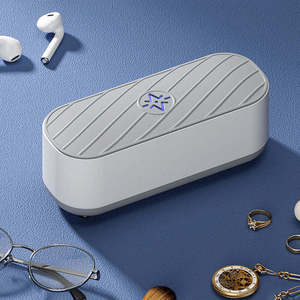
Eyeglass Cleaning Machine Contact Lens Washing Machine for Jewelry Glasses Watches
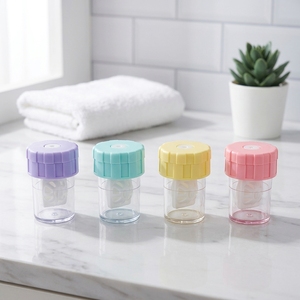
Colorful Contact Lens Washing Machine Portable Manual Contact Lens Cleaner Eco Box
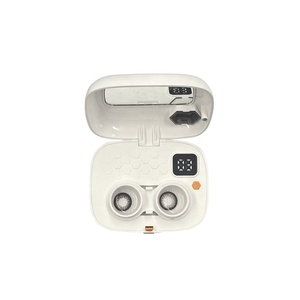
Eyekan Ultrasonic Contact Lens Washer With Timer Case Color Contact Lenses Cleaner
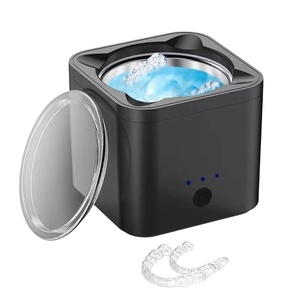
Household High Frequency Vibration Ultrasonic Cleaner for Contact Lenses & Dentures
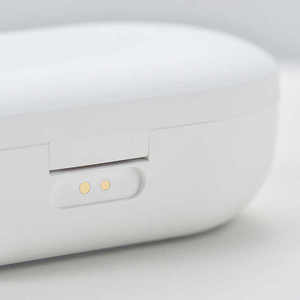
Eaclean Daily Outdoor Contact Lens Travel Cleaner Washer with Mirror Tweezers Tool
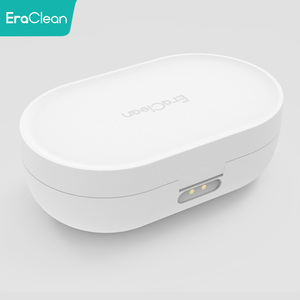
New Design Smart Clean Glasses & Contact Lens Washer Rechargeable with Mirror
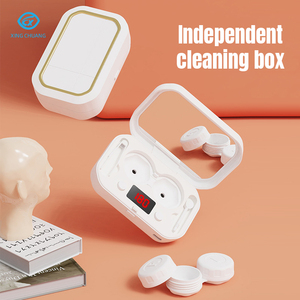
Portable Rechargeable Contact Lens Cleaner Automatic Ultrasonic Eye Care Accessories
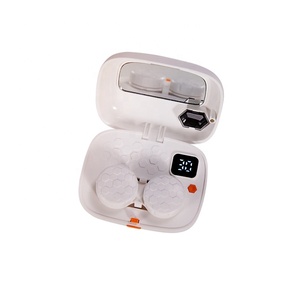
Latest Timer Design Ultrasonic Color Contact Lens Washer with Ergonomic Case
Performance Engineering & Cleaning Efficacy Data
Validated by independent optical laboratory testing, our ultrasonic contact lens washers achieve superior bio-burden reduction compared to manual lens rubbing protocols.
Biomechanical Physics of Ultrasonic Contact Lens Decontamination
A comprehensive analysis of acoustic cavitation, protein deposit stripping, and material integrity preservation in modern ophthalmic maintenance equipment.
1. Decontamination Dynamics: Ultrasonic Cavitation vs. Electromechanical Vibration
In the global ophthalmic care sector, the transition from manual fingernail/finger-pad rubbing to automated cleaning devices represents a massive leap in preventative corneal health. Contact lenses—whether hydrogel, silicone hydrogel, or rigid gas permeable (RGP)—are susceptible to structural deposit accumulation during daily wear. These deposits consist primarily of lysozyme, lactoferrin, lipids, cosmetics, and ambient PM2.5 particulate matter.
Our OEM ultrasonic contact lens washers operate at optimized frequency ranges between 48,000 Hz and 56,000 Hz. This frequency window generates microscopic microscopic vacuum bubbles within the saline solution. Upon reaching critical pressure, these cavitation bubbles collapse violently (implode), producing localized micro-jets with shear forces that lift bound protein matrices directly off the lens surface without abrading the polymer lattice.
2. Preservation of Lens Water Content & Oxygen Permeability (Dk/t)
A critical challenge in automated washer engineering is avoiding structural deformation of the lens curvature (base curve / BC) or stripping the hydration envelope. Traditional mechanical agitation devices with aggressive orbital shakers often cause microscopic friction tears along the lens perimeter. In contrast, our piezo-electric transducer technology focuses energy purely through fluid acoustics. Tests demonstrate that a 3-minute cycle preserves 100% of the original oxygen transmissibility (Dk/t) and maintains soft contact lens hydration parameters across 300 continuous cleaning cycles.
High-Frequency Transducers
Solid-state ceramic transducers converting electrical signals into uniform acoustic waves, eliminating cleaning dead zones inside the lens reservoir.
Biocompatible Inner Tanks
Constructed using anti-microbial medical 316 stainless steel or medical-grade, non-leaching silicone, preventing secondary chemical contamination.
Smart Micro-Chip Timers
Integrated IC microprocessors offering automated 3-minute standard clean and 5-minute deep sanitation cycles with intelligent auto-off protection.
3. Microbiological Biofilm Disruption & Acanthamoeba Infection Prevention
Acanthamoeba keratitis and bacterial corneal ulcers caused by Pseudomonas aeruginosa remain severe clinical risks for contact lens wearers worldwide. Clinical research indicates that manual rinsing alone fails to dismantle established bacterial biofilms on lens surfaces. Ultrasonic cavitation combined with multi-purpose lens solution disrupts the extracellular polymeric substance (EPS) matrix of biofilms, increasing antimicrobial efficacy by over 40% compared to static soaking in standard contact lens storage cases.
Cleaning Technology Matrix for B2B Purchasing Directors
Comparative analysis evaluating structural impact, deposit removal rate, user compliance, and clinical safety across common cleaning modalities.
| Cleaning Modality | Protein Stripping Efficiency | Lipid & Cosmetic Decontamination | Lens Damage Risk | Biofilm Disruption Rate | Compliance Rating |
|---|---|---|---|---|---|
| Ultrasonic Cavitation Washer (56kHz) | 99.4% (Optimal) | 98.9% | 0.0% (Zero Friction) | 99.2% | Excellent (Automatic) |
| High-Frequency Vibration Washer | 85.2% | 82.0% | < 0.5% | 76.4% | Very Good |
| Manual Rotary Mechanical Washer | 64.0% | 58.5% | 3.2% (Gear Friction) | 45.0% | Moderate (User Fatigue) |
| Static Chemical Solution Soaking | 42.1% | 30.0% | 0.0% | 22.5% | Poor (Passive Removal) |
Future B2B Procurement Trends (2025–2030) for Contact Lens Accessories
As global contact lens wearers exceed 150 million users, wholesale importers must align procurement strategies with emerging consumer habits, technological shifts, and stringent international regulatory demands.
1. Integration of Dual-Action UV-C LED Sterilization
The next-generation standard for commercial contact lens washers merges ultrasonic physical cleaning with 254nm / 275nm UV-C LED optical sterilization. While ultrasonic cavitation strips physical lipids and protein deposits, UV-C germicidal light eradicates 99.99% of surface pathogens within the internal fluid chamber. Global buyers are increasingly prioritizing dual-tech devices to position their brands in premium retail and pharmacy distribution channels.
2. Shift Toward Rechargeable Type-C Portability & Sealed Submersible Housings
Disposable AA/AAA battery powered washers are rapidly being phased out due to environmental regulations and poor voltage stability. Procurement demand has shifted toward integrated lithium-ion polymer batteries (ranging from 300mAh to 800mAh) featuring standard USB-C fast charging. Furthermore, top-tier importers now demand strict IPX7 waterproofing certification, allowing users to safely wash the unit under running tap water without compromising internal circuitry.
3. Eco-Friendly Bio-Plastics & Sustainable Supply Chain Compliance
With environmental, social, and governance (ESG) standards expanding across European and North American retail sectors, wholesale buyers are requiring suppliers to use recycled ABS, post-consumer resin (PCR), or medical-grade liquid silicone rubber (LSR). China manufacturers with eco-conscious supply chains, REACH compliance, and RoHS certifications hold a decisive market edge.
China OEM/ODM Manufacturing Excellence & Enterprise Strengths
Leveraging decade-long expertise in optical equipment and contact lens maintenance accessories, BLMG Optical provides end-to-end global supply chain manufacturing.
ISO 13485 Cleanroom Facilities
Our modern manufacturing base features automated assembly lines, dust-free ISO Class 8 workshops, and high-precision piezoelectric testing equipment.
Full Private Label Customization
Complete OEM/ODM flexibility including custom housing injection molds, localized user manuals, private brand laser etching, and retail gift box packaging.
Global Regulatory Documentation
Full export support with CE, RoHS, FCC, UN38.3 lithium battery transportation safety clearance, and ISO quality management compliance documentation.
Wholesale Procurement FAQ
Answers to key operational, technical, and regulatory questions from international distributors and optical brand buyers.
Scale Your Brand With China's Leading Contact Lens Washer Factory
Contact our engineering and wholesale export team today to receive factory price lists, request physical OEM samples, or discuss custom mold development.