Recommended OEM/ODM Hydrogel Contact Lens Collections
Explore our turnkey Class III medical device catalog. All hydrogel formulations feature high oxygen permeability, micro-encapsulated sandwich pigmentation, and ergonomic edge geometry for global private label deployment.
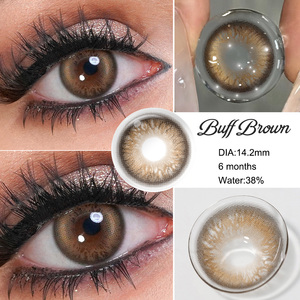
Free Sample MAGISTER Contact Lenses Prescription Colored Contacts Myopia Contact Lenses Lentilles De Lunettes with Power
Food grade PP Polypropylene Rod Compliant FDA NSF ANSI 51 Food Contact Standard
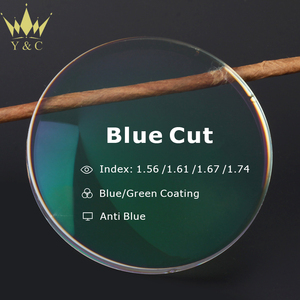
Light Optical Lenses Block Cut Lens Blue China Resin a Grade Clear Contact Soft Lens Medical -8.0 Plastic Clear Lens Solution 2C
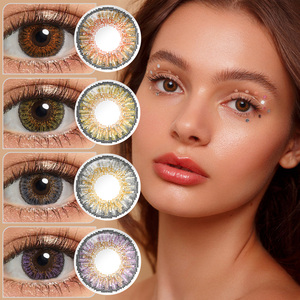
Best Selling 3 Tone Contacts Lenses Color Big Eye Lenses Cosmetic Colored Contact Lens Entilles De Contact En Gros for Dark Eyes
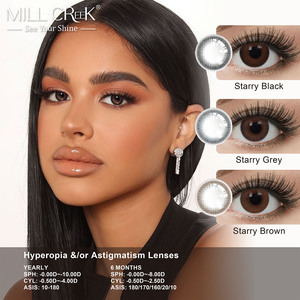
MILL CREEK Wholesale Toric Hyperopia Contact Lenses Prescription for Astigmatism and Farsightedness Custom Power
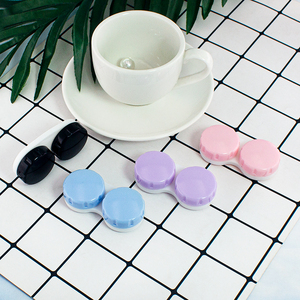
Lalens Lemon Brown Contact Lenses With Packaging Box Custom Design In Various Color Myopia Soft Eye Color Contact Lens
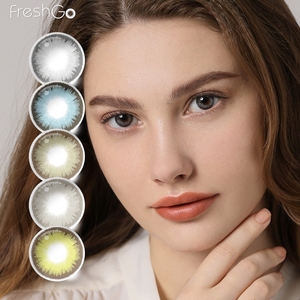
Free Shipping Freshgo Diamond Soft Eye Contact Lenses Gray Colored Contacts Lenses Circle Eye Color Contact Lens Lentilles
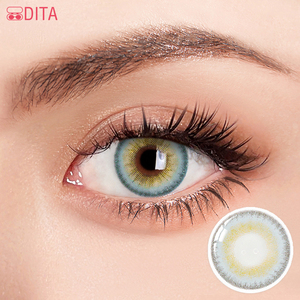
Hot Sale Blue Color Contact Lenses 14.2mm Comfortable Wear Urban Style Cosmetic Lens with Prescription
Enterprise Strengths: World-Class Hydrogel Contract Manufacturing
BLMG Optical Ltd. operates as a premiere medical-grade hydrogel contact lens manufacturer, providing full-chain white label solutions to brand owners, optical chains, and global distributors.
Global Compliance Matrix
Our production facilities maintain full ISO 13485 Quality Management System accreditation alongside CE Marking, FDA Registration, and NMPA Class III medical device compliance, ensuring smooth customs clearance worldwide.
Precision Cast Molding
Utilizing high-precision computer-controlled mold design (Cast Molding), we maintain tight center thickness tolerances (+/-0.01mm) and smooth edge contours, eliminating mechanical abrasion on corneal tissue.
Bio-Compatible Hydrogels
We synthesize poly-HEMA (Hydroxyethyl Methacrylate) and HEMA-MAA copolymers embedded with hydrophilic matrix agents, achieving stable 38% to 58% water content levels to minimize end-of-day eye fatigue.
Information Gain Insight: Unlike standard cosmetic manufacturers using superficial surface tinting, our factory employs 3D Micro-Encapsulation Sandwich Technology. Color pigments are fully sealed between bio-compatible hydrogel layers, eliminating direct contact between print dyes and the ocular surface.
| Polymer Hydrogel Specification | Poly-HEMA (Standard Hydrogel) | HEMA-MAA Copolymer (High Moisture) | Next-Gen Silicone Hydrogel (SiHy) |
|---|---|---|---|
| Water Content Range | 38% - 42% | 55% - 58% | 45% - 50% |
| Oxygen Permeability (Dk/t) | 12 - 18 x 10^-9 | 22 - 28 x 10^-9 | 80 - 120 x 10^-9 |
| Ionic Surface Charge | Non-Ionic (Group I) | Ionic (Group IV) | Non-Ionic (Group V) |
| Target Replacement Cycle | Monthly / Quarterly / Yearly | Daily / Monthly Disposables | Premium 1-Day & Extended Wear |
| Primary B2B Advantage | Cost-effective, highly stable shape retention | Immediate soft comfort, high initial wetting | Ultra-breathable for sensitive, dry eyes |
Hydrogel Product Development & Technological Trends
The global contact lens manufacturing ecosystem is undergoing a major technological transformation. Buyer demands have shifted from basic visual correction to eye-health preservation and multi-tone aesthetic realism.
1. Biomimetic Moisture Locks & Hyaluronic Acid Integration
Traditional hydrogel formulations lose moisture via evaporation under air-conditioned environments or digital screen use. Modern OEM factories inject natural wetting agents—such as Sodium Hyaluronate (HA) and Polyvinylpyrrolidone (PVP)—directly into the hydration saline solution during primary packaging autoclaving. This creates a permanent moisture sheath around the hydrogel lens matrix, reducing protein deposit adhesion by up to 45%.
2. High-Precision Multi-Tone Dot-Matrix Printing
Aesthetic consumer trends favor hyper-realistic iris enlargement over solid opaque block prints. OEM manufacturers now leverage high-speed digital pad printing with sub-micron resolution. By layering up to 4 distinct color channels (limbal ring, primary iris iris-blend, hazel highlight, and inner starburst), contract manufacturers achieve natural eye color blending for dark Asian eyes as well as light European eyes.
3. Integrated UV-Blocking Photopolymers
Ocular health awareness has led to regulatory pressure across the US and EU for UV filtration in soft contact lenses. State-of-the-art hydrogel formulas incorporate Class II UV absorbers into the monomer mix, blocking over 70% of UVA and 95% of UVB radiation. This protects the crystalline lens and retina without compromising optical clarity or refractive power stability.
4. Dynamic Stabilization for Custom Toric Lenses
Manufacturing cosmetic soft contact lenses with astigmatism correction (Toric lenses) requires advanced rotational stabilization technology. Factory R&D teams utilize dual-thin zone profiles (Prism Ballast or Dynamic Acceleration Geometry). This ensures that each time the wearer blinks, hydrodynamic pressure realigns the lens axis automatically within 5 seconds.
Future Global Procurement Trends in Hydrogel Manufacturing
Navigating the global contact lens supply chain requires understanding shifts in consumer purchasing behavior, regulatory friction, and inventory risk management strategies.
Rapid Iteration via Low-MOQ OEM
Historically, contract factories demanded minimum orders of 10,000 pairs per SKU, creating severe cash flow friction for emerging direct-to-consumer (DTC) brands. The market has shifted toward flexible Small-Batch OEM programs starting at just 100 to 500 pairs per design. This enables brands to test micro-collections on social media channels before scaling mass production.
Rise of Daily Disposables (1-Day Wear)
While monthly and yearly lenses retain high volume in developing markets due to per-wear economy, mature markets (Japan, US, UK, South Korea) are seeing a rapid shift toward 1-Day Daily Disposable hydrogel lenses. Sourcing teams are prioritizing automated blister packaging automation lines capable of packing 30-count boxes with zero leakage rates.
Sustainable Eco-Blister Packaging
Environmental regulations and consumer expectations are driving suppliers to optimize secondary and primary packaging materials. Top OEM suppliers are replacing traditional thick plastic blisters with ultra-thin polypropylene foil cups, reducing virgin plastic consumption by 30% per box while maintaining 5-year sterile shelf life integrity.
Frequently Asked Procurement Questions (B2B Sourcing FAQ)
Technical guidance for supply chain managers, brand directors, and compliance officers evaluating contact lens suppliers.
Our OEM manufacturing structure provides two primary procurement pathways: For ODM collections (selecting from our library of 500+ production-validated patterns with custom branded packaging), the MOQ starts at just 100 pairs per design. For fully customized OEM projects—which involve proprietary pattern artwork, custom base curves (BC), or specialized power ranges—the standard production batch MOQ is typically 500 to 1,000 pairs per SKU.
Corneal safety is achieved through our proprietary 3D Micro-Encapsulation Sandwich Technology. During the cast-molding process, a base layer of clear biocompatible hydrogel monomer is injected into the mold, followed by the high-precision pad printing of pharmaceutical-grade pigments. A final protective hydrogel layer is polymerised directly over the artwork. This locks the color layers completely inside the matrix, preventing pigment leaching or direct tactile friction against the corneal epithelium.
As a Class III medical device contract manufacturer, BLMG Optical provides comprehensive technical documentation support (STED / DHF format). This includes ISO 13485 certificate copies, CE Mark certificates under Medical Device Regulation (MDR), FDA 510(k) or Device Registration numbers, NMPA certificates, Certificate of Free Sale (CFS), batch sterilization validation reports (SAL 10^-6), cytotoxicity testing, eye irritation reports, and 5-year real-time and accelerated shelf-life stability test data.
ODM (Original Design Manufacturing) involves choosing existing, market-proven lens patterns, diameters (e.g., 14.0mm - 14.5mm), and base curves from our catalog and printing them under your custom brand packaging. OEM (Original Equipment Manufacturing) is a complete custom production service where we build lenses according to your custom graphic artwork, specialized material specifications (e.g., custom water content blend), custom power matrices (myopia, hyperopia, toric astigmatism), and custom blister box packaging.
We manufacture four main wear cycles: Daily Disposable (1-Day), Monthly Disposable, Quarterly Disposable, and Yearly Disposable. Power ranges span Plano (0.00 diopters) for cosmetic use, to standard corrective powers (-0.50D to -6.00D in 0.25D steps), extended prescription ranges (-6.50D to -10.00D in 0.50D steps), plus custom hyperopia (+0.50D to +6.00D) and custom toric cylinder options for astigmatism.
Clients can submit physical reference samples, high-resolution vector artwork, or standard Pantone color codes. Our R&D optical lab creates test plates and runs trial casting batches. Sample lenses are provided in sterile glass vials or blister packs within 10 to 14 business days for on-eye model evaluations, color opacity checks, and photographic validation prior to mass manufacturing clearance.
Launch or Scale Your Private Label Hydrogel Brand Today
Partner with a certified medical device factory. Whether you require low-MOQ trial collections or high-volume automated 1-day daily production, our technical team is ready to support your market launch.
Contact Us