
Executive Sourcing Summary: The OEM Contact Lens Landscape
The global contact lens industry is undergoing a structural evolution driven by the convergence of aesthetic cosmetic demand, corrective ophthalmic requirements, and technological leaps in polymer chemistry. Navigating the original equipment manufacturer (OEM) and original design manufacturer (ODM) landscape requires business leaders and procurement managers to look beyond surface-level unit costs. Contact lenses are strictly regulated Class III medical devices across major global jurisdictions. Securing a reliable OEM supplier involves rigorous evaluation of automated cast molding capabilities, oxygen transmissibility coefficients (Dk/t), micro-encapsulation safety technologies, and full compliance with international medical device quality systems.
This comprehensive whitepaper evaluates the Top 10 OEM Contact Lenses Factories & Exporters operating in the global market today. It analyzes key manufacturing hubs, structural raw material shifts, private-label packaging trends, and regulatory barriers. Designed specifically for brand directors, optical store chains, e-commerce beauty enterprises, and regional distributors, this guide provides the actionable data necessary to qualify prospective manufacturing partners, streamline supply chains, and mitigate compliance risks.
Strategic Sourcing Takeaway: Selecting an optical manufacturing partner requires verifying Class III medical registrations (FDA, CE, NMPA) upfront. High pigment stability, sandwich color printing, edge geometry smoothness, and high-precision power consistency must be prioritized to build brand equity and secure long-term consumer retention.
Comparative Analysis: Top 10 OEM Contact Lenses Factories & Exporters
Global contact lens manufacturing is highly concentrated due to the strict capital expenditure, cleanroom engineering, and regulatory clearance required to establish facilities. Below is an analytical benchmark of the top 10 global manufacturing hubs and export powerhouses leading the OEM/ODM sector:
1. BLMG Optical Ltd. (China)
- Specialization: Full-Spectrum Colored Contacts, Clear Rx, Sclera & FX Lenses.
- Strengths: 500+ stock pattern catalog, flexible small-batch OEM from 100 pairs, 100,000-class cleanrooms.
- Certifications: ISO 13485, FDA Registered, CE Mark, NMPA Class III, GMP.
- Target Market: Global e-commerce brands, optical chains, niche boutique cosmetic labels.
2. Pegavision Corporation (Taiwan)
- Specialization: High-volume daily disposable hydrogel and silicone hydrogel lenses.
- Strengths: Fully automated robotically controlled production lines, high Dk/t materials.
- Certifications: US FDA 510(k), CE, TFDA, Japanese PMDA.
- Target Market: Mass-market retail optical brands, healthcare conglomerates.
3. G&G Contact Lens (South Korea)
- Specialization: K-Beauty cosmetic color lenses, natural circle lenses, 3-tone patterns.
- Strengths: Innovative iris design aesthetics, multi-tone color layer technology.
- Certifications: KGMP, ISO 13485, CE, MFDS Korea.
- Target Market: Fashion-driven beauty brands, Asian retail distributors.
4. St. Shine Optical (Taiwan)
- Specialization: Clear prescription soft contact lenses and standard monthly color lines.
- Strengths: Expansive production capacity, reliable spherical and toric optical designs.
- Certifications: ISO 13485, CE Mark, US FDA Clearance.
- Target Market: Established medical optics chains and international private labels.
5. Innova Vision Inc. (Taiwan)
- Specialization: Specialty graphic lenses, pattern-printed cosmetic contacts.
- Strengths: Advanced color printing clarity, high hydration polymers.
- Certifications: ISO 13485, CE Mark, TFDA.
- Target Market: Cosplay specialty brands, theatrical & costume distributors.
6. Bescon Co., Ltd. (South Korea)
- Specialization: Cast-molded and lathe-cut custom prescription contact lenses.
- Strengths: Cast molding micro-precision, excellent edge smoothness.
- Certifications: ISO 13485, CE, MFDS, Japan MHLW.
- Target Market: Specialty prescription vendors and cosmetic distribution networks.
7. Visco Technology (Vietnam / China Hub)
- Specialization: Toric cosmetic lenses, anti-blue light clear daily disposables.
- Strengths: Cost-effective OEM manufacturing for large order volumes.
- Certifications: ISO 13485, CE.
- Target Market: Value-focused global wholesalers and regional distributors.
8. Daysoft Limited (United Kingdom)
- Specialization: Direct-to-pack daily disposable clear prescription lenses.
- Strengths: In-pack sterile cast technology, reduced plastic material waste.
- Certifications: CE Mark, UKCA, ISO 13485.
- Target Market: European direct-to-consumer clear prescription brands.
9. Belmore Contact Lens (South Korea)
- Specialization: Premium hydrogel and silicone-hydrogel cosmetic lenses.
- Strengths: Natural gradient pattern development, high moisture retention.
- Certifications: ISO 13485, CE, MFDS.
- Target Market: Premium cosmetic lens brands across Asia-Pacific and North America.
10. Hydron Contact Lens Co. (China)
- Specialization: Mass-market cosmetic lenses, daily clear prescription packs.
- Strengths: High automated output, comprehensive supply chain integration.
- Certifications: NMPA, ISO 13485, CE.
- Target Market: Large domestic retail networks and regional exporters.
Technical Deep-Dive: Material Innovations & Manufacturing Excellence
To differentiate a contact lens brand in a competitive market, brand owners must understand the technical parameters that dictate product comfort, safety, and optical performance. The transition from legacy HEMA materials to advanced polymer formulations represents a core inflection point in modern lens manufacturing.

Polymer Chemistry & Oxygen Transmissibility (Dk/t)
Traditional 2-hydroxyethyl methacrylate (HEMA) polymers have served as the industry standard for soft cosmetic contact lenses. Offered typically at 38% to 45% water content, HEMA hydrogels deliver excellent durability, vibrant color deposition, and budget-friendly manufacturing capabilities. However, modern ocular health requirements are driving adoption toward Silicone Hydrogel (SiHy) materials.
Silicone hydrogels introduce organosilicon monomers into the polymer matrix, raising the oxygen transmissibility (Dk/t) by up to five times compared to standard HEMA. This oxygen flux prevents corneal hypoxia, reduces end-of-day dryness, and allows for extended wearing schedules. Tier-1 manufacturers like BLMG Optical offer both optimized low-water HEMA formulations (minimizing tear absorption) and high-Dk/t silicone hydrogels tailored to brand positioning.
Bio-Compatible Color Encapsulation: "Sandwich" Tech
In cosmetic lens OEM, safety is non-negotiable. Leading factories utilize multi-layer micro-encapsulation technology, commonly known as the Sandwich Structure. In this automated process, non-toxic organic pigments are locked securely between an inner bio-compatible hydrogel layer and an outer clear monomer coating. At no point do active pigments come into direct contact with the wearer's cornea or conjunctiva. Buyers must explicitly audit potential suppliers to confirm that color pigments are encapsulated via automated cast molding rather than surface-printed via secondary stamp methods, which can leach or cause friction irritation.
The 5-Stage OEM/ODM Manufacturing Workflow
Formulation & Design
Submitting pattern artwork, selecting material (HEMA vs. SiHy), and setting wear cycles.
Precision Casting
Automated injection mold casting under ISO Class 5 cleanroom conditions.
Hydration & Extraction
Monomer extraction and sterile saline hydration to achieve target water content.
QC & Inspection
100% automated optical lens scanning for power accuracy, edge geometry, and color fidelity.
Blister Packaging
Heat-sealed foil blister packaging, autoclave terminal sterilization, and custom labeling.
Future Sourcing & Procurement Trends in the OEM Contact Lens Sector
As the direct-to-consumer (DTC) ecosystem matures, procurement dynamics within the contact lens industry are shifting rapidly. Procurement directors must align their purchasing strategies with the following five macro trends:
1. Flexible Small-Batch OEM Strategy
Historically, launching a custom contact lens brand required high minimum order quantities (MOQs) exceeding 5,000 to 10,000 pairs per stock-keeping unit (SKU). This created substantial inventory risk. Modern OEM leaders, including BLMG Optical, have restructured their production workflows to offer Small Batch OEM programs starting from just 100 pairs per design. This allows emerging brands to test niche color patterns, limited-edition seasonal collections, and specialized prescription ranges without overextending capital.
2. Rise of Daily Disposable Sourcing
Consumer preferences are moving toward daily disposables due to superior hygiene, convenience, and zero maintenance requirement for lens care solutions. Brands sourcing cosmetic and clear lenses are expanding their daily disposable product lines. OEM facilities with automated high-speed blister packing lines and low per-unit packaging costs offer a major competitive edge to private label operators targeting subscription-based business models.
3. Eco-Friendly & Sustainable Packaging Options
Environmental sustainability has reached the medical device packaging arena. Procurement teams are actively seeking factories that offer recycled PP blister cups, reduced-foil lid stock, and biodegradable secondary outer box packaging. Minimizing plastic weight per blister while maintaining sterile barrier integrity is a crucial capability for brands marketing to environmentally conscious Gen-Z and Millennial demographics.
4. Hyper-Natural Graphic Patterns vs. Bold Character FX
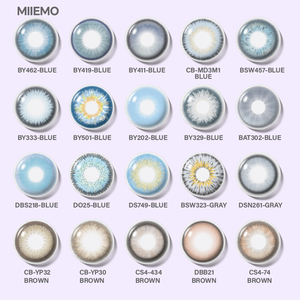
Intent mining data indicates a bifurcation in consumer design preferences. Mainstream buyers demand hyper-natural iris patterns featuring soft limbal rings, olive/hazel undertones, and micro-pupil cutouts that blend seamlessly with natural eye colors. Concurrently, the cosplay, costume, and theatrical sectors are experiencing sustained demand for full sclera (22.0mm), mini sclera (17.0mm), and high-opacity single-tone FX lenses. Successful distributors maintain a balanced catalog covering both natural cosmetic and high-impact FX categories.
Why Partner with BLMG Optical Ltd.?
BLMG Optical Ltd. stands at the forefront of global contact lens manufacturing, blending advanced optical engineering with flexible private-label customization. Operating high-precision production lines within certified cleanroom facilities, BLMG provides turnkey OEM and ODM solutions for global optical brands, e-commerce retailers, and regional healthcare distributors.
- 500+ Production-Ready ODM Patterns: Instantly launch proven, market-tested color designs under your brand name.
- Unrivaled MOQ Flexibility: Start custom private label projects with low minimums from 100 pairs per design.
- Class III Medical Device Standards: Every lens is produced under strict ISO 13485 QMS protocols, fully supported by export certification documentation.
- Complete Packaging Customization: Custom blister foils, outer carton packaging designs, multi-pack kits, and private labeling.

Global Regulatory Compliance & Certification Credentials
Contact lenses are classified as Class III (high-risk) medical devices by regulatory authorities worldwide. Importers of record must ensure that their OEM partner maintains fully audited and verifiable credentials. BLMG Optical supports international market entry with complete technical documentation dossiers:


Comprehensive B2B Sourcing FAQ
Addressing core regulatory, financial, and operational questions for contact lens procurement officers.
What is the minimum order quantity (MOQ) for private label OEM colored contact lenses?
Our specialized Small Batch OEM program allows brand owners to launch private label projects with a low MOQ starting from 100 pairs per pattern design. For full custom artwork development or specialized packaging configurations, standard MOQs vary depending on wear cycles, power ranges, and specific blister packaging materials selected.
What is the key functional difference between OEM and ODM contact lens manufacturing?
ODM (Original Design Manufacturing) enables you to select existing, production-proven designs from our library of 500+ patterns and immediately brand them with your custom packaging. OEM (Original Equipment Manufacturing) involves manufacturing lenses according to your proprietary pattern artwork, custom color specifications, or physical benchmark samples created exclusively for your brand.
Which regulatory certifications are required to import contact lenses into the US and EU?
To legally import contact lenses into the United States, products must be cleared under FDA 510(k) regulations or manufactured within an FDA-registered facility complying with 21 CFR Part 820. For the European Union, lenses require CE Mark certification under the Medical Device Regulation (MDR) alongside an ISO 13485 Quality Management System certification. BLMG Optical provides documentation support for importer compliance in major global markets.
What replacement schedules (wear cycles) can be manufactured under private label?
We manufacture four primary wear schedules: Daily Disposable, Monthly Disposable, Quarterly (3-Month) Disposable, and Yearly Disposable. The choice of wear cycle influences unit pricing, packaging specifications, care solution requirements, and destination market regulatory filings.
How is pigment safety ensured on colored contact lenses?
Pigment safety is maintained through multi-layer color sandwich technology. Pigments are embedded securely inside the hydrogel polymer matrix during cast molding. This ensures that the pigments never come into contact with the eye, preventing color migration and providing a ultra-smooth lens surface for wear comfort.
What is the standard production timeline from sample approval to export dispatch?
Selecting an existing ODM pattern yields the fastest turnaround, typically taking 2 to 4 weeks depending on order volume and packaging customisation. Custom OEM pattern development requiring sample iterations, customized packaging printing, and regulatory labeling reviews usually spans 4 to 8 weeks.