Featured Ultrasonic Lens Cleaning Equipment
Precision-engineered cavitation systems, digital timers, micro-filtration loops, and non-abrasive optical cleaning platforms for global wholesalers and distributors.
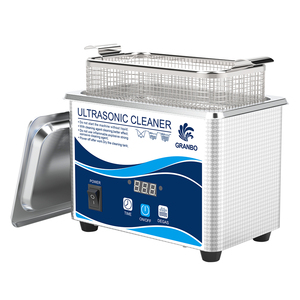
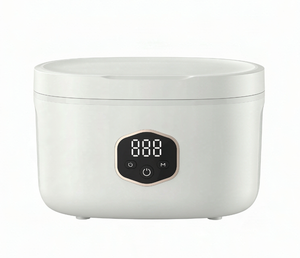
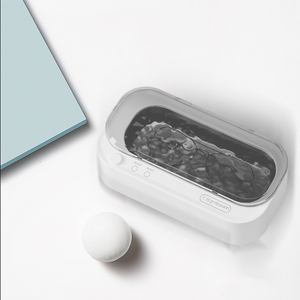
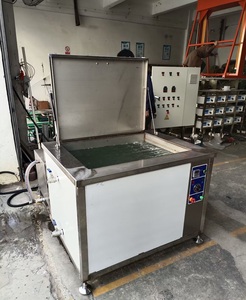
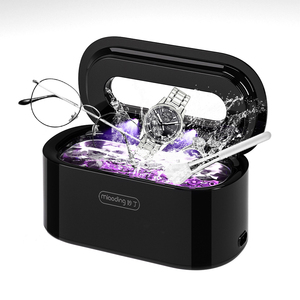
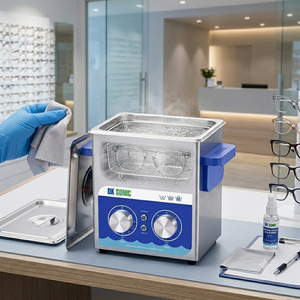
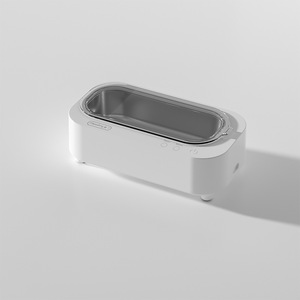
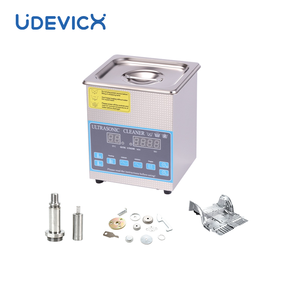
Executive Summary: Ultrasonic Lens Cleaning & Cavitation Engineering
In modern optometry, high-precision camera lens manufacturing, semiconductor mask fabrication, and optical laboratory environments, maintaining surface cleanliness at the sub-micron level is paramount. Traditional manual wiping techniques utilizing micro-fiber cloths or mechanical agitation often fail to dislodge microscopic oils, dust, and particulate contaminants embedded within tight bevel gaps and anti-reflective (AR) coating pores. Worse, manual contact risks inducing micro-abrasions and coating delamination on fragile optical substrates.
Ultrasonic lens cleaners solve this challenge through high-frequency fluid cavitation. By introducing acoustic energy into a liquid medium, high-density pressure waves create microscopic vacuum bubbles that expand and violently collapse (implode). This microscopic shockwave, known as transient acoustic cavitation, dislodges surface contaminants in milliseconds without physical tool contact. However, selecting a top ultrasonic lens cleaner exporter requires a rigorous analysis of transducer stability, acoustic sweep technology, tank metallurgy, and regulatory certifications.
Physics of Optical Cavitation: Balancing Frequency and Surface Integrity
Not all ultrasonic cleaners are suitable for delicate optical lenses. Low frequencies (such as 28 kHz) generate larger cavitation bubbles that release intense energy upon collapse, making them ideal for heavy industrial castings but destructive to multi-layer anti-reflective, hydrophobic, or polarized lens coatings. Conversely, higher frequencies generate fine, gentle micro-bubbles:
- 40 kHz – 48 kHz (Standard Optical & Eyewear Grade): Produces balanced cavitation suitable for prescription glasses, optical frames, and robust glass lenses. It removes skin oils, cosmetics, and atmospheric dust while protecting standard hard coatings.
- 80 kHz – 120 kHz (High-Precision Laboratory & Camera Lens Grade): Generates sub-micron micro-bubbles capable of penetrating tight tolerances in multi-element camera lenses, microscope objectives, and lithography optics without inducing thermal stress or surface pitting.
Top 10 Ultrasonic Lens Cleaner Exporter & Manufacturer Analysis
Evaluating global supply chains based on manufacturing depth, transducer engineering, compliance certifications, and OEM white-label flexibility.
1. China Precision Optical Hubs (Leading OEM/ODM Exporters)
China-based exporters lead global supply chains by offering scalable manufacturing, customizable piezoelectric transducers (350mL to 264L industrial units), and rapid turnaround on custom molds with low minimum order quantities (MOQ).
2. German High-Frequency Specialists
Recognized for ultra-precise 80-120 kHz dual-frequency systems engineered for semiconductor optics and high-end optical labs, though carrying significantly higher capital procurement costs.
3. Japanese Precision Instrumentation Suppliers
Specialize in integrated optical workshop cleaning units equipped with automated chemical dosing and strict environmental compliance standards tailored to retail optical chains.
4. South Korean Compact Consumer Exporters
Focus heavily on desktop aesthetic designs and consumer-grade 48kHz eyeglass cleaners featuring touch-control panels and UV-C sterilization modules.
5. US Industrial Optics Cleaning Suppliers
Focus on heavy-duty stainless steel tanks compliant with MIL-SPEC standards for defense optics, camera repair, and aerospace glass maintenance.
6-10. Specialized OEM Exporters (Niche Applications)
Encompass specialized exporters catering to optical shop chains, dental/lens hybrid cleaners, laboratory micro-filtration systems, and portable battery-powered optical units.
Engineering Benchmark: Critical Features for Optical Cleaning Systems
When procurement directors qualify an ultrasonic lens cleaner manufacturer, price alone is a deceptive metric. Inadequate acoustic wave uniformity or poor tank metallurgy can lead to standing waves that cause uneven cleaning or localized erosion on optical glass. Sourcing teams must audit the following four technical pillars:
1. Transducer Quality & Frequency Sweep Modulation
The heart of any ultrasonic cleaner is its piezoelectric transducer. Premium exporters utilize industrial-grade ceramic crystals that maintain high Q-factor stability over thousands of operating hours. Furthermore, advanced units implement Sweep Frequency Technology—continuously modulating the central frequency (e.g., 48 kHz ± 2 kHz). This eliminates "hot spots" and "dead zones" within the cleaning fluid, ensuring uniform acoustic power density across the entire lens surface.
2. Integrated Micro-Filtration Systems (0.5 μm Precision)
For camera repair facilities and microscope laboratories, redeposition of particulate matter during the bath process is unacceptable. Top-tier exporters equip their 2L-30L professional cleaners with continuous 0.5μm recirculating filtration loops. Fluid is drawn through a sub-micron cartridge filter to remove suspended particles before being reintroduced into the tank, extending fluid life and protecting fine glass elements from scratch hazards.
3. Tank Metallurgy: SUS304 vs. SUS316L Stainless Steel
Standard household units utilize stamped SUS304 stainless steel. However, for industrial optical cleaning where mild aqueous cleaning detergents or acidic optical surfactants are introduced, exporters must offer SUS316L tank construction with electropolished surfaces. SUS316L resists cavitation erosion and chemical corrosion, dramatically expanding machine longevity under 24/7 duty cycles.
4. Degas Functionality for Enhanced Cavitation Efficiency
Fresh cleaning solution contains dissolved atmospheric gases that absorb acoustic energy, damping cavitation performance. Leading professional models incorporate an automated Degas Mode, which pulse-drives the transducers to rapidly expel trapped air bubbles prior to the cleaning cycle, ensuring 100% of acoustic energy is directed toward surface cleaning.
Future Sourcing Trends: What Optical Buyers Must Prepare For
As global quality standards for optical devices elevate, the expectations placed on ultrasonic cleaning hardware are shifting rapidly. Procurement officers should align with exporters who actively innovate across three core industry trends:
Green Chemistry & Solvent Elimination
Global environmental mandates (such as EU REACH and US EPA regulations) are phasing out aggressive solvent degreasers. Modern ultrasonic exporters must design tanks and transducers compatible with biodegradable, neutral-pH aqueous solutions operating at elevated temperatures (50°C - 70°C).
Smart Touch Control & IoT Process Logging
Medical optics and lab environment auditors require traceable process control. Next-generation ultrasonic cleaners feature digital touch interfaces, programmable multi-stage timers, digital temperature control, and RS485/IoT logging interfaces for quality verification.
Dual & Tri-Frequency Multi-Stage Tanks
To clean complex optical assemblies in a single footprint, manufacturers are adopting multi-frequency systems (e.g., switching from 40kHz coarse cleaning to 80kHz fine rinse), reducing equipment footprint and streamlining optical workshop throughput.
Why Partner With Our Export Facilities
Delivering end-to-end OEM/ODM custom engineering, rigorous medical-grade certifications, and flexible export solutions for international optical brands.
Certified Medical Device Management System
Our manufacturing facilities operate strictly under ISO 13485 quality systems, supported by FDA registration, CE compliance, NMPA standards, and GMP-certified cleanroom assembly lines to guarantee batch-to-batch reliability.
Comprehensive OEM / ODM Customization
From 350mL portable household units to 264L heavy industrial tanks, we provide full structural design, custom PCB frequency tuning, private label packaging, and branded aesthetic modifications with low initial MOQs.
Coating-Safe Cavitation Guarantee
Our proprietary 48kHz frequency calibration and non-abrasive basket structures ensure complete removal of grease and dust without risking micro-scratches or peeling on AR, anti-fog, or photochromic lens coatings.
Global Technical Export Support
Exporting to over 100 countries across North America, Europe, Japan, and Southeast Asia. We supply complete customs documentation, factory test reports, and voltage/plug customizations for any target market.
Frequently Asked Questions (FAQ)
Direct answers to technical and commercial questions raised by optical equipment importers and retail buyers.
Why is 48 kHz considered ideal for eyeglass and optical lens cleaning?
Can ultrasonic cleaners damage multi-coated or anti-reflective lenses?
What is the minimum order quantity (MOQ) for custom OEM branding?
How does an integrated 0.5μm micro-filtration system benefit camera repair and optical labs?
What certifications are supplied with your exported ultrasonic cleaners?
What cleaning fluid should be used in ultrasonic optical cleaners?
How long does custom OEM sample development and mass production take?
Need Custom OEM/ODM Ultrasonic Cleaning Solutions?
Connect directly with our engineering team to request factory pricing, custom frequency specifications, and full technical export catalogs.