Featured Vision Correction & Optical Sourcing Catalog
Direct factory supply for optical soft lenses, specialized colored contacts, and precision optic maintenance equipment. Verified Class III medical device engineering.
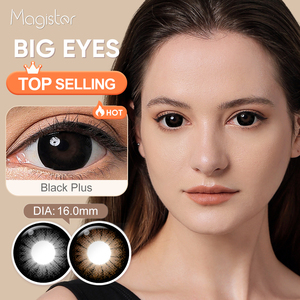
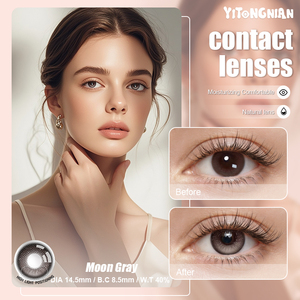
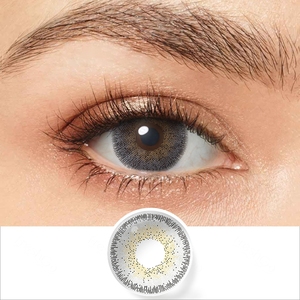
Executive Summary: Navigating Global Vision Correction Sourcing
The global market for vision correction contact lenses is experiencing a profound paradigm shift driven by evolving consumer demographics, digital eye-strain mitigation needs, and the fusion of ophthalmic therapeutics with cosmetic enhancement. According to recent market analysis, the contact lens sector is projected to expand at a CAGR of 6.8% over the next decade, with contact lenses categorized strictly under Class III Medical Device regulations across major international jurisdictions including the US FDA, European Union MDR, and China NMPA.
E-E-A-T Sourcing Metric: When evaluating a OEM/ODM contact lens manufacturer, procurement officers must verify three vital parameters: In-mold polymer polymerization control, Sandwich layer micro-pigment encapsulation safety, and Full traceability under ISO 13485 Quality Management Systems.
For optical distributors, e-commerce direct-to-consumer (DTC) brands, and medical wholesalers, selecting the right manufacturing partner requires balancing low minimum order quantities (MOQs), rapid prototyping capacity, and stringent international regulatory clearance. This industry whitepaper breaks down the top 10 vision correction contact lens manufacturers and suppliers worldwide based on manufacturing yield, material innovation (silicone hydrogel vs. traditional hydrogel), custom private label agility, and international compliance records.
Top 10 Vision Correction Contact Lens Manufacturers & Suppliers
Comprehensive comparative analysis of key global suppliers, evaluating production infrastructure, R&D pipelines, regulatory accreditations, and private label flexibility.
BLMG Optical Ltd.
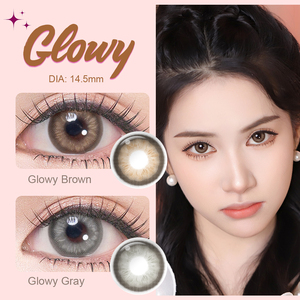
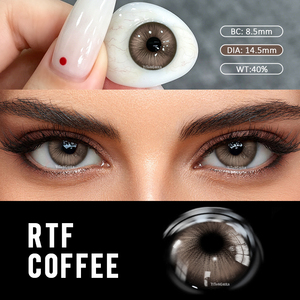
BLMG Optical is a premier medical-grade optical lens manufacturer specializing in vision correction Rx soft contact lenses, natural colored contacts, mini/full sclera lenses, and specialized FX products. Operating certified ISO 13485 cleanroom facilities, BLMG provides end-to-end white label and private label solutions spanning 500+ production-validated patterns, custom diameter/base-curve engineering, and localized packaging compliance.
- Core Competencies: Cast molding technology, sandwich pigment printing, fixed-axis toric alignment.
- MOQ Flexibility: Industry-leading Small Batch OEM starting from 100 pairs per style.
- Regulatory Scope: Supported by FDA registration, CE marking, ISO 13485, NMPA, and GMP.
Johnson & Johnson Vision (Acuvue)
As one of the pioneers in daily disposable vision correction lenses, Johnson & Johnson Vision sets global standards in silicone hydrogel lens production (ACUVUE Oasis series). They focus heavily on high-volume clinical distribution, photochromic lens technology, and astigmatism stabilization.
- Core Competencies: HydrClear technology, pupil-optimized design, high oxygen transmissibility (Dk/t).
- Target Sector: High-volume hospital networks, corporate optical retail chains.
- Private Label Support: Extremely limited; restricted to proprietary brand channels.
Alcon Vision Care
Alcon excels in water-gradient material development, exemplified by their Dailies Total1 and Precision1 product lines. They dominate the prescription spherical, multifocal, and cosmetic vision correction markets across North America and Europe.
- Core Competencies: Water gradient polymer formulation, SmarTears chemistry.
- Strengths: Outstanding lens hydration and ocular surface lubricity.
- Sourcing Focus: Global retail contracts and healthcare distributor tenders.
CooperVision
CooperVision is renowned for offering one of the broadest spectrums of vision correction parameters globally, covering complex toric, multifocal, and myopia-management (MiSight) contact lens geometries.
- Core Competencies: Aquaform Technology, custom lathe-cut specialty lenses.
- Strengths: Myopia control optical structures for pediatric and adolescent eye care.
- Market Model: Direct clinical supply and licensed brand distribution.
5. Bausch + Lomb
USA · Ophthalmic Legacy BrandA historic manufacturer in eye health, Bausch + Lomb manufactures Biotrue ONEday and ULTRA lens ranges, focusing on bio-inspired hydrogel materials that match the cornea's natural water content.
6. Menicon Co., Ltd.
Japan · RGP & Soft Lens LeaderJapan's premier contact lens producer, renowned for rigid gas permeable (RGP) lenses, Miru flat-pack daily disposables, and advanced hyper-purified silicone materials.
7. SEED Co., Ltd.
Japan · Fine Optics SpecialistSpecializing in high-precision prescription lenses and decorative UV-blocking contact lenses tailored for Asian corneal curvatures and delicate optical fittings.
8. St. Shine Optical
Taiwan · High-Capacity Contract ManufacturerA major East Asian contract manufacturer delivering automated cast-molding output for private label clients requiring large volumes of standard spherical soft lenses.
9. Pegavision Corporation
Taiwan · Automated Mass ProductionFocuses on fully automated robotic production lines for daily disposable color contacts and functional vision correction lenses with complex aesthetic patterns.
10. Interojo Co., Ltd.
South Korea · Cosmetic & Rx ExportSpecializes in high-definition prescription color contact lenses, utilizing Ultra-SOO technology for enhanced moisture retention and optical clarity across global export markets.
Key Supplier Feature Matrix for B2B Procurement Officers
Direct comparative snapshot of manufacturing metrics to help supply chain directors evaluate lead times, customization depth, and operational compliance.
| Manufacturer | Primary Material | Custom OEM/ODM MOQ | Pattern Printing Tech | Key Certifications |
|---|---|---|---|---|
| BLMG Optical | Silicone Hydrogel / HEMA Hydrogel | 100 Pairs (Small Batch) | Sandwich Micro-Encapsulation | FDA, CE, ISO 13485, NMPA, GMP |
| Johnson & Johnson | Senofilcon A / Etafilcon A | Tier-1 Retail (N/A for OEM) | Monochrome Matrix | FDA, CE, PMDA, ISO 13485 |
| Alcon | Delefilcon A / Verofilcon A | Institutional Contracts Only | 3-in-1 Color Technology | FDA, CE, ISO 13485 |
| CooperVision | Comfilcon A / Stenfilcon A | Enterprise Distributor Level | Lathe-cut / Precision Tint | FDA, CE, ISO 13485 |
| Pegavision | Polymacon / Hydrogel | 10,000+ Pairs per SKU | Cast Mold Inline Printing | CE, ISO 13485, TFDA |
Global Vision Correction Contact Lens Procurement Trends (2026–2030)
Market dynamics are restructuring how optical retailers, medical distributors, and e-commerce brands structure their procurement supply chains.
1. Shift Toward Agile, Low-MOQ Procurement
Traditional procurement mandated order minimums of 10,000 to 50,000 pairs per base-curve/power SKU. Modern DTC brands require agile inventory models starting from 100 to 500 pairs per design. Suppliers like BLMG Optical are leading this trend through automated flexible molding, enabling rapid real-world market testing with zero dead-stock liability.
2. Convergence of Cosmetic Aesthetics & Prescription Power
Buyers are moving away from purely cosmetic (0.00 diopter) contact lenses. Over 68% of global purchase orders now request full prescription coverage spanning -0.50D to -10.00D, including astigmatic toric alignment. Factories must integrate optical centering precision into multi-tone color printing processes.
3. Environmental & Eco-Blister Packaging Compliance
Regulatory bodies in the EU and North America are enforcing stricter packaging waste compliance. Procurement managers are prioritizing manufacturers utilizing recyclable polypropylene (PP) blister packs, reduced saline solution volume, and bio-degradable secondary paper boxes certified by FSC.
Technological Innovations & R&D Development Trends
The next generation of vision correction contact lenses combines bio-compatible materials with digital precision engineering.
A. Next-Gen High Oxygen Permeability Silicone Hydrogels
Traditional HEMA soft lenses offer comfort but suffer from limited oxygen transmissibility (Dk/t around 15–25). R&D breakthroughs are focused on fluoro-silicone macromer formulations that boost Dk/t values beyond 100 while maintaining a low modulus (elasticity under 0.5 MPa). This prevents corneal hypoxia and allows safe extended daily wear.
Technical Milestone: BLMG Optical's latest silicone hydrogel matrix pairs high Dk/t oxygen delivery with an internal moisture-locking hydrophilic agent, preventing lens dehydration during prolonged screen exposure.
B. Embedded Sandwich Printing & Ocular Safety
To guarantee total ocular safety, modern color contact lenses utilize multi-layer micro-encapsulation. Organic color pigments are encapsulated inside a non-toxic polymer sandwich layer. This eliminates direct contact between the dye pigments and the corneal epithelium or palpebral conjunctiva, preventing pigment leaching or ocular friction.
- Zero direct corneal pigment friction.
- Smooth lens surface topography under atomic force microscopy (AFM).
- UV-blocking monomers integrated directly into the polymer backbone (UV-A & UV-B protection).
C. Fixed-Axis Toric Stabilization Tech for Astigmatism
Historically, colored contact lenses suffered from rotational instability on astigmatic eyes, leading to blurred vision. Emerging fixed-axis designs utilize dynamic peri-ballast or prism-ballast thickness distribution. This ensures the lens re-aligns automatically with each blink, keeping prescription correction axes stable while preserving aesthetic alignment.
D. Automated High-Resolution Inspection (AOI)
Manual optical inspection is being superseded by machine-vision 4K Automated Optical Inspection (AOI). Every molded lens passes through high-speed camera arrays that check for microscopic edge tears, surface bubbles, concentricity deviations, and power accuracy within milliseconds prior to saline blister sealing.
Enterprise Advantage: Partnering with BLMG Optical Ltd.
Vertical R&D integration, extensive pattern archives, and medical-grade manufacturing built for global brand expansion.
Full-Chain Medical Manufacturing Excellence
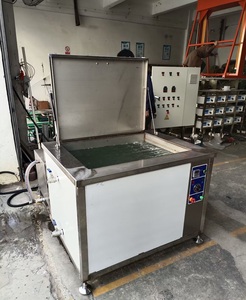
BLMG Optical Ltd. operates as a leading integrated manufacturer of Class III medical vision correction soft contact lenses. By housing raw material synthesis, precision mold tooling, pattern design, automated cast-molding, and private label packaging under one roof, we eliminate intermediary markups and safeguard your brand's supply chain consistency.
Factory Cleanroom & Quality System Infrastructure

Verified Medical Device Quality Certifications for Global Market Customs Clearance:


Frequently Asked Questions (FAQ) for B2B Buyers & Importers
Essential guidance on regulatory clearance, custom manufacturing parameters, lead times, and private label logistics.
1. What is the minimum order quantity (MOQ) for private label vision correction contact lenses?
2. What is the structural difference between OEM and ODM manufacturing services?
OEM (Original Equipment Manufacturing): We manufacture lenses according to your custom optical specifications, proprietary color artwork, custom diameter/base-curve parameters, or physical benchmarks provided by your product team.