1. Industry Executive Summary: China's Role in Global Contact Lens Manufacturing
The global contact lens market is undergoing a structural transformation driven by the convergence of visual correction needs, cosmetic beauty trends, and advanced polymer material engineering. As brand owners, e-commerce retailers, and optical distributors seek reliable procurement channels, identifying the top China bulk contact lenses supplier & suppliers has become a strategic priority for global market expansion.
BLMG Optical Ltd. stands at the apex of this optical manufacturing ecosystem. Operating state-of-the-art cleanroom facilities compliant with ISO 13485 standards, BLMG bridges the gap between high-volume manufacturing capacity and flexible private label customization. China's optical manufacturing infrastructure has evolved beyond simple mass assembly; today, it represents a hub of micro-injection precision molding, three-layer pigment encapsulation technology, and automated vision inspection systems. For international buyers, sourcing bulk contact lenses directly from specialized Chinese manufacturers provides unmatched cost efficiencies without compromising corneal health, oxygen transmissibility, or regulatory compliance.
Strategic Procurement Insight: Sourcing Class III medical devices demands strict audit trails. BLMG Optical guarantees full batch traceability, raw material hydrogel certification, and factory-direct compliance support for FDA 510(k), CE 0197, and NMPA medical device filings.
2. Enterprise Core Competencies & Technical Infrastructure
When evaluating bulk suppliers in China, corporate capability extends far beyond basic manufacturing output. Enterprise reliability is rooted in rigorous engineering, certified cleanroom protocols, and an extensive intellectual property catalog. BLMG Optical operates as a full-service OEM, ODM, and private-label contract manufacturer tailored for fast-growing optical brands.
500+ Production-Ready Patterns
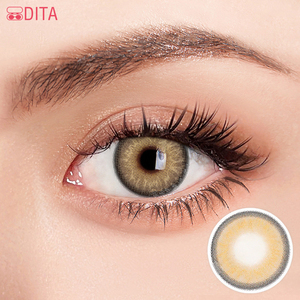
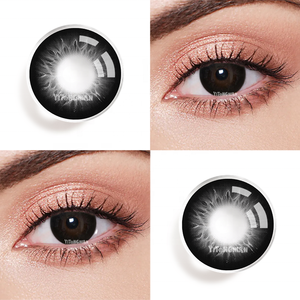
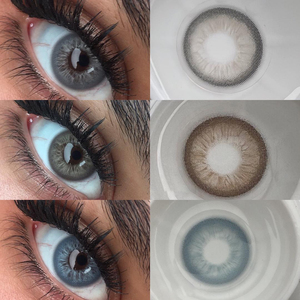
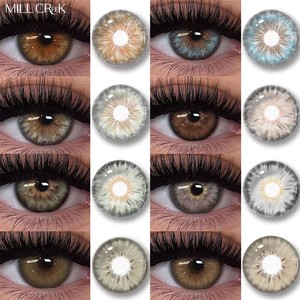
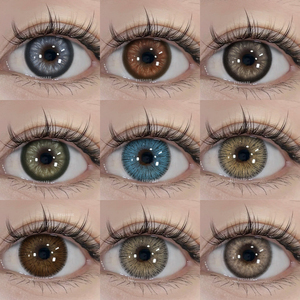
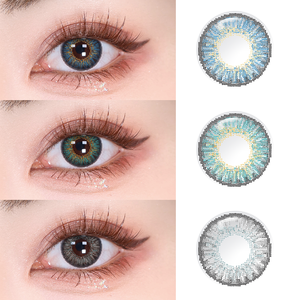
Instant access to an extensive library of natural iris gradients, Korean cosmetic styles, vivid cosplay tones, and mini/full sclera designs validated for color fastness and optical clarity.
Flexible OEM/ODM & Low MOQ
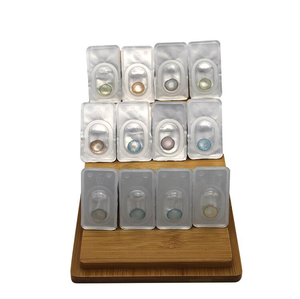
Our Small-Batch OEM program allows new brands to start with as low as 100 pairs per design. Test consumer demand with minimal inventory holding risk before scaling volume runs.
Quadruple Regulatory Assurance
Fully compliant with ISO 13485 Quality Management Systems, supported by US FDA registration, CE Mark approval, NMPA Class III medical device credentials, and GMP cleanliness standards.
3. Material Engineering: HEMA vs. Silicone Hydrogel & Safety Technology
The safety and comfort of soft contact lenses depend on advanced polymer chemistry. Modern contact lens manufacturing relies primarily on two hydrogel families: Hydroxyethyl Methacrylate (HEMA) and Silicone Hydrogel (SiHy). Understanding the technical differences between these materials is essential for bulk buyers customizing product lines for diverse target markets.
Hydroxyethyl Methacrylate (HEMA): HEMA-based hydrogels remain the gold standard for cosmetic color contact lenses due to their superior pigment adhesion properties, initial insertion softness, and cost-effectiveness. Formulations with 38% to 42% water content strike an optimal balance, preventing lens dehydration in air-conditioned environments while maintaining stable physical dimensions.
Silicone Hydrogel Innovation: For premium daily disposable lines, silicone hydrogel materials incorporate siloxane monomers into the polymer matrix. This structure creates high oxygen permeability ($Dk/t$ values exceeding 80–120 units), allowing oxygen to pass directly through the material to the cornea. This significantly reduces the risk of corneal hypoxia during extended wear.
Three-Layer Pigment Encapsulation ("Sandwich" Tech): Color pigments in cosmetic lenses must never come into direct contact with ocular tissue. BLMG Optical utilizes double-sided micro-printing encapsulation. The color layer is micro-embedded securely between two clear hydrogel polymer layers. This smooth surface design eliminates pigment leaching, protects corneal surface integrity, and maintains consistent ocular hydration.
| Technical Parameter | HEMA Hydrogel Series | Silicone Hydrogel (SiHy) Series | Specialty FX & Sclera Series |
|---|---|---|---|
| Water Content | 38% – 42% (High Hydration Balance) | 45% – 55% (High Water Retention) | 38% (Low Dehydration Rate) |
| Oxygen Transmissibility ($Dk/t$) | 18 – 25 $10^{-9}$ units | 80 – 130 $10^{-9}$ units | 15 – 22 $10^{-9}$ units |
| Base Curve (BC) Range | 8.5mm – 8.6mm (Standard fit) | 8.4mm – 8.7mm (Precision fit) | 8.6mm – 9.0mm (Custom extended) |
| Diameter (DIA) Range | 14.0mm – 14.5mm | 14.0mm – 14.2mm | 14.5mm – 22.0mm (Mini/Full Sclera) |
| Power Spectrum (Rx) | Plano (0.00) to -8.00D (0.25D steps) | Plano (0.00) to -10.00D | Plano (0.00) focus |
| Target Applications | Cosmetic fashion, daily/monthly retail | Premium optical chains, high-comfort Rx | Film, cosplay, theatrical, Halloween |
4. End-to-End OEM/ODM Manufacturing Protocol
Partnering with BLMG Optical ensures a transparent, step-by-step manufacturing process designed for global brand success. From initial concept artwork to final sealed blister inspection, every phase is rigorously managed under medical device manufacturing guidelines.
Stage 1: Formulation & Pattern Design Brief
Brand owners select from over 500 validated ODM patterns or submit custom vector artwork. Our optics lab conducts spectrum analysis and pupil aperture calculations to optimize visual clarity and natural iris coverage.
Stage 2: Precision Mold Tooling & Micro-Injection
Using computer-controlled single-point diamond turning (SPDT), master optical molds are cut to sub-micron accuracy. Polypropylene molds are injected in Class 100,000 cleanrooms to guarantee pristine lens geometry.
Stage 3: Automated Micro-Pad Printing & Encapsulation
Biocompatible, non-toxic cosmetic inks are applied via automated multi-station pad printing. The protective hydrogel topcoat is instantly cured under UV light, permanently encapsulating the pattern.
Stage 4: Hydration, Extraction & Sterilization
De-molded dry lenses undergo multi-stage hydration in purified saline baths to strip residual monomers. Sealed blister packs or glass vials are then autoclaved using high-pressure steam at 121°C (250°F) for total terminal sterilization.
Stage 5: Full Inspection & Private Label Packaging
Every single lens passes through automated high-resolution vision systems to verify edge profiles, center thickness, and color registration. Finished products are packaged in custom boxes with custom branding, batch codes, and multi-language instructions for use (IFU).
5. Future Trends in Global Contact Lens Procurement (2025–2030)
Understanding shifting consumer habits allows B2B buyers to future-proof their supply chains. Key developments defining the next decade of bulk contact lens sourcing include:
- Rise of Daily Disposable Color Contacts: Driven by hygiene awareness and convenience, daily disposables are capturing market share from annual lenses. Bulk buyers are shifting ordering volume toward 10-pack and 30-pack daily blister boxes.
- Natural "My Eyes But Better" Iris Enhancers: Subtle 1-tone and 2-tone limbal ring designs with micro-dots are outperforming heavy full-coverage patterns in Western and East Asian beauty markets.
- Eco-Friendly Blister Materials & Compact Packaging: Green procurement initiatives are driving demand for recyclable PP blister trays, reduced foil packaging, and biodegradable cleaning accessory kits.
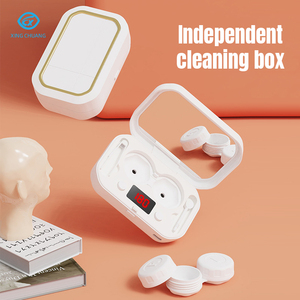
- Ultrasonic & Smart Contact Lens Accessories: Retailers are bundling color contacts with automated ultrasonic lens cleaners, offering end-users enhanced hygiene maintenance and creating high-margin upselling opportunities.
6. Frequently Asked Questions (FAQ) for B2B Importers & Procurement Teams
Clear, direct answers to common questions about supplier qualification, logistics, branding, and regulatory compliance.
Our Small-Batch OEM program features an industry-leading MOQ starting from just 100 pairs per design for ODM patterns with private labeling. For completely custom pattern development or specialized packaging box configurations, standard production runs typically range from 500 to 1,000 pairs depending on the lens replacement schedule.
ODM (Original Design Manufacturing) allows you to select from our library of 500+ pre-approved, production-tested iris patterns and launch under your brand name using custom packaging. OEM (Original Equipment Manufacturing) involves creating custom lenses from your proprietary artwork, color parameters, or physical benchmarks, combined with fully tailored box designs.
BLMG Optical provides comprehensive compliance dossiers for global imports, including ISO 13485 Quality System Certificates, Certificates of Free Sale (CFS), Full Sterilization Validation Reports, Material Safety Data Sheets (MSDS), Certificate of Analysis (COA) per lot, and FDA/CE registration documentation matched to your target destination.
Our contact lenses feature a guaranteed shelf life of 5 years from the date of terminal sterilization when stored in original, sealed medical-grade blister packaging or glass vials. The buffered saline solution maintains consistent pH levels and hydration without degrading lens parameters or pigment integrity.
Existing ODM sample requests are dispatched within 48 to 72 hours. Custom color or pattern physical samples take approximately 7 to 14 business days for optical trial mold setup. Mass production turnaround times range from 20 to 35 calendar days following packaging artwork sign-off and deposit receipt.