Featured Natural Look Contact Lens Collections
Direct Factory Sourcing Solutions for Global Brands, Importers & Distributors
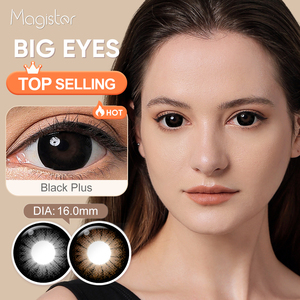
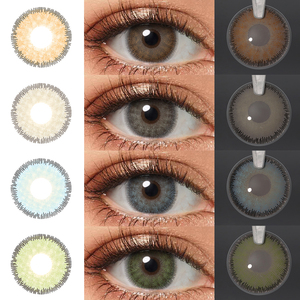
Executive Summary: The Paradigm Shift in Global Color Contact Lens Sourcing
The global cosmetic and corrective contact lens market is undergoing an unprecedented structural evolution. Consumers no longer accept stark, artificial eye-color alterations; the modern market standard demands hyper-realistic depth, subtle limbal transitions, and exceptional ocular comfort. As a leading China Natural Look Contacts Manufacturer & Exporter, BLMG Optical Ltd. operates at the intersection of bio-compatible polymer chemistry, advanced optical physics, and micro-encapsulation color technology.
This B2B white paper serves as an authoritative guide for optical brand owners, healthcare distributors, e-commerce retail groups, and private-label cosmetics brands seeking to optimize their supply chain strategy. By examining material advances, regulatory compliance frameworks, manufacturing methodologies, and consumer behavior shifts, this document outlines how enterprise buyers can establish high-margin, compliant, and differentiated contact lens product lines manufactured in China's state-of-the-art medical production hubs.
Key Strategic Takeaway for B2B Importers: Natural-look contact lenses demand higher precision than theatrical or costume lenses. Achieving zero-pixelation iris pigmentation alongside high oxygen transmissibility (Dk/t) requires multi-tier sandwich printing and automated cast-molding techniques certified under ISO 13485 standards.
1. Technical Blueprint: Engineering Hyper-Realistic "Natural Look" Iris Designs
The engineering challenge of creating a truly natural-looking cosmetic contact lens lies in replicating the intricate biological optics of the human iris. Human irises consist of complex radial fibers, crypts, contraction furrows, and subtle pigment gradations. Traditional screen printing or single-dot matrix printing results in a flat, artificial aesthetic often referred to in consumer markets as the "zombie effect."
1.1 Micro-Encapsulation "Sandwich" Color Technology
Safety is the primary non-negotiable metric in Class III medical device manufacturing. Pigment leaching can cause severe corneal irritation, epithelial defects, and long-term ocular trauma. To eliminate colorant exposure, BLMG Optical utilizes a proprietary double-layer embedding process—commonly known as Sandwich Technology.
- Inner Base Hydrogel Layer: A ultra-smooth, biocompatible hydrophilic polymer layer that sits directly against the cornea, ensuring optimal tear film distribution.
- Micro-Encapsulated Color Pigment Layer: Non-toxic, FDA-approved bio-pigments are encapsulated in a micro-thin matrix and precisely positioned in the lens structure.
- Outer Shield Layer: A clear protective polymer coating seals the pigments completely, preventing direct pigment contact with either the cornea or the palpebral conjunctiva.
This triple-structure design guarantees zero color-fading, complete pigment isolation, and uncompromised surface smoothness, yielding a friction-free blink cycle.
Bio-Inspired Radial Micro-Dot Matrix
Utilizing high-resolution sub-pixel printing technology to blend up to three tone gradients (outer limbal ring, secondary iris body, and warm honey inner accent) seamlessly over native dark brown or light eye backgrounds.
Optimized Limbal Ring Architecture
Engineered ring densities that soften the transition between the colored pattern and the white sclera, avoiding harsh cutoffs and providing an authentic visual enlargement effect.
3D Optical Center Depth
Clear central optical zone calibrated between 3.8mm and 4.2mm to allow full pupil dilation under low light without exposing the underlying native iris color or obstructing the vision field.
2. Material Science Comparison: Hydrogel vs. Silicone Hydrogel (SiHy)
Selecting the appropriate polymer chemistry is a critical strategic decision for B2B buyers when formulating brand collections. The choice between HEMA-based soft hydrogel and Silicone Hydrogel impacts product positioning, cost structure, target wear duration, and regulatory approval pathways.
| Performance Parameter | Standard HEMA Hydrogel | Advanced Silicone Hydrogel (SiHy) | Target Market Application |
|---|---|---|---|
| Oxygen Transmissibility (Dk/t) | 15 – 25 Dk/t | 80 – 120 Dk/t | SiHy preferred for extended monthly & daily wear |
| Water Content Range | 38% – 58% | 33% – 45% | 38% water content ideal for low-tear environments |
| Modulus (Lens Flexibility) | 0.3 – 0.5 MPa (Ultra-soft) | 0.6 – 1.0 MPa (Form-retaining) | HEMA offers instant initial handling comfort |
| Dehydration Rate | Moderate to High over 8 hrs | Very Low (Sustained comfort) | SiHy engineered for high-altitude/air-con wear |
| Production Cost Index | Baseline (Cost-efficient) | 1.8x – 2.5x of HEMA | HEMA ideal for mass beauty retail & starter series |
For budget-conscious or high-volume fast-fashion beauty retail, HEMA hydrogel with 38% water content remains the global market workhorse. Low water content (38%) reduces moisture evaporation from the lens, meaning the contact lens extracts less natural tear film from the user's eye throughout the day, providing stable, long-lasting comfort in arid climates or office environments.
3. Global Sourcing Trends & Future Outlook (2025–2030)
As consumer education surrounding eye health deepens globally, purchasing behavior in North America, Western Europe, Southeast Asia, and the Middle East is shifting rapidly. OEM/ODM brand leaders must align their product development cycles with four major macro-trends:
3.1 Accelerated Shift Toward Daily Disposables
While yearly and quarterly reusable lenses dominated legacy wholesale channels, daily disposable (1-Day) color contacts represent the fastest-growing category globally. Driven by hygiene concerns, convenience, and zero maintenance requirement (no contact lens solution or storage cases needed), daily disposables reduce compliance risks and encourage multi-shade purchasing behaviors among consumers who switch eye colors per outfit or occasion.
3.2 Hyper-Customized Niche & Micro-Brand OEM Expansion
The legacy market model required minimum order quantities (MOQs) of 10,000+ pairs per SKU, creating high barriers to entry for startup brands, beauty influencers, and boutique optical lines. Leveraging modular automated manufacturing lines, BLMG Optical offers a groundbreaking Small Batch OEM program with MOQs starting at just 100 pairs per design. This allows brands to test hyper-specific color trends (e.g., olive green, hazel caramel, mist gray) with minimal inventory risk.
3.3 Smart Wearable & UV/Blue-Light Hybrid Lenses
Next-generation colored contacts are evolving from purely aesthetic cosmetics to multi-functional health products. Integration of Class 1 or Class 2 UV blocking filters (blocking >95% UVA and >99% UVB radiation) alongside high-energy visible (HEV) blue-light filtering is quickly transitioning from a premium feature to a standard consumer expectation.
4. Institutional E-E-A-T: Quality Assurance, Cleanroom Rigor & Global Compliance
Contact lenses are classified as Class III Medical Devices in most major regulatory jurisdictions (including the US FDA, EU MDR, China NMPA, and Korean MFDS). Sourcing from unverified or non-compliant manufacturers creates severe legal risks, custom seizures, and brand reputation damage.
ISO 13485:2016 Certified Facilities
Our complete manufacturing matrix operates strictly under ISO 13485 Quality Management Systems tailored specifically for medical devices. Every batch undergoes full traceability tracking from raw monomer intake to final blister sealing.
Class 100,000 Cleanroom Production
Molding, casting, hydration, color printing, and primary packaging are conducted inside Class 100,000 (ISO Class 8) dust-free cleanrooms. Automated optical inspectors (AOI) screen 100% of lenses for edge defects, tears, or color misalignments.
Full Export Documentation Suite
We provide complete regulatory backing for global importers: CE Mark certification, FDA registration access, Free Sale Certificates (FSC), Certificate of Origin (CO), ISO 13485 audits, and complete technical master files for local health authority registration.
5. Complete Step-by-Step B2B Procurement & OEM Packaging Workflow
Partnering with BLMG Optical guarantees a streamlined, transparent, and structured product launch cycle. Whether you select from our catalog of 500+ production-ready ODM patterns or commission custom artwork OEM lenses, our engineering team manages the workflow end-to-end:
- Phase 1: Market Brief & Product Specification: Define replacement schedule (Daily, Monthly, Yearly), base curve (8.5mm - 8.6mm), diameter (14.0mm - 14.5mm), water content, and prescription power range (-0.00 to -10.00D).
- Phase 2: Pattern Matching & Physical Sampling: Choose from existing high-converting ODM natural-look patterns (e.g., Luna, Iris, Diamond, Alaska series) or submit digital vector files for custom OEM mold creation. Physical color proofing samples are dispatched for on-eye model evaluation.
- Phase 3: Brand Packaging Design & Artwork Proofing: Custom private-label packaging engineering, including primary sterile blister packs, glass vials, custom outer paper boxes, security seals, user instruction leaflets (IFU), and barcode printing compliant with destination market labeling laws.
- Phase 4: Automated Mass Production & Sterilization: Cast-molding polymerization, 3D color printing, hydration, double-stage inspection, automated blister sealing, and high-pressure steam autoclave terminal sterilization (121°C for 30 mins) to ensure a Sterility Assurance Level (SAL) of 10⁻⁶.
- Phase 5: Quality Assurance Clearance & Global Logistics: Final release testing for physical dimensions, power accuracy, pH, osmolality, and bio-burden. Consolidated sea, air, or express courier shipping with customs documentation included.
Frequently Asked Questions by Global Buyers
Key Procurement, Technical, and Legal Inquiries Answered by Our OEM Team
What is the minimum order quantity (MOQ) for private-label natural colored contact lenses?
How do OEM and ODM services differ for colored contact lenses?
OEM (Original Equipment Manufacturer): We manufacture lenses according to your exclusive proprietary pattern designs, color palettes, diameter specifications, or physical sample references provided by your creative team.
Which certificates do you provide to clear customs in the US, EU, and Latin America?
Are your colored contact lenses safe? How do you prevent color bleeding?
What wear replacement cycles can you manufacture?
Can I order custom optical prescription powers (diopters) for colored lenses?
Why Partner with BLMG Optical Ltd.?
China's Leading Manufacturing & Export Infrastructure for Contact Lenses
High Automated Production Capacity
Equipped with high-speed automated lathe-cutting, mold-casting, and high-speed filling lines capable of producing millions of lenses monthly with tight batch-to-batch color consistency.
Full Packaging & Labeling Customization
From luxurious rigid box presentation sets to retail-ready blister 2-packs, 5-packs, and 10-packs. Complete multilingual label design services matching EU MDR or US FDA compliance regulations.
Dedicated Project Management Team
Our bilingual optical engineers, regulatory specialists, and brand managers provide fast consultation, rapid prototype sampling, and real-time order status updates.
Start Your Private Label Contact Lens Line Today
Connect directly with China's premier contact lens manufacturing team. Request our latest 2025/2026 pattern master catalog, request physical samples, or receive a tailored quotation within 24 hours.
Get a Quote