Export Portfolio
Featured Wholesale & Private Label Lenses
Medical-grade optical prescription lenses, cosmetic color contact lenses, and high-index blue-light blocking ophthalmic solutions manufactured under ISO 13485 standards.
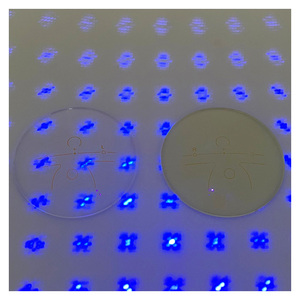
1.56 Invisible Anti Blue Ray Hard Contact Lens HC HMC Round Top Bifocal
Inquire Now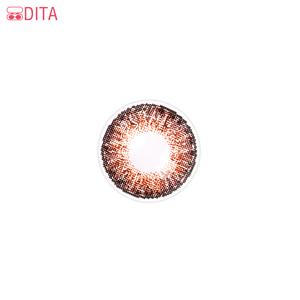
In Stock Optical Contact Lens Pupil Lenses Custom Packing Semi Annual
Inquire Now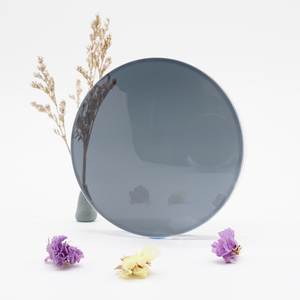
MAAT Lab Photochromic Photo Grey Lenses 75mm Optical Resin 1.60 Index
Inquire Now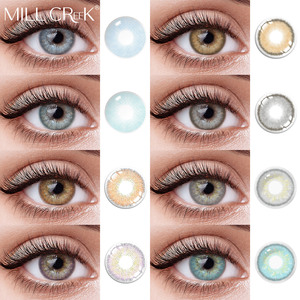
MILLCREEK Colored Contact Lenses Color Soft Daily Ultrathin 14.0mm 40% Water
Inquire Now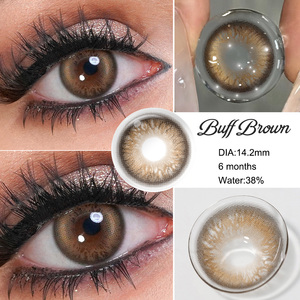
Free Sample MAGISTER Prescription Colored Contacts Myopia Lenses with Power
Inquire Now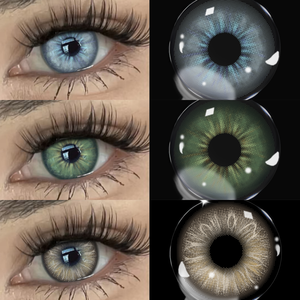
Wholesale Natural Myopia Contact Lenses High Cost Effective Everyday Wear
Inquire Now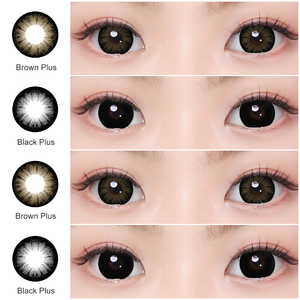
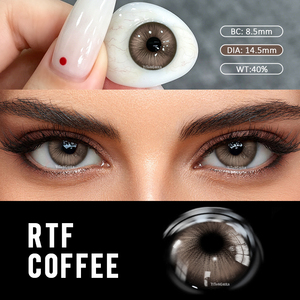
YITONGNIAN Natural Brown Colored Contact Lenses Wholesale Korean Style Soft
Inquire Now500+
Proprietary Color & Pattern Matrices
100k
Class Cleanroom Automated Lines
100
Pairs Low MOQ for Startup Brands
ISO/CE
13485 Quality & Medical Certifications
Factory Authority
Precision Optical Engineering & Medical Device Manufacturing
As a premier China optical contact lenses factory and global exporter, BLMG Optical Ltd. operates at the intersection of bio-material science, ophthalmology, and automated manufacturing. We specialize in producing Class III medical device soft contact lenses, corrective refractive lenses, and cosmetic pattern contacts designed for global market approval.
Our state-of-the-art facilities leverage micro-injection cast molding and high-precision lathe-cutting technologies. From daily disposable hydrogels to annual wearable prescription contacts, our processes guarantee edge-thickness consistency, optimal corneal oxygenation, and zero-color-leakage safety.

Whitepaper Insights
Advanced Polymer Materials & Manufacturing Paradigms
Understanding the technical parameters that differentiate commercial-grade cosmetic contact lenses from medical-grade therapeutic ophthalmic devices.
Sandwich Color-Lock Tech
Cosmetic pigments are encapsulated within bio-compatible hydrogel layers (Poly-HEMA). Pigments never contact the corneal endothelium, eliminating inflammation risk and meeting strict US FDA & EU CE safety guidelines.
High Oxygen Transmissibility (Dk/t)
Utilizing third-generation Silicone Hydrogel formulations, our optical contact lenses achieve Dk/t values exceeding 100, allowing continuous wear without hypoxic corneal swelling or vascularization.
Cast Molding Automation
Fully robotic wet-cast molding ensures exact Base Curve (BC) curvature uniformity (tolerance < ±0.02mm) and pristine edge profiles, vastly improving wear comfort over traditional lathe-cutting.
Technical Matrix: Soft vs. Ophthalmic Resin Lenses
| Lens Parameter | Cosmetic Hydrogel Contact Lenses | Silicone Hydrogel Prescription Lenses | High Index Optical Resin (1.56/1.60) |
|---|---|---|---|
| Primary Material | HEMA / NVP Polymer | Fluoro-Silicone Hydrogel | Optical Resin Monomer |
| Water Content | 38% - 45% High Water Retention | 45% - 55% Bio-mimetic Hydrogel | N/A (Solid Substrate) |
| Oxygen Transmissibility (Dk/t) | 20 - 30 Dk/t | 100 - 138 Dk/t | High Transmittance (98.5%) |
| Replacement Schedule | Daily, Monthly, Yearly | Daily, Monthly | Permanent Lens Blank |
| Regulatory Class | Class III Medical Device | Class III Medical Device | Class I / II Ophthalmic Device |
Market Intelligence
Product Development & B2B Procurement Trends
Where the global contact lens and optical market is heading over the next decade—and how importers can stay competitive.
1. Surge in Daily Disposable Preference
Global consumer shifts strongly favor daily disposable colored and prescription contact lenses. Hygienic convenience, combined with reduced risk of ocular infection, is driving brand growth. Chinese factories are responding by scaling automated blister packaging lines to reduce unit packaging costs.
2. Myopia Control & Defocus Optics
With pediatric and young-adult myopia rates rising worldwide, optical buyers are moving beyond single-vision lenses. Peripheral defocus contact lenses and dual-focus soft contact lenses represent the fastest-growing OEM category for medical optical distributors.
3. Photochromic & Blue-Light Filtering Hybrids
Hybrid optical contact lenses incorporating dynamic light-filtering technology—such as fast-reacting photochromic dyes and 420nm blue-light filtration—are bridging the gap between cosmetic enhancement and digital device ocular protection.
Procurement Risk Mitigation Strategy
For international importers and brand owners, navigating custom regulations, FDA 510(k) clearances, and EU MDR compliance requires a supplier with verified technical documentation.
- Audit Factory Certificates: Always verify ISO 13485 and NMPA Class III registration numbers.
- Test Moisture Decay: Request 24-hour hydration retention graphs to prevent dry-eye customer complaints.
- Small Batch Validation: Utilize 100-pair MOQ programs to test localized color preferences before placing 10,000-unit orders.
Supply Chain Blueprint
End-to-End Private Label Manufacturing Workflow
How BLMG Optical simplifies custom pattern manufacturing from initial artwork concept to final customs clearance.
1
Concept & Pattern Design
Choose from our 500+ stock pattern library or submit custom vector graphics. Our optical design team generates 3D pupil render previews within 48 hours.
2
Sample Molding & Trial
Physical sample trial batches are produced in our pilot line to verify color density, outer ring blending, and diopter prescription accuracy.
3
Mass Production & QC
Full cast-molding runs take place in Class 100,000 cleanrooms, followed by 100% automated optical comparator inspection for edge tears and surface micro-defects.
4
Sterilization & Packaging
Lenses are sealed in saline-filled PP blisters or glass vials and autoclaved at 121°C for complete biological safety. Custom box packaging and barcoding are applied.
5
Compliance Documentation
We provide complete Certificate of Analysis (CoA), Free Sale Certificates (FSC), MSDS reports, and sterilized batch records for your local customs clearance.
6
Global Logistics Dispatch
Temperature-controlled air and ocean shipping options ensure product integrity upon arrival at your regional distribution hub.
Procurement FAQ
Frequently Asked Questions by International Buyers
Essential answers regarding minimum orders, customization limits, registration certificates, and sample timelines.
What is the Minimum Order Quantity (MOQ) for private label custom contact lenses?
Our Small Batch OEM program allows emerging brands to start with as low as 100 pairs per pattern design for stock color formulations. For completely custom ODM pattern printing, custom diopter power matrices, or custom box packaging, standard factory MOQ starts at 500 to 1,000 pairs depending on the wear cycle (daily vs. annual).
What is the difference between OEM and ODM contact lens manufacturing?
ODM (Original Design Manufacturing): You select from our catalog of over 500 validated, market-tested color patterns and packaging layouts. We manufacture them immediately under your brand logo, ensuring the fastest lead times.
OEM (Original Equipment Manufacturing): We produce lenses according to your precise proprietary artwork specifications, custom diopter ranges, unique base curves, and bespoke structural packaging.
Which international medical device certifications do your products possess?
Our manufacturing facilities operate under strict ISO 13485 Medical Device Quality Management Systems. We hold CE certificates, FDA registrations, NMPA Class III medical device licenses, GMP compliance, and MFDS approval for Korean markets. Full audit documentation is provided during contract negotiations.
How do you ensure color pigment safety on cosmetic soft contact lenses?
We utilize proprietary 3-layer Sandwich Printing Technology. The cosmetic pigment layer is completely enclosed between two transparent Poly-HEMA hydrogel layers. This guarantees that dyes never rub off or come into direct contact with the wearer's cornea or eyelid lining.
What is the typical lead time for production and custom sampling?
Sample orders using existing catalog patterns ship within 3 to 5 business days. Custom pattern sample development takes approximately 10 to 14 days. Full-scale commercial OEM production runs typically require 25 to 35 business days depending on blister packaging requirements.
Partner with China's Premier Optical Contact Lens Manufacturer
Ready to launch your own contact lens line or upgrade your current supply chain? Talk directly with our senior OEM engineers and procurement consultants today.
Inquire Now