Featured OEM/ODM Product Catalog
Certified Class III Medical Devices & Premium Aesthetic Two Tone Contact Lenses
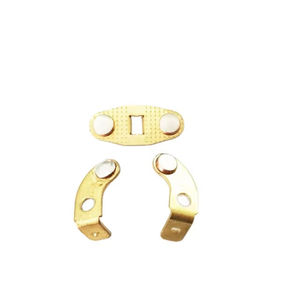
OEM Customized Metal Wear Resistant Electrical Contacts Rivet
Get Catalog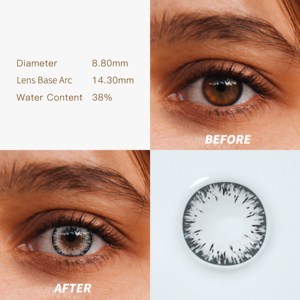
Fresh Natural Soft Colored Two Tone Circle Contact Lenses
Get Catalog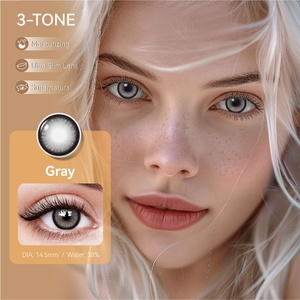
DSC Colored Prescription Contact Lenses (14.0-14.2mm)
Get Catalog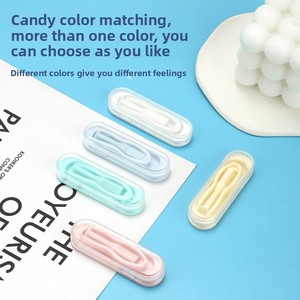
Silicone Contact Lens Applicator & Tweezer Auxiliary Kit
Get Catalog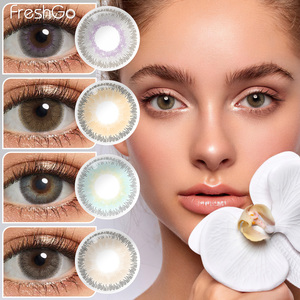
HEMA Hydrogel Soft Two Tone Cosmetic Contact Lenses
Get Catalog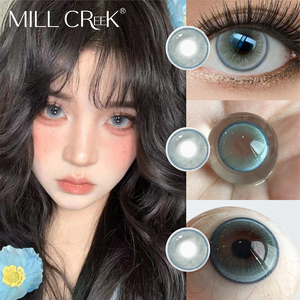
Haipurecon High-Dk Soft Circle Yearly Two Tone Contact Lenses
Get Catalog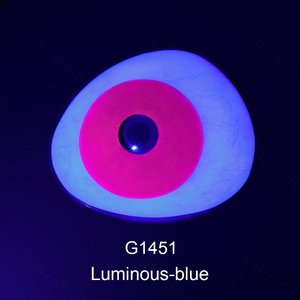
Pseyeche UV Glow & Special FX Cosplay Color Contact Lenses
Get Catalog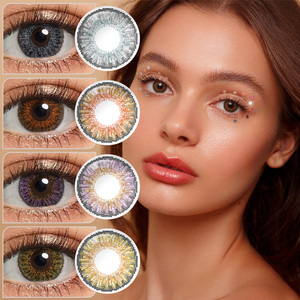
FreshGo Premium Multi-Tone Natural Soft Color Contact Lenses
Get CatalogExecutive Technical Overview: Sourcing Two-Tone Contact Lenses from China
The global color contact lens market has witnessed a paradigm shift toward natural iris enhancement and high-definition color blending. Among the diverse spectrum of aesthetic contact lens categories, two tone contacts (often termed 2-tone colored contacts) represent the vital bridge between subtle daily enhancements and dramatic ocular transformations. For optical brand owners, pharmaceutical distributors, e-commerce retailers, and procurement officers, identifying premier China two tone contacts manufacturers & suppliers is a critical strategic imperative.
China's optical manufacturing infrastructure—led by certified medical device leaders such as BLMG Optical.Ltd.—combines advanced hydrogel material polymer science, fully automated cast-molding technologies, and strict bio-compatibility standards compliant with FDA, CE, and ISO 13485 frameworks. This technical whitepaper delves into the engineering principles of two-tone contact lens production, micro-encapsulation color technologies, market supply chain trends, and regulatory compliance protocols required to successfully launch or scale a global color contact lens brand.
Core Technical Insight: Modern two-tone contact lenses utilize a dual-layer pigment matrix consisting of an outer limbal definition ring combined with an inner radial iris pattern. This configuration provides depth, eye enlargement, and seamless color blending over both light and dark natural irises.
Manufacturing Excellence & Engineering Principles of Two-Tone Lenses
The fabrication of high-performance color contact lenses requires rigorous control over optics, oxygen transmissibility ($Dk/t$), water retention kinetics, and pigment containment. Unlike standard clear prescription lenses, two-tone colored contact lenses incorporate solid dye particulates and light-diffracting pigments directly into the lens structure.
1. Micro-Encapsulation & "Sandwich" Printing Technology
Top-tier Chinese manufacturers utilize advanced bio-compatible micro-encapsulation technology—commonly referred to as the "Sandwich" or Double-Cladding printing method. In this process, color pigments are locked securely between an inner bio-compatible HEMA hydrogel substrate and an outer protective polymer layer. This prevents direct contact between the active pigments and the delicate corneal epithelium, eliminating pigment leeching, ocular friction, and chemical keratitis risks.
2. Fully Automated Cast Molding vs. Lathe Cutting
While low-volume specialty lenses are occasionally lathe-cut, high-volume production of two-tone contacts employs high-precision automated cast molding. Liquid monomer (HEMA, NVP, or Silicone Hydrogel formulations) is injected into precision-machined optical molds containing the printed two-tone pattern. Ultraviolet (UV) polymerization cures the lens instantly, ensuring ultra-smooth surface optics, consistent base curves ($8.5\text{mm} - 8.6\text{mm}$), and exact edge profiles that maximize tear-exchange efficiency during blinks.

3. Material Chemistry: HEMA Hydrogel vs. Silicone Hydrogel Matrix
Choosing the correct polymer substrate dictates both lens comfort and regulatory positioning:
- Poly-HEMA Hydrogel (38% – 43% Water Content): Highly stable, cost-effective, and ideal for standard daily, monthly, or yearly disposable cosmetic contact lenses. It balances mechanical stability with optimal dimensional accuracy for detailed two-tone dot-matrix printing.
- Silicone Hydrogel (SiHy - Dk/t > 80): The modern gold standard for extended wear and high-oxygen permeability. Silicone hydrogel allows up to 5x more oxygen to pass through the lens matrix to the cornea, reducing corneal hypoxia risk and maintaining ocular white-eye aesthetics during prolonged wear.
Enterprise Competitive Advantages of Partnering with BLMG Optical
As a established OEM/ODM color contact lens manufacturer in China, BLMG Optical.Ltd. provides end-to-end solutions designed specifically for brand scaling, low supply chain risk, and strict international compliance.
ISO 13485 & Cleanroom Standards
Operates under Class 100,000 (ISO 7) cleanroom environments certified to ISO 13485 Quality Management Systems. Every batch undergoes 100% automated optical inspection (AOI) for edge defects and diameter accuracy.
Flexible OEM / Low MOQ Program
Supports low MOQ starting from just 100 pairs per design under our Small Batch OEM program. Ideal for niche cosmetic brands, boutique optical chains, and fast-growing online direct-to-consumer (DTC) stores.
500+ Proprietary Pattern Library
Access an extensive library of ODM optical designs covering natural two-tone iris rings, dramatic multi-tone blends, cosplay FX, and clear Rx prescription lenses—minimizing artwork development timelines.

Full Turnkey Private Label Packaging Solutions
We provide full-spectrum branding services, including custom foil-sealed polypropylene blister packs, glass vials, custom-printed paper packaging boxes, instruction leaflets (IFUs), and barcode serialization compliant with GS1 and UDI standards.
Our regulatory affairs department prepares complete Technical Files (STED format), Certificate of Free Sale (CFS), and batch test reports required for FDA registration, CE Mark under EU MDR 2017/745, NMPA Class III registration, and MFDS approval in South Korea.


Product Architecture & Two Tone Optics Recommendation Matrix
When selecting two-tone contact lens designs for your brand catalog, it is crucial to understand how color chemistry interacts with varying natural iris pigmentation (e.g., dark brown European/Asian eyes vs. light blue/green Nordic eyes).
| Two-Tone Category | Optical Design Strategy | Target Base Iris | Recommended Replacement Cycle | Ideal Retail Channel |
|---|---|---|---|---|
| Natural Ring 2-Tone | Dark outer limbal border + translucent inner accent dot matrix. | Dark Brown / Black | Daily / Monthly Disposables | Optical Chains & Pharmacy Retail |
| Vibrant Highlight 2-Tone | Opaque high-contrast primary shade with golden inner iris rays. | Dark & Light Eyes | Monthly / Quarterly | DTC E-Commerce Brands |
| Enlargement (Circle Lens) 2-Tone | Expanded 14.5mm graphic diameter ($GDIA$) with defined outer rim. | Medium / Dark Brown | Quarterly / Yearly | Beauty Boutiques & Cosplay Markets |
| Prescription Two-Tone (Rx) | Dual-tone color overlay on spherical powers ($0.00$ to $-10.00\text{D}$). | All Iris Colors | Daily / Monthly Disposables | Licensed Optometry Clinics |

Engineering Lens Geometry: DIA, BC & GDIA Parameters
Proper fit and aesthetic outcome depend heavily on micro-geometric optical engineering:
- Overall Diameter ($DIA$): Standard ranges span from $14.0\text{mm}$ to $14.5\text{mm}$, with mini-sclera contacts extending up to $15.0\text{mm}$.
- Graphic Diameter ($GDIA$): The printed color zone typically measures $13.2\text{mm}$ to $13.8\text{mm}$, controlling the visual enlargement factor.
- Base Curve ($BC$): Precision-molded at $8.5\text{mm} - 8.6\text{mm}$ to accommodate over 95% of global corneal topographies without movement instability or excessive centration tilt.
- Pupil Center Clearance: Optical zone diameter is maintained at $3.8\text{mm} - 4.5\text{mm}$ to prevent visual field obstruction or color fringing under dilated low-light conditions.
Global B2B Procurement Trends in Two-Tone Contacts (2025–2030)
Navigating the color contact lens market requires aligned forward-looking supply chain strategies. Procurement managers must adapt to several fast-evolving industry trends:
1. Accelerating Shift toward Daily Disposable (1-Day) Formats
Historically, yearly and quarterly disposable colored lenses dominated emerging markets due to lower price points. However, global consumer preference has decisively shifted toward daily disposables due to superior ocular hygiene, zero maintenance (no cleaning solution required), and reduced risk of microbial keratitis. B2B buyers are increasingly prioritizing OEM suppliers capable of high-speed blister packaging lines for 10-pack and 30-pack daily colored contacts.
2. Rise of Eco-Friendly Bio-Based Packaging
Environmental regulations across the EU and North America are pushing brands toward sustainable packaging. Top Chinese manufacturers are pioneering biodegradable blister secondary boxes, reduced-plastic solution trays, and recyclable aluminum foil seals, allowing private label brands to fulfill ESG (Environmental, Social, and Governance) commitments.
3. Hyper-Realistic Iris Pattern Customization via AI Algorithmic Design
Modern consumers demand seamless natural blending rather than artificial pixelated dots. Next-generation two-tone manufacturing utilizes high-resolution digital plate-making guided by biometric iris scanning datasets. This creates multi-layered micro-dot patterns that mirror natural human iris structures with unparalleled realism.
4. Stringent Global Medical Regulatory Governance
Regulatory oversight for cosmetic contact lenses has tightened globally. The implementation of the EU Medical Device Regulation (MDR 2017/745) under Annex XVI explicitly classifies non-corrective decorative lenses as high-risk devices subject to strict clinical evaluations and notified body audits. Sourcing from accredited Chinese factories with established STED documentation and ISO 13485 certification is essential to prevent customs seizures and brand liability.
Frequently Asked Sourcing & Technical Questions (FAQ)
Q1: What is the Minimum Order Quantity (MOQ) for custom private label two-tone contacts?
Under our standard OEM service, the MOQ typically ranges from 500 to 1,000 pairs per color design. However, through our specialized Small Batch OEM Program, startups and niche brands can place initial orders starting from just 100 pairs per design, allowing low-risk market testing prior to mass production.
Q2: How do Two-Tone contacts differ structurally from Single-Tone and Three-Tone contacts?
Single-tone contacts feature a uniform color print without a outer limbal ring. Two-tone contacts incorporate an outer dark definition ring combined with a primary color body to define and enlarge the iris. Three-tone contacts add a third, honey-gold inner ring around the pupil for complex color transition and dimension.
Q3: Which international medical certifications do BLMG two-tone contact lenses carry?
Our manufacturing facilities operate under strict ISO 13485 Quality Management Systems. Products hold CE mark clearance, FDA registration support, NMPA (China Class III Medical Device Registration), and MFDS certifications. Complete technical documentation (STED) and batch COA (Certificate of Analysis) are provided for import declaration.
Q4: Are your two-tone contact lenses available with prescription powers (Myopia)?
Yes. All two-tone patterns can be produced as plano ($0.00$ power) for cosmetic use, or with prescription optical corrections ranging from $-0.50\text{D}$ to $-6.00\text{D}$ (in $0.25\text{D}$ steps) and $-6.50\text{D}$ to $-10.00\text{D}$ (in $0.50\text{D}$ steps).
Q5: What is the turnaround lead time for OEM sampling and mass production?
Choosing existing, validated ODM designs from our 500+ pattern catalog enables sampling within 3–7 business days, with mass production completed in 20–30 days. Custom pattern development (OEM artwork creation) requires approximately 14 days for initial mold and print plate validation prior to mass production.
Q6: What packaging options are available for private label orders?
We provide full packaging customization, including sterile polypropylene blister packs (buffered saline or hyaluronic acid solution), medical-grade glass vials, customized outer color packaging boxes, multi-pack starter kits, and auxiliary care accessories (lens cases, tweezers, and insertion tools).
Q7: How is pigment safety ensured during long-term lens wear?
All BLMG colored contacts utilize sandwich micro-encapsulation printing. Pigment particles are sealed entirely within the hydrogel material layers. No pigment touches the cornea or conjunctiva directly, guaranteeing zero color fading, leaching, or mechanical irritation during the recommended wear cycle.
Step-by-Step OEM/ODM Sourcing Workflow
Initiating a custom contact lens project with BLMG Optical follows a streamlined, quality-assured five-stage protocol:
Step 1: Project Consultation
Define target market, power ranges, wear schedule (Daily/Monthly/Yearly), packaging requirements, and target launch deadlines.
Step 2: Pattern Selection & Proofing
Select from 500+ existing ODM patterns or submit original design artwork for custom plate engraving and sample proofing.
Step 3: Sample Verification
Evaluate physical samples for color rendering, base curve fitting, edge comfort, and packaging print fidelity.
Step 4: ISO Mass Production
Automated cast-molding, sandwich printing, hydrate equilibrium, online automated optical inspection, and terminal autoclave sterilization.
Step 5: Quality Release & Export
Final QC release, certificate issuing (COA, CFS), customs documentation prep, and direct shipment via air freight or express logistics.