
B2B Manufacturing Intelligence: The Engineering Behind Big Eye (Circle) Lenses
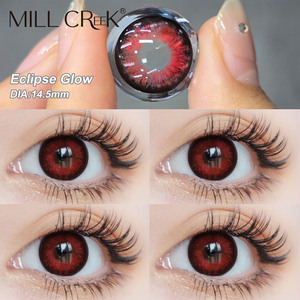
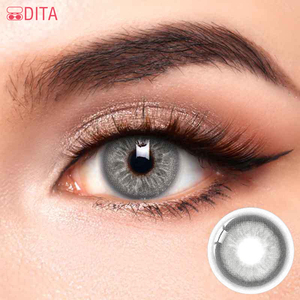
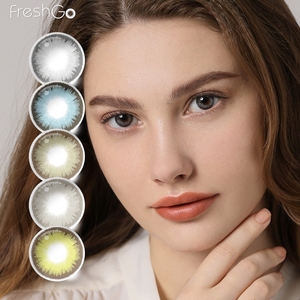
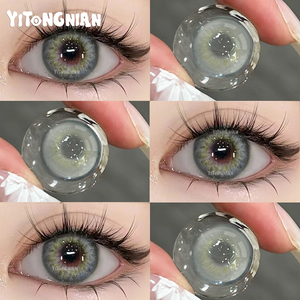
In the global contact lens sector, the market demand for "Big Eye Lenses" (commonly recognized in optical retail as circle lenses or limbal ring enhancing lenses) has transitioned from a niche cosmetic craze into a permanent, multi-billion-dollar segment of the contact lens industry. Unlike standard clear prescription lenses or conventional cosmetic lenses that simply alter iris pigmentation, Big Eye lenses are optically engineered to visually amplify the apparent diameter of the cornea. This effect is achieved by placing an extra-wide, dark outer limbal ring beyond the natural iris parameter, coupled with micro-dot graphic printing.
For global brands, optical retail chains, and medical device importers, identifying trusted Big Eye lenses manufacturers & exporters requires deep evaluation far beyond superficial surface color aesthetics. Cosmetic contact lenses are categorized globally as Class III medical devices (under US FDA, EU MDR 2017/745, and NMPA regulations). Manufacturing high-grade circle lenses involves balancing complex physiological variables: preserving corneal oxygenation (Dk/t), maintaining wet casting dimensional stability, guaranteeing bio-compatible pigment encapsulation (sandwich technology), and ensuring exact optical power translation across a broad spectrum of corrective range.
Key Procurement Insight: Inferior big eye contact lenses manufactured using surface-printing processes expose the user's corneal epithelium to direct dye rubbing, leading to severe hypoxia and keratitis. Tier-1 certified contact lens factories utilize dual-layer encapsulation technology, locking micro-pigments completely within hydrophilic poly-HEMA or silicone matrix polymers.
Optical Engineering & Pigment Encapsulation Technologies
The structural design of an advanced Big Eye contact lens hinges on precise geometric parameterization. Standard human iris diameters range between 11.5 mm and 12.0 mm. Big Eye lenses strategically expand the Graphic Diameter (GDIA) to 13.2 mm – 14.2 mm while keeping the overall physical lens Overall Diameter (DIA) strictly regulated between 14.0 mm and 14.5 mm to prevent limbal stem cell compression.
Micro-Sandwich Technology
Color pigments are double-sealed between inner and outer monomer hydrogel matrix layers. Pigments never directly touch corneal tissue or palpebral conjunctiva.
High Oxygen Transmissivity (Dk/t)
Engineered material chemistry incorporating N-Vinylpyrrolidone (NVP) and hydrophilic monomers ensures maximum oxygen diffusion to prevent corneal swelling during extended daily wear.
Smooth Edge Geometry
Full automated CNC lathe mold cutting ensures ultra-thin, smooth edge profiles, facilitating tear film flow beneath the lens and eliminating foreign body sensation.
BLMG Optical Ltd and leading OEM contract facilities employ state-of-the-art Fully Automated Wet Cast Molding processes. Cast molding delivers identical optical power uniformity, pristine surface curvature consistency, and superior edge smoothness compared to legacy lathe-cut methods. Furthermore, automated laser micro-inspection systems screen 100% of finished lenses for chromatic aberrations, optical power drift, border pixelation, and structural micro-voids prior to sterile blister sealing.
Technical Specification Benchmark for B2B Importers
When submitting OEM/ODM tenders or qualifying factory suppliers for Big Eye lens export contracts, procurement directors must evaluate technical parameters against regional market compliance standards:
| Optical & Material Parameter | Standard Commercial Range | High-Performance OEM Option | Clinical / Regulatory Significance |
|---|---|---|---|
| Material Formulation | Poly-HEMA (2-Hydroxyethyl Methacrylate) | Silicone Hydrogel / MPC Hydrophilic Polymer | Determines lipid resistance, wettability, and long-term wearing comfort. |
| Water Content (%) | 38% – 42% (Low Water) | 55% – 58% (High Water) | Low water reduces environmental tear evaporation; ideal for dry climates. |
| Base Curve (BC) | 8.50 mm – 8.60 mm | Customized 8.40 mm – 8.80 mm | Ensures accurate centration of the enlargement ring on the eye bulb. |
| Overall Diameter (DIA) | 14.00 mm – 14.20 mm | 14.50 mm (Max Cosmetic Limit) | Defines physical lens fit and tear exchange efficiency under the matrix. |
| Graphic Diameter (GDIA) | 13.00 mm – 13.50 mm | 13.80 mm – 14.00 mm (Enlargement) | Visual "Big Eye" enlargement metric created by the outer limbal pattern. |
| Prescription Spherical Range | Plano (0.00) to -6.00D (0.25D step) | -6.50D to -10.00D / Toric Astigmatism | Covers both plano fashion buyers and high-myopia vision correction markets. |
| Sterilization Process | Moist Heat Autoclave (121°C / 30 mins) | Validated Steam Sterilization Cycles | Guarantees 10^-6 Sterility Assurance Level (SAL) required for medical devices. |
Future Procurement Trends in the Cosmetic Lens Industry (2026–2030)
Analyzing search intent signals, global procurement volume data, and consumer behavioral analytics reveals five core macro trends shaping the future of big eye contact lens sourcing:
1. Accelerating Shift to Daily Disposables
Global consumers are rapidly migrating away from annual and quarterly replacement schedules toward 1-Day Daily Disposable color contacts due to superior hygiene, reduced ocular inflammation risks, and convenience.
2. Silicone Hydrogel Cosmetic Materials
Next-generation color contact lenses integrate silicone hydrogel polymers that provide up to 5x higher oxygen permeability (Dk/t > 80) compared to legacy hydrogels, enabling safe 12-hour continuous cosmetic wear.
3. Hyper-Natural 3D Iris Multi-Tones
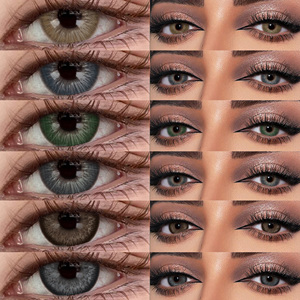
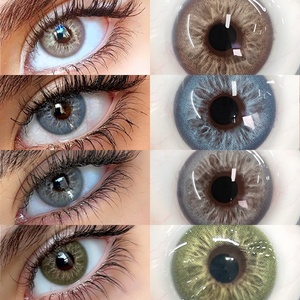
Visual demands have shifted from solid harsh limbal borders to subtle, multi-layered 3-tone and 4-tone gradient patterns that mimic real biological iris depth, blending naturally with dark brown Asian or light Western irises.
4. Sustainable Bio-Plastic Packaging
Leading brands require OEM manufacturers to adopt recyclable polypropylene blister containers, reduced foil seal thickness, and FSC-certified secondary outer retail boxes to meet strict EU environmental mandates.
5. Small Batch OEM & Agility
E-commerce beauty brands demand lower initial Minimum Order Quantities (MOQs starting from 100-500 pairs per SKU) to validate micro-collections, test viral social media trends, and minimize inventory holding capital.
6. Turnkey Private Label Services
Brand owners favor factories providing comprehensive OEM/ODM contract solutions—spanning graphic vector design, custom blister mold creation, registration dossier preparation, and global drop-ship logistics.
Why Partner with BLMG Optical Ltd: Enterprise Competitive Edge
As a specialized high-capacity manufacturer and global exporter of clear and colored contact lenses, BLMG Optical Ltd bridges the gap between scientific optical engineering and dynamic fashion retailing. Operating Class 100,000 cleanroom production facilities equipped with high-speed automated casting matrix lines, BLMG ensures every batch adheres strictly to international medical standards.
Key Operational Advantages for Global Procurement Teams:
- Massive In-House ODM Library: Access to over 500+ market-proven, pre-tested optical patterns including natural enlargement circles, 3-tone hazel gradients, vibrant cosplay sclera designs, and subtle daily wear tones.
- Uncompromising Quality Assurance: Fully certified quality management systems certified under ISO 13485, with technical documentation supporting FDA 510(k), CE (MDR), NMPA, and MFDS registration procedures.
- Agile Small-Batch Production: Specialized OEM programs accommodating low initial MOQ thresholds starting at 100 pairs per design, allowing startup brands to launch premium collections with minimal capital exposure.
- Full-Chain Customization: Complete freedom over base curves, water content selection, graphic iris diameter, customized blister foil artwork, branded packaging boxes, and multilingual instruction inserts.
Frequently Asked Questions (FAQ) for B2B Sourcing & Procurement
Review these essential technical and commercial questions compiled by our regulatory and optical engineering specialists to streamline your supplier qualification workflow: