1. Strategic Overview: Sourcing CE-Certified Contact Lenses for Doha & GCC Markets
The State of Qatar—and specifically its metropolitan hub, Doha—represents one of the world's most rapidly expanding luxury optical and corrective eye-care markets. Driven by high consumer purchasing power, sophisticated fashion preferences, and strict regulatory standards under the Qatar Ministry of Public Health (MOPH), optical importers and retail distributors in Doha demand contact lenses that seamlessly combine medical safety with superior aesthetic elegance. For global optical brands, clinical distributors, and boutique ophthalmic lines looking to penetrate or expand within Doha's retail spaces—such as those in Mall of Qatar, Doha Festival City, and Villaggio Mall—partnering with a CE-certified, ISO 13485 compliant contact lens factory is an essential strategic requirement.
As a premier contact lens manufacturing enterprise (BLMG Optical Ltd.), our state-of-the-art facilities integrate advanced polymeric chemical engineering, precision cast molding, micro-encapsulated color locking, and fully automated sterile blister packaging. By maintaining comprehensive Class III Medical Device certifications (CE Marking, US FDA registration, NMPA, and ISO 13485 standard operating procedures), our production lines provide Doha optical importers with an uncompromised supply chain bridge. We eliminate compliance risks, ensure fast customs clearance through Hamad Port and Hamad International Airport (HIA), and deliver bespoke contact lens formulations customized to the demanding environmental and physiological requirements of the Gulf region.
2. Climate-Optimized Ophthalmic Engineering for Doha & Arid Environments
Operating an optical brand in Doha requires addressing severe environmental challenges. Qatar experiences extreme desert heat with summer temperatures exceeding 45°C, accompanied by dry, dust-laden winds. Conversely, indoors—where Doha residents spend over 90% of their day—heavy industrial air conditioning creates low-humidity micro-environments (often under 30% relative humidity). This sharp transition between intense outdoor heat and dry indoor refrigeration places immense osmotic pressure on soft contact lenses, frequently resulting in rapid lens dehydration, tear-film instability, surface lipid deposition, and ocular discomfort for end users.
To solve this specific physiological challenge, our R&D laboratories have pioneered polymer matrix engineering utilizing Non-Ionic Hydrogel (HEMA-NVP Copolymers) and Fluoro-Silicone Hydrogel Materials. Non-ionic lens surfaces inherently resist protein buildup and lipid adhesion, which are common issues in sandy, dusty environments. Furthermore, our proprietary moisture-retention matrix binds water molecules tightly within the lens core, preventing evaporation even under aggressive air-conditioning airflow.
| Material Class | Water Content (%) | Oxygen Permeability (Dk/t) | Surface Charge | Primary Local Application in Doha | Primary Business Benefit |
|---|---|---|---|---|---|
| Standard HEMA Hydrogel | 38% - 42% | 15 - 20 Dk/t | Non-Ionic | Cosmetic Daily/Monthly Lenses for Indoor Events | High Cost-Efficiency, Exceptional Shape Memory |
| Advanced Hydrogel (NVP Co-polymer) | 45% - 55% | 25 - 30 Dk/t | Non-Ionic | Prescription Myopia Lenses for All-Day Wear | All-Day Moisture Balance, Ultra-Thin Edge Profile |
| Premium Silicone Hydrogel | 40% - 48% | 80 - 120 Dk/t | Plasma Surface Treated | Extended Wear & High-Power Prescription Optics | Maximum Cornea Oxygenation, Dry-Eye Resistance |
| Bio-compatible Hyaluronic Hydrogel | 58% | 33 Dk/t | Hydrophilic Locked | Sensitive Eyes & High Air-Conditioned Environments | Endogenous Moisture Retention, Zero Stinging |
3. Advanced Manufacturing & Information Gain: Color-Locking & Lens Safety
A core requirement when manufacturing cosmetic soft contact lenses is ensuring complete pigment isolation. Lower-tier manufacturers often use surface-printing methods where dye comes into direct contact with the ocular tissue or inner eyelid lining, risking pigment leaching, mechanical micro-abrasions, and allergic giant papillary conjunctivitis (GPC).
Our factory utilizes advanced Sandwich Color-Locking Micro-Encapsulation Technology. During the automated cast-molding process, pigment layers (derived from biocompatible iron oxides and titanium dioxide) are embedded completely *between* two clear, un-pigmented micro-thin layers of hydrogel polymer material.
4. Localized Application Scenarios in Doha: Optical Practice to E-Commerce
Understanding how local consumers in Qatar utilize optical products allows distributors to structure their retail product lines effectively. Our factory supports tailored OEM collections tailored for specific consumer usage scenarios across Doha:
A. Luxury Cosmetic & Bridal Fashion (The Pearl-Qatar & Katara Cultural Village):
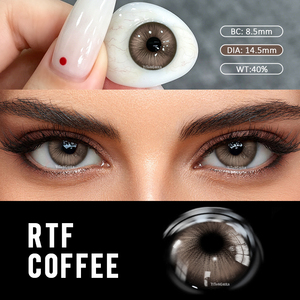
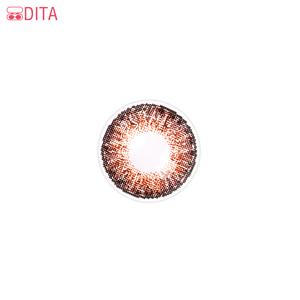
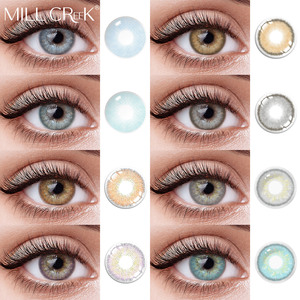
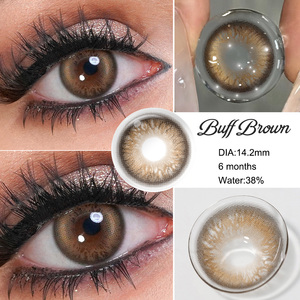
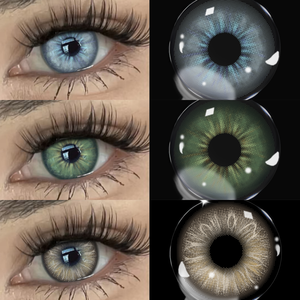
Cosmetic contact lenses are heavily utilized in Doha for high-end fashion, evening galas, and wedding events. Consumers look for warm, rich iris enhancements—such as deep mocha brown, hazel honey, olive green, and soft gray. These lenses feature intricate multi-tone dot matrices that overlay naturally onto dark Arabic eyes, providing dramatic aesthetic transformation without looking artificial.
B. Everyday Optical Myopia Correction (West Bay Corporate & Academic Sectors):
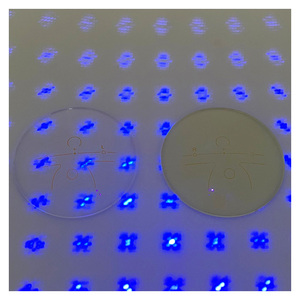
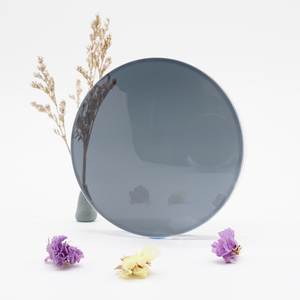
With high screen usage among executives, university students, and technology workers in Doha's West Bay financial center, demand for blue-light filtering contact lenses and clear Rx prescriptive lenses (ranging from -0.50D to -10.00D) is substantial. Our ultra-thin hydrogel optical lenses provide consistent refractive correction while reducing digital eye strain.
C. Theatrical, Cosplay & Special FX Events (Doha Gaming & Cultural Expos):
As pop-culture conventions, theatrical productions, and gaming expos expand in Qatar, specialized lenses—including mini-sclera, full sclera, and vibrant solid anime colors—have seen an upsurge. Our specialized production lines engineer these complex, high-pigment lenses under rigorous safety standards, ensuring theatrical performers enjoy striking visual effects safely.
5. Regional Sourcing Trends & Supply Chain Dynamics in Qatar & the GCC
The commercial landscape for contact lenses in the Gulf Cooperation Council (GCC) is shifting rapidly from traditional brick-and-mortar optical shops to omnichannel retail models. Local optical brands in Doha are launching Direct-to-Consumer (D2C) e-commerce platforms, offering fast local courier deliveries within 24 hours across Al Rayyan, Al Wakrah, and Lusail.
To support these agile retail models, our factory offers a Small Batch OEM Program with MOQs starting at just 100 pairs per design. Traditional manufacturing models often require minimum runs of 3,000 to 5,000 pairs per SKU, forcing brands to tie up significant capital in inventory. Our low-MOQ flexibility empowers Qatari entrepreneurs and established retail chains to test new color series, seasonal lines, or limited-edition packaging with minimal financial exposure.
6. Comprehensive Turnkey OEM/ODM Production Workflow for Doha Importers
7. Quality Assurance Certifications: Medical-Grade Compliance
Contact lenses are classified as Class III Medical Devices under the stringent regulatory frameworks of major international health authorities. Importing medical devices into Qatar requires absolute traceability, sterile packaging validation, and audited quality management systems.
Our manufacturing facility operates strictly under the ISO 13485:2016 Quality Management System for medical devices. Every production batch undergoes comprehensive quality testing, including lens power accuracy verification via automated lensmeters, edge profile analysis, bio-burden testing, cytotoxicity screening, and seal integrity tests for blister packages. When you partner with our factory, we supply full technical dossiers, CE Certificates of Conformity, and ISO documentation ready for submission to the Qatari Ministry of Public Health.