Featured OEM & Export Contact Lens Collections
Selected high-oxygen silicone hydrogel and cosmetic soft contact lenses engineered for export compliance, ultra-comfort wearability, and optical precision in Japan.
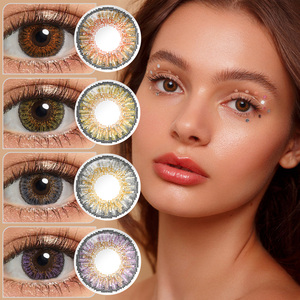
Best Selling 3 Tone Contacts Lenses Color Big Eye Lenses Cosmetic Colored Contact Lens Entilles De Contact En Gros for Dark Eyes
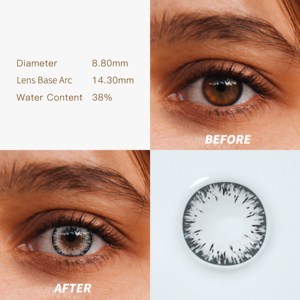
Fresh Natural Eye Contact Lenses,Wholesale Cycle Origin Certificate Wholesale Soft Colored Circle Eye Contact Lenses
Conant 1.499 1.56 1.60 1.67 1.74 Spheric Aspheric Optical Lens Resin Clear Contact Soft Lens Medical -8.0
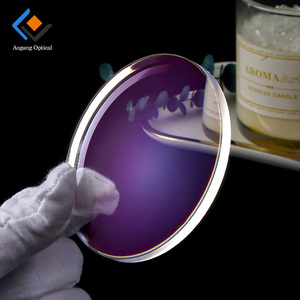
Wholesale Eyeglass Lenses Optical Lens Manufacturer Lens Optic Lenses Spectacle Lenses Cr39
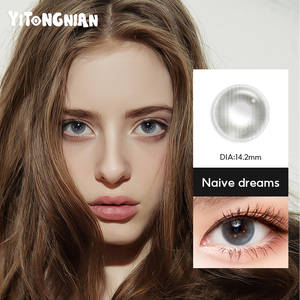
YITONGNIAN 14.2mm Hema Soft Colored Contacts Prescription Contact Lenses Wholesale Natural Lady Eye Lens Hybrid Design
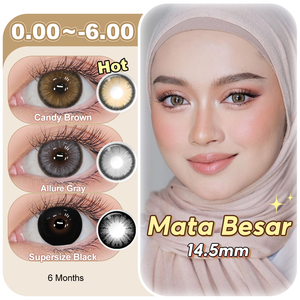
Prescription Myopia Eye Colored Contact Lenses Lentes De Contacto De Color Con Formula Medical Color Contact Lenses Pupilentes
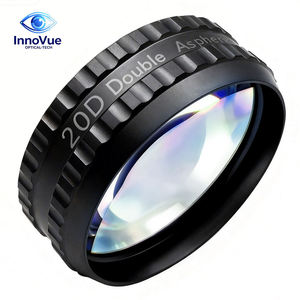
InnoVue Opto 20D Ophthalmic Fundus Contact Lens CE ISO Certified with 1 Year Warranty OEM Customization for Hospital Use
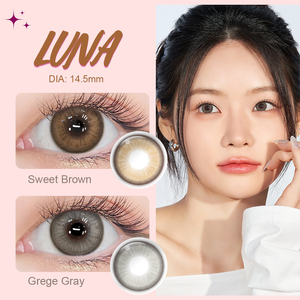
Free Shipping Magister LUNA Contact Lenses Natural Eye Lens 14.5 Colored Contact Lenses Lenses Eye Contact Lentes De Contact
Executive Overview: The Evolution of Silicone Hydrogel in Japan’s Optical Sector
The Japanese soft contact lens market represents one of the most technologically demanding and quality-sensitive optical sectors globally. Driven by sophisticated consumer expectations regarding ocular health, long hours of digital device usage, and strict oversight by the Pharmaceuticals and Medical Devices Agency (PMDA), the industry has undergone a massive structural transition from traditional Poly-2-hydroxyethyl methacrylate (polyHEMA) hydrogel materials toward 3rd-generation Silicone Hydrogel (SiHy) polymers.
Silicone hydrogel contact lenses integrate hydrophobic siloxane macromers with hydrophilic hydrogel monomers. This hybrid macromolecular structure bypasses the physical oxygen transmission limit of water itself. Traditional hydrogel lenses rely entirely on water content to transport oxygen to the corneal epithelium, capping oxygen transmissibility ($Dk/t$) at approximately $25 - 35 \times 10^{-9}$. In contrast, silicone hydrogel formulations achieve oxygen transmissibility values ranging from $100$ to over $175 \times 10^{-9} \text{ (cm/s)[mL O}_2\text{/(mL }\cdot\text{ mmHg)]}$, effectively eliminating corneal hypoxia, limbal hyperemia, and end-of-day dryness during extended wear.
Information Gain Key Takeaway for B2B Importers: In the Japanese market, transition to 1-Day Silicone Hydrogel is no longer merely a premium positioning strategy—it is becoming the baseline requirement for brand registration, distributor acceptance, and clinical endorsement by Japanese optometrists.
Material Engineering & Factory OEM Innovations
How our manufacturing facilities solve the historical tradeoffs between silicone stiffness, surface wettability, and color pigment safety.
Fluorosilicone Polymerization
By incorporating long-chain fluoro-siloxane monomers, our lab synthesizes a matrix that allows uninhibited gas permeability while inhibiting lipid deposit formation. This ensures crystal-clear optical clarity throughout a 16-hour daily wear cycle.
Non-Plasma Moisture Matrix
Traditional SiHy required harsh surface plasma treatments to overcome silicone's natural hydrophobicity. Our factory utilizes interpenetrating Polyvinylpyrrolidone (PVP) hydrophilic networks that lock moisture inside the lens matrix without surface breakdown.
Sandwich Bio-Color Encapsulation
For cosmetic color lenses exported to Japan, color pigments are micro-encapsulated and embedded between two micro-thin layers of clear silicone hydrogel. Pigment particles never touch the cornea or palpebral conjunctiva, fully satisfying Japanese safety mandates.
Localized Application Scenarios in the Japanese Market
Customizing lens parameters for specific demographic demands, lifestyle requirements, and retail distribution channels across Tokyo, Osaka, and regional hubs.
1. Office Professionals & Screen Workers (Tokyo / Marunouchi Sector)
Demographic & Need: Japanese corporate employees spending 8–12 hours daily in front of high-luminance monitors inside air-conditioned office towers.
Localized Product Solution: Clear & Subtle Circle Silicone Hydrogel Lenses with high Dk/t ($>120$), built-in UV blocking (Class 1 UV filtering protecting against $>90\%$ UVA and $>99\%$ UVB), and blue-light absorption filters. Low elastic modulus ($0.35 - 0.40 \text{ MPa}$) minimizes mechanical friction against the upper lid during blinking.
2. "Churu-n" Natural Cosmetic Contacts (Shibuya & Harajuku Retail)
Demographic & Need: Fashion-conscious Gen-Z and millennial consumers demanding subtle iris enlargement ("Churu-n" watery glaze effect) without unnatural harsh outer rings.
Localized Product Solution: 1-Day Disposable Silicone Hydrogel Color Contacts featuring 14.0mm - 14.2mm total diameter (DIA) with a Graphic Diameter (G.DIA) of 13.0mm - 13.4mm. Micro-dot printing technology blended with olive tones, mocha browns, and soft ash grays matches natural Asian iris structures while providing high oxygen permeability.
3. Subculture, Cosplay & Event Lenses (Akihabara / Ikebukuro Markets)
Demographic & Need: High-impact theatrical performance, anime character recreation, and photographic cosplay events requiring vivid color coverage over dark eyes.
Localized Product Solution: High-opacity multi-tone pigment matrix embedded in breathable silicone hydrogel. Ensures full eye color transformation while preventing the corneal oxygen deprivation commonly associated with traditional dense cosmetic inks.
4. Clinical & Post-Refractive Optometric Channel
Demographic & Need: Japanese eye clinics issuing prescription correction for patients prone to dry eye syndrome, low tear film stability, or mild astigmatism.
Localized Product Solution: Aspheric front surface geometry to eliminate spherical aberrations, combined with stable toric back-surface optics for precise astigmatic correction.
Material Comparison Matrix: Hydrogel vs. 3rd-Gen SiHy
Empirical data comparison illustrating key physical properties essential for Japanese optical buyers and regulatory approval.
| Physical Parameter | Traditional HEMA Hydrogel | 1st Generation SiHy | BLMG 3rd-Gen Silicone Hydrogel |
|---|---|---|---|
| Oxygen Transmissibility ($Dk/t$) | $20 - 30 \times 10^{-9}$ | $80 - 100 \times 10^{-9}$ | $135 - 160 \times 10^{-9}$ |
| Water Content (%) | $38\% - 58\%$ | $24\% - 36\%$ | $45\% - 55\%$ |
| Modulus of Elasticity (Stiffness) | $0.25 - 0.30 \text{ MPa}$ | $1.00 - 1.40 \text{ MPa}$ (Rigid) | $0.35 - 0.42 \text{ MPa}$ (Ultra-Soft) |
| Surface Wettability (Contact Angle) | $65^\circ - 75^\circ$ | Requires Plasma Coating | $< 38^\circ$ (Intrinsic Moisture) |
| Lipid / Protein Resistance | Moderate Protein Binding | High Lipid Adsorption | Dual Resistance (PVP Matrix) |
| PMDA Class III Approval Feasibility | Decreasing Market Share | Standard Approval | Fast-Track Priority Standard |
Market Trends Shaping Japanese OEM & Import Strategies
Navigating the Japanese optical landscape requires deep awareness of evolving consumer behaviors and shifting retail channels. Importers and brand owners operating in Tokyo, Osaka, and Fukuoka are adjusting their procurement roadmaps based on three major market drivers:
Dominance of 1-Day Disposables
The Japanese market has the world's highest penetration of daily disposable (1-Day) contact lenses. Convenience, hygiene compliance, and elimination of lens care solutions drive over $72\%$ of soft lens sales. Factory export programs must offer automated high-speed blister packing tailored for 1-Day format packs (10-pack, 30-pack, and 90-pack configurations).
Tightening PMDA Regulatory Audits
Japan’s PMDA treats colored contact lenses strictly as Class III Medical Devices (高度管理医療機器). Importers must work exclusively with factories possessing valid Foreign Special Medical Device Manufacturer Accreditation (外国製造業者登録) and comprehensive STED (Summary Technical Documentation) support.
Expansion of E-Commerce & Subscription
Direct-to-consumer (D2C) online platforms and subscription models across Rakuten, Yahoo! Japan, and dedicated brand apps require agile supply chains. Factories capable of Low MOQ initial runs combined with rapid scaling are winning long-term OEM contracts.
Why Global & Japanese Brands Partner with BLMG Optical
Full-chain manufacturing excellence, from high-precision mold synthesis to certified export documentation.
Full Regulatory Certification Portfolio
BLMG Optical maintains a comprehensive quality management framework certified under ISO 13485, alongside valid CE Marking, US FDA Registrations, NMPA (CFDA) Class III Approvals, GMP certifications, and MFDS (Korea) documentation. Our regulatory team directly assists Japanese importers in compiling technical files required for PMDA submission.
Flexible OEM / ODM & Small Batch Production
Recognizing that emerging Japanese cosmetics and eyewear brands need to test new market concepts without excessive capital tie-up, our Small Batch OEM Program starts from just 100 pairs per design. Concurrently, our mass production automated lines deliver over 15 million lenses monthly for established global distributors.
500+ Validated Color Pattern Library
Brands can select from our vast ODM catalog featuring over 500 market-proven, pre-tested optical designs—ranging from ultra-natural single-tone brown rings to intricate 3-tone gradient hazel and specialized cos-play pigments. Custom bespoke artwork creation is fully supported by our optical design engineers.
End-to-End Packaging & Labeling Localization
We supply complete private label customization: primary blister foil sealing, sterile glass vial packaging, outer box artwork printing compliant with Japanese Medical Device Labeling Standard (JIS T 7333), multi-language package inserts, and custom GTIN / JAN barcoding.
Frequently Asked Questions (FAQ) for Japanese B2B Importers
Technical, legal, and commercial answers for optical buyers, product managers, and regulatory officers.
What are the PMDA registration requirements for importing silicone hydrogel contact lenses into Japan?
What is the Minimum Order Quantity (MOQ) for custom private-label silicone hydrogel orders?
How does silicone hydrogel perform regarding dry eyes during prolonged wear?
What replacement schedules can your factory export to the Japanese market?
How do you ensure color pigment safety on cosmetic soft contact lenses?
What is the lead time for sample validation and mass production shipments?
Launch or Scale Your Contact Lens Brand in Japan
Partner with a certified silicone hydrogel manufacturer. Request technical documentation, sample trials, or schedule a B2B consultation with our optical export specialists today.