The 2026 market for Daily Disposable Colored Contacts looks attractive, but appearance should never outrank eye health. Colored lenses can change the iris from brown to blue within seconds. Yet they still sit directly on the cornea. The U.S. Food and Drug Administration classifies contact lenses, including decorative lenses, as medical devices. Its consumer guidance stresses that buyers need a valid prescription and professional fitting. This matters because a colorful product can feel harmless when it is not.
Industry demand also deserves careful interpretation. Grand View Research identifies colored contact lenses as a growing global segment, supported by fashion, social media, and cosmetic use. However, market estimates vary by definition, region, and sales channel. That uncertainty should be stated clearly. The U.S. Centers for Disease Control and Prevention reports that about 45 million Americans wear contact lenses. Its guidance links unsafe habits, such as sleeping in lenses or using water, with serious eye infections. The lesson is practical.
A reliable buying guide should compare comfort, oxygen transmission, replacement timing, prescription accuracy, and manufacturer transparency. Look for sealed blister packs, clear expiry dates, and customer support that provides real material information. Daily lenses reduce storage and cleaning demands. They do not remove every risk. Wash and dry your hands. Never share lenses. Stop wearing them if redness, pain, discharge, or blurred vision appears. Seek an eye-care professional promptly.
Some buyers may still choose color intensity over comfort. That is understandable, but worth reconsidering. The best 2026 choice is not simply the most dramatic shade. It is the lens that fits properly, comes from a traceable source, and supports healthy, informed wear.
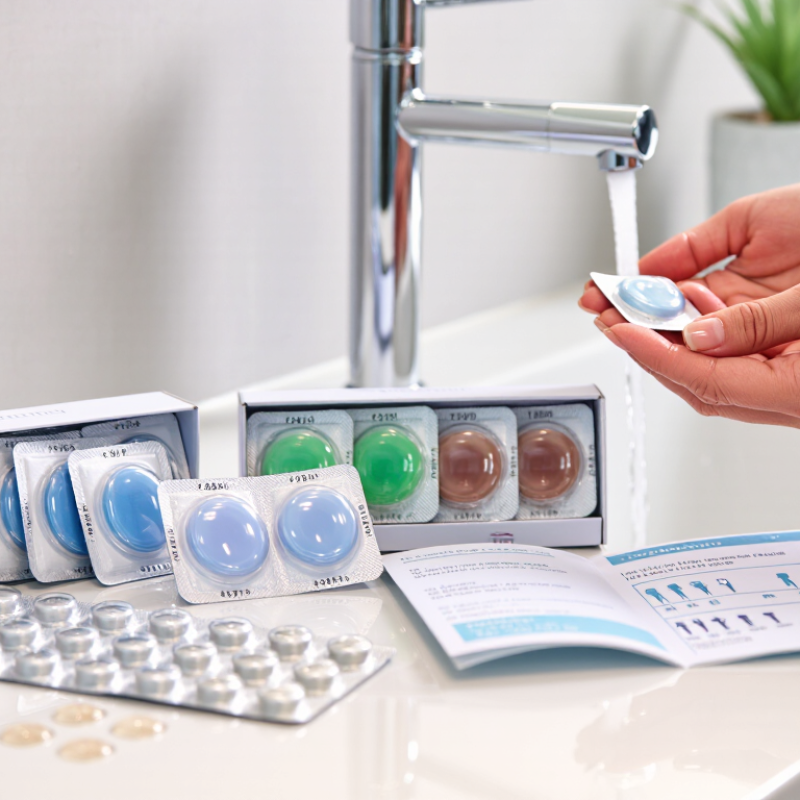
In the United States, about 45 million people wear contact lenses, according to the CDC. This figure shows the scale of the market. It does not prove that every wearer wants colored lenses. Daily disposable colored contacts appeal to consumers seeking temporary style changes, easier routines, and less storage. They also reduce repeated handling. That matters after a long workday.
The FDA classifies decorative contact lenses as medical devices. A prescription and professional fitting remain essential, even for cosmetic use. The CDC reports that sleeping in lenses, swimming with them, and poor hand hygiene increase infection risks. These warnings should shape every 2026 buying decision. Check the lens material, replacement schedule, oxygen performance, and available prescription range. Comfort comes before dramatic color.
Industry reporting from Contact Lens Spectrum continues to track daily disposable lenses as a major growth segment in soft-lens sales. Yet market growth can hide uneven consumer education. I would not use the 45-million figure as a direct demand forecast. It measures wearers, not colored-lens buyers. A careful guide should compare moisture comfort, edge design, color realism, and fitting support. Read the official instructions. Stop wearing lenses when redness, pain, or blurred vision appears. Safety is easy to overlook.
2026 Top Daily Disposable Colored Contacts Buying Guide
In the United States, colored contact lenses are medical devices, even when worn for appearance. The FDA classifies many soft contact lenses as Class II devices under 21 CFR Part 886. A prescription remains necessary. “Plano” means no vision correction, not risk-free. The FDA estimates that about 45 million Americans wear contact lenses, showing the scale of this safety issue (FDA, Contact Lens Care). Before buying, check the seller, prescription requirements, sealed packaging, lot number, and expiration date.
ISO 18369 provides technical language for contact lenses, including tolerances, measurement methods, and material properties. Its four-part framework helps evaluate diameter, base curve, power, oxygen performance, and manufacturing consistency. However, ISO alignment is not the same as FDA authorization. That distinction matters. A product page may mention ISO standards without proving legal market clearance or sterile packaging. Daily disposables should be used once, then discarded, not stored overnight.
The CDC’s 2014 risk-behavior report found that 99% of surveyed contact lens wearers reported at least one hygiene habit linked with eye-infection risk. That finding still deserves attention in 2026. I would inspect every lens for tears, unexpected color patches, or damaged seals. Do not improvise. Eye redness, pain, light sensitivity, or blurred vision requires prompt professional care. Marketing language can feel reassuring, but measurable specifications and licensed eye-care guidance are stronger evidence.
| Priority | Buying Dimension | What to Verify | Regulatory or Technical Relevance | Practical Buying Check |
|---|---|---|---|---|
| 1 | Prescription and professional fitting | A current prescription issued after an eye-care examination, including power, base curve, diameter, and the specific lens parameters when applicable. | In the United States, decorative and vision-correcting contact lenses are medical devices and are generally prescription products. A prescription does not replace professional fitting. | Do not purchase lenses that are offered without prescription verification or fitting information. |
| 2 | FDA regulatory status | Confirm that the product is legally marketed for the intended use in the United States and that the seller provides traceable labeling and prescription controls. | Contact lenses regulated by the FDA are generally Class II medical devices. Class II status indicates the applicable regulatory class; it is not a quality ranking or a guarantee of personal suitability. | Check FDA device information and avoid products described only as “cosmetic,” “fashion,” or “plano” when they are intended to be worn on the eye. |
| 3 | Daily-disposable design | The approved or labeled replacement schedule must state single-day use, with disposal after removal. | “Daily disposable” means a lens is intended to be worn for one day and discarded. It does not mean the lens can be cleaned, stored, or reused safely. | Use a new, unopened lens for each wearing day and never transfer lenses between users. |
| 4 | ISO 18369 labeling and terminology | Look for clear lens parameters, material information where applicable, replacement schedule, handling instructions, and packaging identification. | The ISO 18369 series addresses contact-lens vocabulary and classification, tolerances, measurement methods, and material-related physicochemical properties. | Treat ISO 18369 as a technical standards reference, not as an independent consumer safety certification or product approval. |
| 5 | Base curve and diameter | Compare the labeled base curve and overall diameter with the fitted prescription or eye-care professional’s recommendation. | Lens geometry affects centration, movement, comfort, and interaction with the cornea. A power match alone does not ensure a proper fit. | Do not substitute another size or geometry solely because the power appears identical. |
| 6 | Oxygen performance | Review the manufacturer’s technical information for oxygen permeability (Dk) and, where provided, oxygen transmissibility (Dk/t). | Oxygen-related values are material and thickness dependent. ISO 18369-4 covers relevant physicochemical properties, while ISO 18369-3 covers measurement methods. | Do not use an unverified “high oxygen” claim as a substitute for professional advice or prescribed wearing limits. |
| 7 | Tint and optical zone | Confirm the color pattern, tint location, clear pupil zone, prescription range, and whether the design is intended for cosmetic or corrective use. | Pigments and printed designs must be suitable for the intended contact-lens application and must not compromise vision, fit, or surface integrity. | Assess vision in different lighting conditions and stop wearing the lenses if the tint causes persistent blur, glare, or discomfort. |
| 8 | Packaging integrity and traceability | Check that each package is sealed and includes lot or batch identification, expiration date, lens parameters, and manufacturer instructions. | Traceability supports product identification, complaint handling, and recalls. Damaged, expired, or unidentifiable packaging should not be used. | Reject blister packs that are leaking, punctured, cloudy, unusually dry, or missing required labeling. |
| 9 | Hygiene and handling | Follow handwashing, insertion, removal, and disposal instructions. Avoid tap water, saliva, and sharing. | Poor hygiene and non-prescribed reuse can increase the risk of microbial contamination and serious eye complications. | Wash and dry hands before handling; do not swim or shower in lenses unless specifically advised by an eye-care professional. |
| 10 | Comfort and wear duration | Evaluate comfort, dryness, redness, lens movement, and end-of-day vision during the prescribed wearing period. | Comfort is individual and cannot be guaranteed by material, water content, or color design alone. Extended wear should not be assumed unless specifically approved and prescribed. | Remove lenses promptly if pain, marked redness, light sensitivity, discharge, or sudden vision changes occur, and seek eye-care advice. |
| 11 | Material and water content | Review the labeled lens material or material family and water-content information when available. | Material and water content can influence handling, dehydration behavior, oxygen performance, and individual comfort, but neither value independently determines safety. | Use the material selected by the eye-care professional, especially when managing dry-eye symptoms or allergies. |
| 12 | Replacement cost and supply planning | Calculate the number of sealed lenses required for the intended wearing schedule, including separate left-eye and right-eye prescriptions when needed. | A daily-disposable schedule requires a fresh lens for each wearing day; unopened lenses must remain within their labeled expiration period. | Compare total use cost, not only the price per box, and store unopened lenses according to the package instructions. |
Choosing daily disposable colored contacts requires more than comparing shade charts. The 2023 International Contact Lens Prescribing Survey reported daily disposables near or above half of soft-lens fits in several surveyed markets. That trend reflects convenience, but technical values still decide comfort and safety.
Dk/t measures oxygen transmissibility through the finished lens. It is more useful than Dk alone. Pigment layers can reduce oxygen flow, so check the final lens specification. TFOS DEWS II links reduced oxygen availability with corneal stress during lens wear. A higher Dk/t is not automatically a permission slip for extended wear. Daily lenses should still follow professional instructions.
Base curve controls how the lens sits on the cornea. A 14.2 mm diameter with an 8.6 mm base curve may feel stable on one eye, yet tight on another. Diameter affects movement and coverage. Water content adds another complication. High-water hydrogel lenses may feel soft initially, then dehydrate in air-conditioned rooms. A 55% water label does not guarantee better comfort. It can mislead.
Check the prescription, material, Dk/t, base curve, diameter, and replacement schedule together. The U.S. FDA classifies decorative lenses as medical devices requiring professional fitting. Never judge fit by color or first-hour comfort alone. I would also question unusually vague specifications. Missing data is a warning, not a minor inconvenience.
Prescription power is the starting point, not a final answer. A valid eye examination should confirm your sphere, cylinder, axis, and current prescription.
Astigmatism needs special attention. Some colored lenses may not support every prescription accurately.
Base curve and diameter also influence movement, comfort, and vision.
A lens that looks attractive online may feel loose or press against the cornea.
Fit changes how color appears. Limbal coverage controls the border around the iris.
A narrow pattern can look subtle, while wider coverage creates a stronger, enlarged effect.
The edge should align with your natural iris without covering too much of the white of the eye.
Check this in daylight and under indoor lighting. Small differences matter.
Opacity depends on your natural eye color. Translucent pigments often blend better with light eyes.
Darker eyes usually need layered or higher-opacity designs.
Too much opacity can look flat, especially around the pupil.
I would not choose from a screen image alone. Photos use lighting, editing, and different eye models.
A fitting professional can assess movement and redness after wearing.
Daily lenses reduce storage concerns, but they do not excuse poor hygiene.
Wash and dry your hands, never share lenses, and replace each pair as directed.
Comfort can still vary from one day to another.
That uncertainty deserves attention.
Colored daily disposable lenses can change your look without storing solution overnight. However, color does not reduce infection risk. The lens still rests directly on your cornea. Choose only products fitted and prescribed by a licensed eye-care professional. The FDA classifies decorative contact lenses as medical devices, not simple accessories.
Daily-use safety depends on strict timing. Wear a fresh pair for one day, then discard it. Do not reuse yesterday’s lenses, even if they look clean. Never sleep in them. CDC guidance reports that sleeping while wearing contacts increases infection risk six to eight times. A CDC MMWR analysis also found that 99% of surveyed wearers reported at least one risky hygiene behavior. That figure is uncomfortable. Convenience can make people careless.
Tips:
Check your prescription, material, Dk/t, base curve, diameter, and replacement schedule. Color alone is not enough. Ask an eye-care professional to assess the fit.
Dk/t measures oxygen transmission through the finished lens. It is more useful than Dk alone. Pigment layers may reduce oxygen flow, so check the final specification.
No. Higher oxygen transmission does not permit sleeping in daily lenses. Follow professional wearing instructions and remove lenses before bed.
Base curve affects how the lens sits on your cornea. Diameter affects movement and coverage. An 8.6 mm base curve may feel stable in one eye but tight in another. Fit is personal.
Yes. High-water hydrogel lenses may feel soft at first, then dehydrate in air-conditioned rooms. A 55% water label does not guarantee better comfort. I would question that assumption.
Wear a fresh pair for one day, then discard it. Do not reuse lenses from yesterday, even if they look clean. Daily means daily.
No. Never sleep in contact lenses. Sleeping while wearing them can increase infection risk six to eight times. Keep lenses away from showers, pools, and tap water.
Wash and dry your hands before touching the lenses. Use clean fingertips, not wet towels or tissues. Never rinse lenses with saliva or tap water. Small shortcuts can become serious problems.
Remove them if your eyes become painful, gritty, unusually red, or light-sensitive. Stop immediately if discharge or blurred vision appears. Wear glasses and seek prompt professional care. Mild redness deserves attention too.
This 2026 buying guide explains how to evaluate Daily Disposable Colored Contacts for comfort, appearance, and safe everyday use in the U.S. With approximately 45 million contact lens wearers, buyers should understand that colored lenses are medical devices, not merely cosmetic accessories. FDA Class II requirements and ISO 18369 standards provide a framework for quality, manufacturing, and performance. Key specifications include oxygen transmissibility (Dk/t), base curve, diameter, and water content, all of which can influence eye comfort and lens movement.
Choosing the right pair also requires a valid prescription, appropriate limbal coverage, and an opacity level that matches the desired color effect without compromising vision. Daily lenses should be replaced after one day of use and must never be worn overnight. Following CDC-aligned hygiene practices—washing and drying hands, avoiding water exposure, not sharing lenses, and following professional fitting instructions—can help reduce irritation and infection risks. A qualified eye-care professional should confirm fit and suitability before purchase.