Monthly Disposable Color Contacts are moving beyond novelty fashion. They now serve seasonal styling, photography, cosplay, retail, and everyday appearance changes. Global buyers still need more than attractive iris patterns. They need verified materials, dependable replacement cycles, accurate prescriptions, and traceable manufacturing.
Market research shows why this category deserves careful attention. Grand View Research’s contact lens market reports identify continued growth in soft lens demand, supported by convenience and changing consumer preferences. However, market growth does not automatically mean safer purchasing. The U.S. Centers for Disease Control and Prevention reported that nearly all surveyed contact lens wearers had practiced at least one risky hygiene behavior. That finding remains uncomfortable. It also makes product selection more important.
A responsible comparison should examine oxygen permeability, water content, diameter, base curve, tint design, packaging integrity, and availability of prescription options. Monthly lenses are not twelve-month products. They require replacement after approximately 30 days of opening, even when they appear clean. FDA guidance also classifies decorative contact lenses as medical devices in the United States, meaning prescription and professional fitting requirements may apply. Rules differ across countries, so buyers should check local regulators before ordering.
This guide reviews 10 Best Monthly Disposable Color Contacts for Global Buyers through a practical, evidence-led lens. It considers comfort during long workdays, color realism in daylight, lens stability during blinking, and supplier communication. No ranking is perfect. Individual eyes vary. A beautiful lens can still feel wrong. Professional eye-care advice should remain part of the final decision.
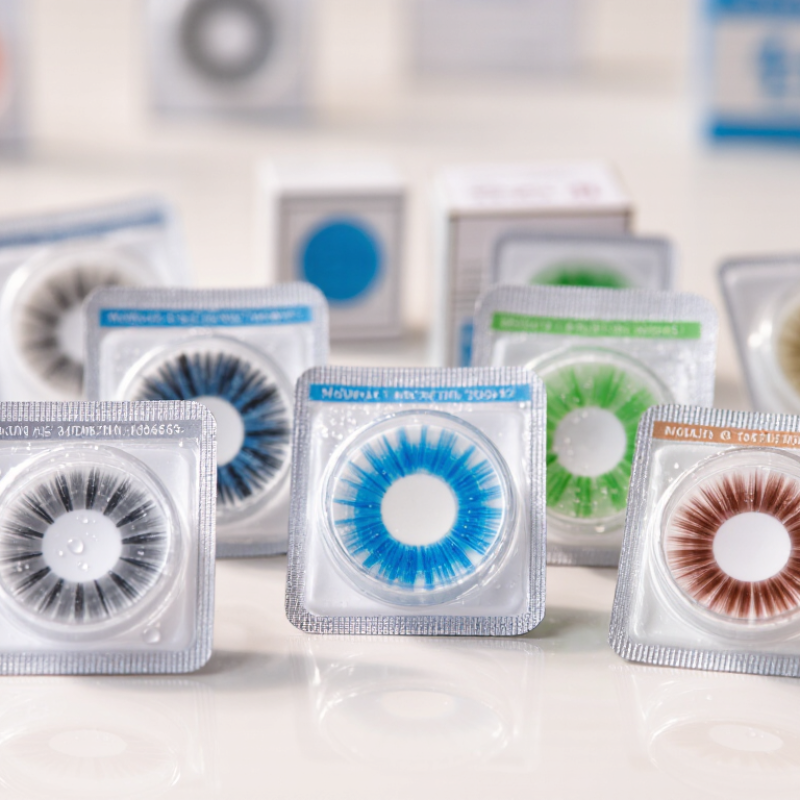
Monthly disposable color contacts are soft lenses designed to change or enhance eye color for one calendar month. “Monthly” means 30 days after opening, not 30 separate wears. Even occasional use does not extend the replacement date. The color pattern is embedded within the lens, while the central zone supports vision. Some lenses correct prescriptions; others do not. This difference matters.
The U.S. Food and Drug Administration classifies decorative contact lenses as medical devices. Buyers generally need a valid prescription and professional fitting, even for cosmetic use. A fitting checks movement, comfort, oxygen access, and corneal health. A lens can look beautiful yet feel wrong. That uncomfortable truth is often overlooked.
Care remains essential. Wash and dry hands before handling, use fresh approved solution, and keep lenses away from tap water. Never share them. Replace the storage case regularly. The Centers for Disease Control and Prevention reported that nearly all surveyed contact lens users had at least one risky hygiene behavior linked with eye infections. That figure deserves reflection. Convenience can quietly weaken good habits. Global buyers should also check local rules, verify product labeling, and confirm the replacement schedule with an eye-care professional. A monthly lens is not maintenance-free.
Monthly disposable color contacts are soft lenses designed to be replaced approximately every 30 days after opening. The chart compares common replacement schedules for contact lens categories. Actual wearing time, cleaning requirements, prescription suitability, and replacement instructions vary by product and eye-care professional guidance.
Evaluating the 10 best monthly disposable color contacts requires more than comparing photographs. I would check prescription range, base curve, diameter, material, water content, and oxygen permeability. These details affect comfort after several hours, especially in dry offices or windy streets. A licensed eye-care professional should confirm the fit before purchase, because a beautiful lens can still move poorly or irritate the cornea.
For global buyers, product reliability matters as much as appearance. Check the package for an intact seal, lot number, expiry date, manufacturer details, and clear wearing instructions. Confirm that the seller provides traceable customer support and follows the medical-device rules of the destination country. Approval in one market does not guarantee approval elsewhere. Avoid listings that hide specifications or promise medical benefits. Monthly replacement also requires discipline: use fresh disinfecting solution, never share lenses, and remove them before sleeping or swimming.
Color performance deserves a practical test. Compare the lens in daylight, indoor lighting, and a phone camera, because printed images often exaggerate brightness. Score each option for comfort, natural blending, edge design, stability, and value over one wearing month. My scoring system is not flawless. Personal eye shape, tear quality, and expectations can change the result. Stop wearing a lens if redness, pain, blurred vision, or unusual sensitivity appears, and seek professional advice promptly. Safety must outweigh a stronger color effect.
| Rank | Anonymous Lens Profile | Recommended Use | Replacement Cycle | Material Type | Water Content | Base Curve | Diameter | Prescription Range | Color Effect | UV Blocking | Evaluation Score |
|---|---|---|---|---|---|---|---|---|---|---|---|
| 1 | Natural Hazel Blend | Daily wear and subtle eye enhancement | Up to 1 month after opening | Hydrogel | 38%–42% | 8.6 mm | 14.2 mm | Plano to approximately −8.00 D | Soft limbal ring with blended brown-gold tones | Not standard; verify package labeling | 9.2/10 |
| 2 | Cool Gray Enhancement | Light-colored eyes and photographic styling | Up to 1 month after opening | Hydrogel | 40%–45% | 8.6–8.7 mm | 14.2–14.5 mm | Plano to approximately −6.00 D | Cool gray iris ring with translucent center | Not standard; verify package labeling | 9.0/10 |
| 3 | Deep Brown Natural Look | Dark eyes and conservative cosmetic wear | Up to 1 month after opening | Hydrogel | 38%–42% | 8.6 mm | 14.0–14.2 mm | Plano to approximately −8.00 D | Layered dark-brown tint with a fine limbal outline | Not standard; verify package labeling | 8.9/10 |
| 4 | Silicone Hydrogel Blue-Green | Users prioritizing oxygen transmission | Up to 1 month after opening | Silicone hydrogel | 35%–45% | 8.4–8.6 mm | 14.2–14.5 mm | Plano to approximately −6.00 D | Blue-green blend with a moderate limbal ring | Not standard; verify package labeling | 8.8/10 |
| 5 | Soft Olive Hazel | Medium-to-dark eyes seeking a muted change | Up to 1 month after opening | Hydrogel | 38%–45% | 8.6–8.7 mm | 14.2–14.5 mm | Plano to approximately −8.00 D | Olive and amber tones with a low-contrast edge | Not standard; verify package labeling | 8.6/10 |
| 6 | High-Opacity Honey | Dark irises requiring stronger color coverage | Up to 1 month after opening | Hydrogel | 40%–45% | 8.6 mm | 14.2–14.5 mm | Plano to approximately −6.00 D | Opaque honey-gold pigmentation with a defined border | Not standard; verify package labeling | 8.5/10 |
| 7 | Enlarging Circle Brown | Cosmetic enlargement effect for occasional wear | Up to 1 month after opening | Hydrogel | 38%–42% | 8.6–8.7 mm | 14.5 mm | Plano to approximately −6.00 D | Wide dark limbal ring creating a larger-eye appearance | Not standard; verify package labeling | 8.3/10 |
| 8 | Smoky Blue Gray | Fashion styling and cooler cosmetic looks | Up to 1 month after opening | Hydrogel | 40%–45% | 8.6 mm | 14.2–14.5 mm | Plano to approximately −6.00 D | Smoky blue-gray blend with a moderate outer ring | Not standard; verify package labeling | 8.1/10 |
| 9 | Violet Accent Blend | Occasional events and editorial makeup looks | Up to 1 month after opening | Hydrogel | 38%–45% | 8.6–8.7 mm | 14.2–14.5 mm | Plano to approximately −6.00 D | Muted violet center with a gray transition zone | Not standard; verify package labeling | 7.9/10 |
| 10 | Toric Color Lens Profile | Astigmatism correction where a colored toric option is available | Up to 1 month after opening | Hydrogel or silicone hydrogel | 35%–55% | 8.4–8.8 mm | 14.2–14.5 mm | Sphere, cylinder, and axis depend on the prescription | Natural tint with stabilization markings or design features | Not standard; verify package labeling | 7.8/10 |
Monthly disposable color contacts can refresh an everyday look without requiring daily replacement. However, comfort depends on more than color. Buyers should check lens diameter, base curve, water content, and available prescription options. A licensed optometrist should confirm the correct fit before purchase. A beautiful shade is not enough.
In practice, natural-looking tones often suit work settings, while brighter colors create stronger visual contrast. Color results may vary with natural eye color, lighting, and pupil size. Some lenses feel comfortable immediately, but others may require adjustment. That difference deserves attention.
Replace lenses according to the manufacturer’s schedule, usually after one month of opening. Never share them, sleep in them, or use tap water for cleaning. Even occasional shortcuts can cause problems.
Tips: Buy from a transparent seller that provides material details, expiration dates, batch information, and clear care instructions. Check import rules in your country, since contact lenses may require a prescription or medical-device approval. Carry fresh solution and a clean case when traveling. Remove lenses if redness, pain, blurred vision, or unusual dryness appears. Stop wearing them and seek professional advice. Packaging can look convincing, but reliable documentation matters more.
When reviewing monthly disposable color contacts, treat them as medical devices, not fashion accessories. Start with a valid prescription and a current eye examination. An optometrist should check corneal health, tear quality, and the lens fit. Color patterns can reduce oxygen flow or disturb vision when they cover the pupil. That risk is easy to overlook in product photos. Ask for the base curve, diameter, material, water content, and replacement schedule. Comfort begins with accurate fit.
For global purchasing, check the destination country’s regulator and import requirements. Approval in one market does not guarantee approval elsewhere. A CE mark may support European market access, but it does not replace local obligations. Request traceable lot numbers, expiry dates, manufacturer details, and clear wear instructions. Packaging should arrive sealed and undamaged. If documents are vague, pause the order. A low price cannot compensate for uncertain traceability.
Monthly lenses still require daily cleaning with fresh approved solution. Never use tap water, saliva, or another person’s lenses. Do not sleep or swim while wearing them unless an eye-care professional gives specific advice. Replace the lenses on schedule, even when they look clean. Stop wearing them if redness, pain, blurred vision, or unusual sensitivity appears. Seek professional care promptly. Some users tolerate a lens for several hours, while others need less time; comfort claims are never universal. I have found that rushed purchasing creates avoidable problems, and product descriptions rarely show the full picture.
10 Best Monthly Disposable Color Contacts for Global Buyers
Choosing monthly disposable color contacts begins with eye health, not shade. A vivid color means little if the lens fits poorly or blocks oxygen. Confirm your prescription, base curve, and diameter with a qualified eye-care professional. Cosmetic lenses still require medical guidance.
Check the seller’s credentials before ordering across borders. Look for clear manufacturer information, batch details, expiry dates, wearing instructions, and local regulatory compliance. Ask how the lenses are sealed and stored. A trustworthy seller should explain shipping conditions and provide responsive support. Do not accept loose lenses or damaged packaging.
Think about your daily environment. Dry offices, dusty streets, and long flights can make lenses uncomfortable. Monthly lenses need careful cleaning with approved solution and a clean storage case. Never use tap water or share lenses. Replace them on schedule, even when they still look attractive. That part is easy to forget.
I once underestimated shipping delays. Planning around a holiday would have prevented the problem. International buyers should check customs rules, return policies, currency charges, and delivery times before payment. Some colors may appear different under daylight, indoor lamps, or phone cameras. A sample image is not a guarantee. If redness, pain, blurred vision, or unusual sensitivity appears, remove the lenses and seek professional care promptly.
They are soft lenses designed to change or enhance eye color for one calendar month. Monthly means 30 days after opening, not 30 separate wears. Even occasional use does not extend the replacement date.
No. Some lenses include vision correction, while others are purely cosmetic. Confirm your prescription needs before purchasing. A beautiful lens may not provide clear vision.
Professional fitting is strongly recommended, even for cosmetic lenses. An eye-care professional checks movement, comfort, oxygen access, and corneal health. Appearance alone is not enough.
Wash and dry your hands before handling the lenses. Use fresh, approved contact-lens solution and a clean storage case. Never use tap water. Never share lenses.
Replace them 30 days after opening, even if you wore them only twice. A lens can still look attractive while its replacement date has passed. That detail is easy to forget.
Look for clear product information, batch details, expiry dates, and wearing instructions. Avoid loose lenses or damaged packaging. Ask about sealing, storage, delivery conditions, and customer support. I once underestimated shipping delays. That was avoidable.
Yes. Dry offices, dusty streets, and long flights may increase discomfort. Different lighting can also change how a color appears. Phone images are not guarantees. Real life looks different.
Remove the lenses promptly if redness, pain, blurred vision, or unusual sensitivity appears. Seek professional eye care without delay. Do not keep wearing them to test your tolerance. That gamble is not worth it.
Monthly Disposable Color Contacts are designed to be worn during the day and replaced after approximately one month, provided they are cleaned, stored, and handled according to professional guidance. This guide explains how these lenses work and how global buyers can compare the ten best options by examining comfort, breathable materials, color clarity, moisture retention, fit, prescription availability, and overall value. It also highlights the importance of choosing lenses that are professionally fitted and clearly labeled for approved use.
Before purchasing, buyers should review safety instructions, packaging integrity, expiration dates, manufacturing information, and applicable regulatory standards in their destination country. Proper hygiene, regular eye examinations, and responsible replacement schedules are essential for reducing avoidable eye discomfort and complications. By comparing product specifications, supplier reliability, shipping conditions, customer support, and local compliance requirements, shoppers can select Monthly Disposable Color Contacts that balance appearance, comfort, safety, and practical worldwide purchasing needs.