Custom Pattern Contact Lenses can transform an eye look from subtle and elegant to theatrical and highly expressive. Buyers may encounter floral prints, animal-inspired designs, geometric graphics, galaxy effects, cosplay styles, handwritten patterns, and softly tinted iris details. Each option creates a different visual impression under natural light, studio lighting, or a phone camera.
Yet the pattern is only one part of a responsible choice. Dr. Lyndon Jones, a leading contact lens researcher, has said, “Contact lenses are medical devices and should be treated as such.” That reminder matters, especially when a dramatic design appears harmless in an online product image. A lens must fit the eye correctly, maintain adequate oxygen flow, and come from a reliable manufacturer. Comfort should never be traded for a sharper costume effect.
This guide examines the top ten types of Custom Pattern Contact Lenses for informed buyers. It considers pattern clarity, color intensity, wearing comfort, cleaning requirements, and suitability for different occasions. Some designs look striking on dark eyes but appear surprisingly soft on light irises. Others may seem perfect on a screen yet feel less convincing in person.
Small details matter.
The selection process is not flawless. Product photos can exaggerate color, and individual eye shape can change the final result. Buyers should verify professional fitting requirements, follow the prescribed wearing schedule, and stop use when irritation or blurred vision appears. Aesthetic appeal is valuable, but healthy eyes remain the more convincing form of confidence.
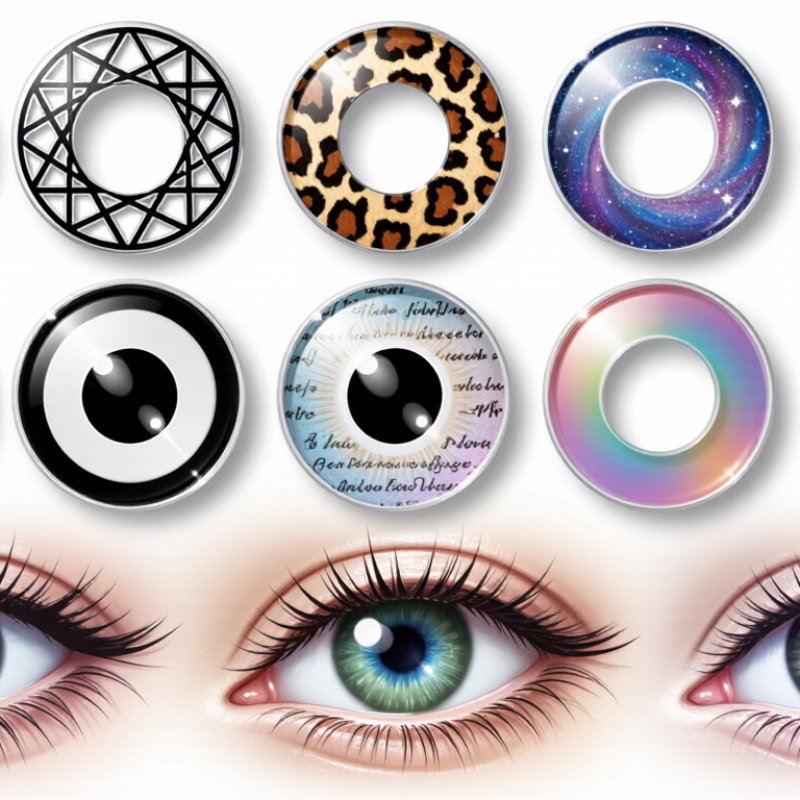
Custom pattern contact lenses are decorative lenses with printed or molded designs. Their patterns can alter iris color, pupil contrast, or the visible eye diameter. Buyers commonly compare ten styles: iris enlargement, limbal-ring, gradient, marble, galaxy, floral, animal-inspired, geometric, fantasy, and photo-realistic designs. Each style creates a different visual effect.
Diameter, opacity, water content, edge shape, and oxygen permeability influence comfort and appearance. In practice, a sharp pattern may look attractive online but appear unnatural in daylight.
The broader contact lens market reached about US$18.8 billion in 2023, according to a 2024 Grand View Research report. This growth reflects demand for vision correction and cosmetic customization, not proof that every decorative lens is safe. The U.S. Food and Drug Administration classifies contact lenses as medical devices. The Centers for Disease Control and Prevention reports roughly 45 million U.S. contact lens users.
That scale makes hygiene and fitting especially important. Buyers should obtain a valid prescription, even when correction is unnecessary, and use lenses fitted by qualified professionals.
Key features deserve close inspection.
A breathable material can reduce dryness, while stable pigmentation helps prevent color distortion. Smooth edges matter. A lens that shifts during blinking may irritate the cornea or blur vision.
Some sellers use “custom” loosely, and product specifications are not perfectly standardized. That gap deserves skepticism. Check material details, replacement schedules, cleaning instructions, and regulatory authorization in your region before purchase.
Never share lenses, sleep in unauthorized lenses, or continue wearing them after redness, pain, or sudden blur appears.
Top 10 Types of Custom Pattern Contact Lenses for Buyers
The Ten Main Pattern Categories and Their Visual Effects
Custom pattern lenses can change the eye’s apparent size, color, and mood. Anime patterns often enlarge the iris with bright rings and oversized pupils. Animal patterns use feline, reptile, or mammal-inspired textures for a striking, instinctive effect. Floral designs create softer impressions through petals, vines, and layered color. Geometric patterns add sharp lines, grids, or symmetrical shapes. They often make the gaze appear more structured.
Galaxy patterns blend stars, nebula-like swirls, and deep blue or violet tones. They create a distant, luminous look. Gothic patterns use dark borders, red accents, and pointed details for dramatic contrast. Fantasy designs may include mythical symbols, metallic effects, or unusual color transitions. Watercolor patterns appear lighter, with blurred edges and gentle color bleeding. Marble patterns imitate stone veining, producing a refined but unpredictable appearance. Gradient patterns shift gradually between two or more colors, making the iris look deeper.
Pattern density matters. A dense print may hide natural eye details, while a fine pattern can look more believable. I have seen buyers focus on color and forget comfort. That is an easy mistake. A qualified eye-care professional should check the fit, prescription, materials, and wearing schedule. Customization does not guarantee safety. Lenses must be obtained through lawful, reliable channels and handled with proper cleaning practices. Even a beautiful design can cause problems when the fit is wrong.
The Ten Main Pattern Categories and Their Visual Effects
Visual impact is rated on a practical 1–10 scale based on pattern contrast, coverage, edge definition, and perceived prominence on the eye. Higher scores indicate a stronger and more noticeable cosmetic effect. Actual appearance varies with iris color, pupil size, lighting, and lens design.
Custom pattern contact lenses are best compared through four details: material, tint, printing method, and design.
The ten common options include hydrogel, silicone hydrogel, transparent tint, opaque tint, limbal-ring, gradient, marbled, geometric, pixel-art, and digitally micro-printed lenses.
Hydrogel can feel soft, while silicone hydrogel generally supports higher oxygen transmission. ISO 18369-1 defines key contact-lens terms, including material and optical parameters.
Tint choice changes the result.
A transparent tint subtly shifts eye color. An opaque tint creates stronger coverage. A limbal ring sharpens the outer iris, while gradients soften the transition near the pupil.
Marbled and geometric patterns add visible texture. Pixel-style designs can look precise in product images but appear harsher at close range. Small details matter.
Printing may use pad transfer, digital deposition, or pigment encapsulation.
Buyers should request evidence that pigments remain stable during wear and cleaning. The United States FDA classifies decorative lenses as medical devices, not simple accessories.
A 2015 CDC MMWR report estimated that 40% to 90% of contact-lens wearers do not fully follow care instructions. That gap is uncomfortable.
Fit, prescription verification, oxygen performance, and professional evaluation should outweigh a dramatic pattern. A perfect print can still feel wrong.
Top 10 Types of Custom Pattern Contact Lenses for Buyers
Custom pattern lenses may include iris-print, limbal-ring, opaque, translucent, gradient, scleral, mini-scleral, full-eye, UV-reactive, and prosthetic-style designs. Each type changes vision, tear exchange, and eyelid movement differently. Prescription strength must match a current eye examination. Decorative appearance never replaces optical accuracy. In the United States, the FDA classifies decorative contact lenses as medical devices requiring a prescription. Buyers should confirm the prescriber, seller, lens material, base curve, and diameter before ordering.
Fit controls more than appearance. A lens that feels tight can reduce oxygen flow and cause redness. A lens that moves excessively may blur vision or scratch the cornea. Scleral designs need careful measurement and professional insertion training. Comfort also depends on wearing time, tear quality, pigment placement, and cleaning habits. Sometimes, the most attractive pattern is the least comfortable choice.
The CDC reports that about 45 million Americans wear contact lenses. Its contact-lens safety report found 99% of surveyed wearers reported at least one hygiene practice linked with higher infection risk. That figure deserves attention. Wash and dry hands before handling lenses, use fresh approved solution, and never share lenses. Do not sleep or swim in them unless an eye-care professional specifically advises otherwise. Stop wearing them after pain, light sensitivity, discharge, or sudden blur appears. A 2023 review in Contact Lens and Anterior Eye also emphasized that customized lenses require individualized fitting and follow-up, not online guesswork.
Buyers often begin with appearance. They compare ten pattern categories: natural tint, limbal-ring, gradient, opaque, translucent, marble, galaxy, geometric, floral, and scleral designs. Color accuracy matters, but fit matters more. The U.S. Centers for Disease Control and Prevention estimates that 45 million Americans wear contact lenses. That scale makes careless buying a real safety concern. Decorative lenses are medical devices, according to the U.S. Food and Drug Administration. Buyers should request a valid prescription and professional fitting, even when vision correction is unnecessary.
Compare material, diameter, water content, replacement schedule, and supplier traceability. Ask for the base curve and oxygen-transmission information. A trained eye-care professional can check movement, comfort, and corneal health. An attractive pattern can still blur vision or reduce oxygen flow. That assumption is tempting, but often wrong. CDC’s MMWR report found that 99% of surveyed wearers reported at least one risky contact-lens practice. Nearly half reported sleeping in lenses, while 61% reported swimming in them. Those figures should change the ordering decision.
Order only sealed lenses with clear labeling and care instructions. Do not share them. Do not sleep, shower, or swim while wearing pattern lenses. Use fresh approved disinfecting solution, never tap water. Replace the case regularly, and follow the prescribed schedule. Stop immediately for pain, redness, discharge, or sudden blur. I would also question dramatic online claims about “all-day comfort.” Independent verification is better. Even experienced buyers can overlook small scratches, poor packaging, or an incorrect curve.
A practical comparison of common custom pattern contact-lens categories, including visual effect, fitting considerations, ordering information, and routine care requirements.
| Rank | Custom Pattern Lens Type | Primary Visual Effect | Typical Buyer Objective | Pattern Coverage | Prescription Availability | Fitting and Selection Factors | Typical Ordering Information | Care and Maintenance Priorities | Relative Customization Level |
|---|---|---|---|---|---|---|---|---|---|
| 1 | Custom Iris-Print Lenses | Replicates or modifies the visible iris with detailed radial lines, color variation, and a defined pupil opening. | Natural-looking cosmetic enhancement or a personalized iris appearance. | Usually covers the visible iris while leaving the pupil area clear; the clear zone must align with the pupil. | Often available in prescription and plano versions, subject to local regulation and professional fitting. | Iris diameter, pupil size, base curve, corneal shape, eye color, and required visual acuity are important. | Prescription, eye measurements, iris color references, desired limbal definition, replacement schedule, and shipping details. | Use approved multipurpose or saline products as directed; never use tap water or saliva; follow the prescribed replacement schedule. | Very High |
| 2 | Limbal-Ring Pattern Lenses | Adds a darker or contrasting ring around the iris to create a larger, sharper, or more defined eye appearance. | Subtle enlargement, enhanced definition, or a stronger contrast between the iris and sclera. | Pattern is concentrated around the limbus and normally does not cover the central pupil zone. | Commonly offered as plano or prescription lenses by authorized sellers, depending on jurisdiction. | Ring width, ring opacity, iris diameter, pupil alignment, comfort, and movement during blinking should be assessed. | Prescription or plano status, base curve, diameter, pattern color, ring width, quantity, and replacement interval. | Clean and disinfect after removal; inspect the printed edge for damage; discontinue use if discomfort or blurred vision occurs. | High |
| 3 | Enhancement-Tint Pattern Lenses | Deepens or changes the apparent shade of a naturally light iris while retaining some natural iris detail. | Low-intensity color enhancement with a relatively natural appearance. | Usually translucent across the iris area, allowing some underlying eye color to remain visible. | Prescription and non-prescription options may exist; suitability depends on the wearer’s ocular health and prescription. | Underlying iris color strongly affects the final result; compare color samples under neutral lighting before ordering. | Current prescription, base curve, diameter, preferred color family, wearing schedule, and lens quantity. | Use only the recommended disinfecting system; do not top off old solution; replace the storage case regularly. | Moderate |
| 4 | Opaque Color-Change Lenses | Creates a more substantial color change by using an opaque printed pattern over most or all of the iris. | Changing a dark natural eye color or achieving a clearly visible cosmetic transformation. | Broad iris coverage with a separate clear pupil aperture; the aperture must remain centered during wear. | Often produced in prescription and plano forms, but availability and legal requirements vary by market. | Opacity, color blend, pupil aperture, diameter, base curve, centration, and visibility in different lighting conditions matter. | Prescription, eye measurements, color reference, opacity preference, replacement period, and fitting verification. | Keep lenses hydrated only in the approved solution; avoid wearing when irritated; do not share with another person. | High |
| 5 | Sectoral or Partial-Iris Pattern Lenses | Places a customized color, texture, or opacity pattern in one selected sector of the iris. | Asymmetrical cosmetic effects or partial coverage for a specific visual requirement. | Pattern covers only a defined section of the iris rather than the full visible iris. | May be available with vision correction, but the design must be professionally evaluated for stability and optical performance. | Angular position, pattern size, lens rotation, pupil clearance, and repeatable orientation are critical. | Prescription, sector location, orientation marks if required, diameter, base curve, and customized artwork instructions. | Check that the pattern remains correctly oriented; remove the lens if rotation causes visual disturbance or irritation. | Very High |
| 6 | Theatrical or Character Pattern Lenses | Produces dramatic effects such as unusual pupils, high-contrast irises, fantasy textures, or non-natural eye colors. | Film, stage, photography, themed events, cosplay, or temporary character styling. | Coverage varies from a printed iris design to a large opaque area surrounding a custom pupil shape. | Prescription status varies; a theatrical appearance does not remove the need for professional fitting or a valid prescription where required. | Reduced light transmission, limited low-light visibility, pupil design, movement, duration of wear, and makeup compatibility require attention. | Prescription or plano status, design file or reference image, diameter, base curve, wear date, and delivery lead time. | Limit wear to the professionally advised period; remove before sleeping; avoid use with contaminated cosmetics or shared accessories. | Very High |
| 7 | Prosthetic and Light-Management Pattern Lenses | Uses a customized opaque or translucent pattern to mask an irregular appearance or manage excessive light entry in selected cases. | Cosmetic rehabilitation or support for certain ocular conditions under eye-care supervision. | Can cover the iris, pupil, or selected ocular areas; design depends on the clinical objective. | Usually requires a specialized prescription and clinical assessment rather than a standard cosmetic purchase. | Underlying condition, corneal health, pupil position, tear film, opacity level, and wearing tolerance must be evaluated. | Clinical prescription, measurements, diagnostic findings, pattern location, opacity requirements, follow-up schedule, and replacement plan. | Attend scheduled follow-ups; use the prescribed cleaning method; report pain, light sensitivity, discharge, or sudden vision changes promptly. | Very High |
| 8 | Full-Scleral Graphic Lenses | Creates a large-area graphic effect that extends beyond the cornea and may alter the apparent color of much of the visible eye. | Special-effects styling, artistic photography, or highly distinctive cosmetic presentation. | Large diameter design covers the cornea and rests on the scleral surface, with a customized graphic zone. | May be made with vision correction, but fitting generally requires specialized measurements and professional oversight. | Scleral shape, fluid reservoir, landing zone, clearance, insertion technique, wear time, and oxygen transmission are important. | Ocular measurements, prescription, lens diameter, graphic design, fitting data, handling instructions, and follow-up requirements. | Fill only with sterile, preservative-free saline when instructed; avoid tap water; use meticulous insertion, removal, and disinfection practices. | Very High |
| 9 | Hand-Painted or Artisan Pattern Lenses | Provides individually painted color gradients, veins, textures, highlights, or other artistic details. | Highly personalized cosmetic, theatrical, photographic, or prosthetic appearance. | Coverage and opacity are individually specified and may include iris-only, sectoral, or broader ocular designs. | Prescription availability depends on the production method and local requirements; professional fitting remains necessary. | Color matching, repeatability, pigment placement, surface finish, pupil aperture, and long-term stability should be confirmed. | Prescription, measurements, high-resolution reference images, color notes, pattern map, intended use, and approval proof. | Inspect for surface defects before every use; do not use abrasive cleaners; replace the lens if the paint or surface becomes damaged. | Exceptional |
| 10 | Custom Gradient and Multi-Tone Pattern Lenses | Combines two or more shades with blended edges, radial details, or graduated opacity for a dimensional appearance. | Natural-looking customization with more depth and color variation than a single-tone lens. | May cover the full iris, selected zones, or the limbal area, depending on the design brief. | Prescription and plano versions may be available, provided the design and fit are approved for the wearer. | Color layering, contrast, pattern scale, pupil aperture, iris diameter, and the wearer’s natural eye color affect the outcome. | Prescription, base curve, diameter, color palette, gradient direction, reference images, quantity, and delivery timeframe. | Follow the approved cleaning and disinfection routine; do not wear beyond the recommended schedule; store fully immersed in fresh solution. | High |
Buyer and safety note: Decorative, cosmetic, theatrical, and prescription contact lenses are medical devices in many jurisdictions. Buyers should obtain an eye examination, a valid prescription, and professional fitting before ordering. Never sleep, swim, or shower while wearing lenses unless specifically instructed by an eye-care professional. Remove lenses and seek urgent eye-care advice for significant pain, redness, light sensitivity, discharge, or sudden blurred vision.
They can enlarge the iris, deepen color, or create a softer or more dramatic gaze. Anime designs use bright rings and larger pupils. Galaxy styles add stars, swirls, and deep blue tones.
Floral and watercolor designs usually appear gentler. They use petals, vines, blurred edges, and mild color bleeding. The result can look natural, but not always.
Geometric patterns use sharp lines, grids, and symmetry. Marble designs imitate stone veins with irregular color paths. Pixel patterns look precise in photos but may seem harsh nearby.
Transparent tints subtly shift natural eye color. Opaque tints provide stronger coverage. Gradients blend colors gradually and can make the iris appear deeper.
Hydrogel may feel soft, while silicone hydrogel generally allows more oxygen transmission. Material choice affects comfort, eye health, and wearing time. Softness alone is not enough.
A professional checks prescription, base curve, diameter, material, and eye condition. A tight lens may cause redness or reduce oxygen flow. A loose lens may move, blur vision, or irritate the cornea.
Wash and dry hands before touching the lenses. Use fresh, approved solution and follow the recommended replacement schedule. Never share lenses. Do not sleep or swim in them unless professionally advised.
Stop immediately after pain, strong redness, light sensitivity, discharge, or sudden blurry vision. Remove the lenses and contact an eye-care professional promptly. Do not ignore warning signs. Beauty is not proof of safety.
No. Printing quality cannot correct a poor fit, incorrect prescription, or weak cleaning routine. A beautiful design may feel wrong after thirty minutes. The safest-looking option can still require reconsideration.
Custom Pattern Contact Lenses are specialized lenses designed with decorative colors, shapes, symbols, or artistic graphics to create distinctive visual effects. This overview introduces ten common pattern categories, including natural enhancements, geometric designs, fantasy-inspired styles, gradients, animal-like textures, and bold theatrical effects. It also explains how color intensity, opacity, printing techniques, lens materials, and surface finishes influence the final appearance and overall design flexibility.
For buyers, selecting Custom Pattern Contact Lenses involves more than comparing visual styles. Prescription accuracy, professional fitting, breathable materials, moisture retention, edge design, and wearing comfort are essential considerations for eye safety. The article also outlines how to compare product specifications, confirm sizing and prescription details, place an informed order, and maintain lenses through proper cleaning, storage, replacement, and usage practices. By balancing creative preferences with comfort and responsible care, buyers can choose pattern lenses that are attractive, practical, and suitable for their individual needs.