Why choose Yearly Disposable Contact Lenses when daily and monthly options dominate modern conversations? The answer is not simply lower replacement frequency. It involves prescription stability, handling habits, eye health, and total ownership cost. Yearly Disposable Contact Lenses may suit experienced wearers who prefer one carefully fitted pair and consistent visual performance throughout the year.
The U.S. Centers for Disease Control and Prevention estimates that about 45 million Americans wear contact lenses. Its contact-lens safety guidance stresses handwashing, proper cleaning, and replacing lenses as recommended. The U.S. Food and Drug Administration also classifies contact lenses as medical devices, not ordinary accessories. As ophthalmologist Thomas L. Steinemann has stated, “Contact lenses are medical devices, not cosmetics.” That distinction matters beside a bathroom mirror, where rushed cleaning can leave invisible deposits on a lens.
Industry reporting adds useful context. The 2024 Contact Lens Spectrum Annual Report continues to track strong interest in reusable lens categories, while market research from Grand View Research describes contact lenses as a growing global vision-correction market. However, broad market growth does not prove that yearly lenses fit everyone. That is the uncomfortable part.
Yearly lenses can reduce replacement packaging and repeated purchases. They can also demand stricter daily care. A damaged lens, poor storage case, or forgotten replacement schedule can undermine the expected value. This article examines comfort, hygiene, cost, sustainability, and professional fitting. It also asks a less convenient question: is a longer replacement cycle genuinely practical for your eyes, or merely cheaper on paper?
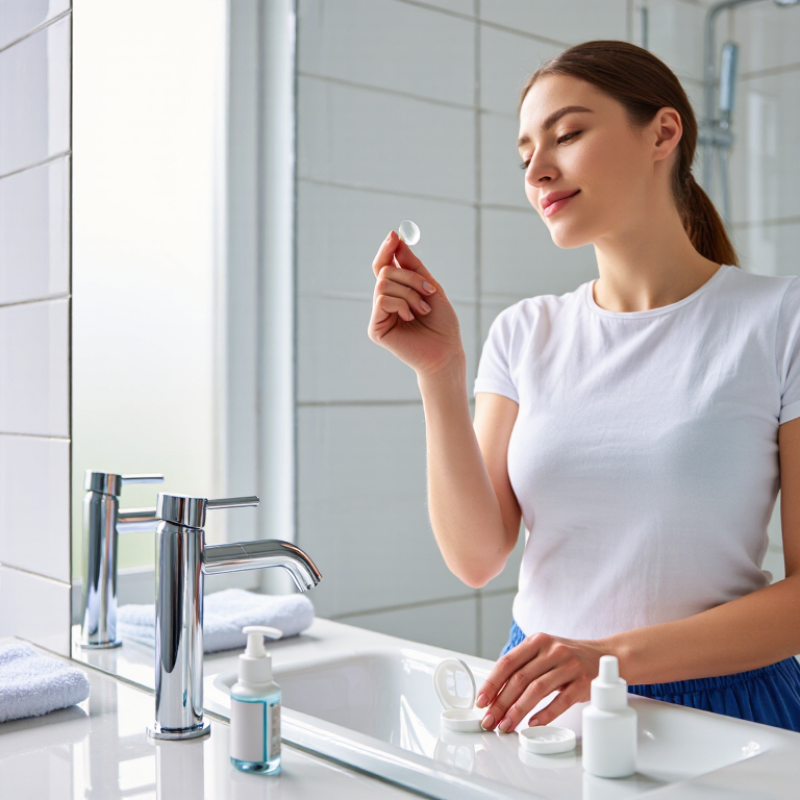
What Yearly Disposable Lenses Mean: A 12-Month Replacement Cycle
Why Choose Yearly Disposable Contact Lenses?
What Yearly Disposable Lenses Mean: A 12-Month Replacement Cycle
Yearly disposable contact lenses are replaced every 12 months, not after each use. The schedule begins when the sealed package is opened. Your eye-care professional may recommend an earlier change if the lens becomes damaged, uncomfortable, or heavily deposited. The word “disposable” can mislead. These lenses still require daily cleaning, disinfection, and storage with fresh solution. Never extend the cycle simply because the lens still looks clear.
The FDA classifies contact lenses as medical devices and recommends following the prescribed replacement schedule. That advice matters. A CDC report found that 99% of surveyed wearers reported at least one risky hygiene habit, including sleeping or napping in lenses. The CDC also notes that sleeping in contact lenses can increase infection risk six- to eightfold. These figures are unsettling, but they reflect behavior, not just lens design.
A yearly cycle may suit people who wear lenses occasionally and want fewer package changes. It can also create a simple calendar reminder: replace the pair every twelve months. Still, comfort is not proof of eye health. A lens may feel normal while deposits or microscopic damage increase irritation. During follow-up visits, practitioners can check fit, tear-film response, and corneal condition. I would not treat the annual date as permission to postpone care. Sometimes, the safer replacement date is earlier.
Market Context: CDC Estimates 45 Million U.S. Contact Lens Wearers
Why Choose Yearly Disposable Contact Lenses?
Market Context: CDC Estimates 45 Million U.S. Contact Lens Wearers
The CDC estimates that about 45 million people in the United States wear contact lenses. That number shows a large, established market, but it does not mean every wearer needs the same replacement schedule. Prescription strength, eye health, tear production, and daily habits all influence the safest choice.
Yearly disposable lenses may appeal to people who prefer fewer replacement packages. A wearer might open one pair, clean it carefully, and use it for a longer planned period. This option can feel practical for occasional wearers or people with less common prescriptions. Still, “yearly” does not mean unlimited use. An eye care professional must confirm the schedule, fit, and lens material.
Care matters every evening. Rub and rinse the lenses as directed, use fresh disinfecting solution, and replace the storage case regularly. Never sleep in lenses unless a qualified professional specifically approves it. A dry office, dusty commute, or long screen session can also change comfort.
The choice is not automatically better.
Longer replacement periods may reduce packaging, yet solution bottles and cases remain part of the routine. Some wearers may also delay replacement when lenses feel acceptable. That habit deserves honest reflection. Regular eye examinations help identify irritation, corneal changes, or poor fit before symptoms become obvious. In practice, convenience should support eye health, not compete with it.
Important: Replacement intervals vary by lens type and prescription. Stop wearing lenses and seek professional eye care if you experience pain, unusual redness, light sensitivity, discharge, or blurred vision.
Prescription Fit and Materials: Why Eye-Care Data Matter for Annual Lenses
Why Choose Yearly Disposable Contact Lenses?
Yearly disposable lenses can offer stable vision, but only when prescription and fit match the eye. A prescription shows power. It does not fully describe corneal shape, tear quality, or eyelid movement. Eye-care professionals assess these details during fitting. They also review oxygen transmissibility, water content, lens diameter, and material stiffness. These properties affect comfort and corneal health. The FDA classifies contact lenses as medical devices, so professional fitting remains essential. The TFOS DEWS II report identifies material, fit, environment, and tear-film changes as important factors in contact lens discomfort. A yearly lens is not automatically better. The calendar is convenient, but eyes are not calendars.
Tips: Ask for a documented prescription and fitting check. Replace the lens on schedule. Never extend its use because it still looks clear. CDC data estimates that about 45 million Americans wear contact lenses. Its 2017 report found that 99% of surveyed users reported at least one risky hygiene behavior. Small habits matter.
Wash and dry hands before handling lenses. Use fresh approved solution, not tap water. A lens case can look clean while holding microorganisms. Replace it regularly. Remove lenses when redness, pain, light sensitivity, or blurred vision appears. These symptoms need prompt professional attention. I would not treat one comfortable appointment as permanent evidence of a perfect fit. Vision, tear production, medications, and screen exposure can change. Annual wearers should schedule eye-care reviews, even when their vision seems unchanged.
Cost and Waste: Comparing Annual, Monthly, and Daily Replacement
Why Choose Yearly Disposable Contact Lenses?
Yearly disposable contact lenses can reduce the number of lenses purchased each year. One pair may replace twelve monthly pairs or hundreds of daily lenses. However, the purchase price is only part of the calculation. Annual lenses require cleaning solution, a storage case, and careful handling. These costs can quietly add up beside the checkout receipt.
Monthly lenses usually need 24 lenses per year for both eyes. Daily lenses may require about 730 lenses and individual blister packs. That creates more packaging waste, even though daily wear can reduce solution bottles and storage cases. Annual lenses produce fewer discarded units, but each lens remains in use much longer. A damaged or lost lens can also disrupt the expected savings.
The calculation is not perfect.
Packaging materials vary by location and recycling system. A lightweight daily lens does not automatically create less waste than a thicker annual lens. Personal wearing habits matter too. Someone who wears lenses twice weekly may use fewer daily lenses than expected. Someone wearing annual lenses every day must maintain strict cleaning habits and replace the case regularly. An eye care professional should confirm the replacement schedule and fit. Saving money should never mean extending lens wear beyond professional guidance.
Safety Standards: FDA Guidance on Cleaning, Storage, and Replacement
Why Choose Yearly Disposable Contact Lenses?
Yearly replacement lenses can suit wearers who follow a careful care routine. FDA guidance requires cleaning, disinfecting, and storing lenses exactly as prescribed. Never use tap water, saliva, or homemade saline. Water can carry microorganisms linked to serious eye infections. After removal, rub both lens surfaces with fresh multipurpose solution, then rinse before storage. Keep lenses fully covered in a clean case.
The CDC’s MMWR report, Healthy Contact Lens Wear and Care Practices, found that 99% of surveyed adult wearers reported at least one risky habit. Common problems included sleeping in lenses, replacing cases too rarely, and exposing lenses to water. These findings make daily habits more important than the replacement label. A yearly lens is not a “wear all year” product. It still needs replacement at the prescribed date, even when it looks clear.
Small details matter.
Wash and dry hands before touching the lens. Use fresh solution every time; never top up old liquid. Replace the case regularly, following professional advice, and let it air-dry between uses. Stop wearing lenses if redness, pain, light sensitivity, or blurred vision appears. Contact an eye-care professional promptly. FDA guidance also recommends following the prescribed wearing schedule and attending fitting reviews. The honest weakness is simple: yearly lenses demand discipline. One rushed night, especially after travel, can undermine months of careful care.
FAQS
They may suit occasional wearers or people with less common prescriptions. An eye-care professional must confirm fit, material, and replacement timing.
No. Yearly describes the planned replacement period. It does not permit unlimited wear, overnight use, or skipped cleaning.
Wash and dry your hands first. Rub and rinse both lens surfaces with fresh disinfecting solution, as directed.
No. Tap water and saliva can carry microorganisms. Use only the recommended sterile solution.
Place each lens in fresh solution. Keep both lenses fully covered in a clean case, then let the case air-dry.
Avoid sleeping in lenses unless a qualified professional specifically approves it. One rushed night can create problems.
Replace the case regularly, following professional advice. Never add fresh solution to old liquid.
Stop if redness, pain, light sensitivity, or blurred vision appears. Contact an eye-care professional promptly.
They may reduce packaging, but solution bottles and cases remain necessary. The choice is not automatically better.
Examinations can detect irritation, poor fit, or corneal changes before symptoms become obvious. Comfort alone can mislead you.
Conclusion
Yearly Disposable Contact Lenses are designed to be replaced every 12 months, offering an alternative to monthly or daily replacement schedules. This option may appeal to experienced wearers who want to reduce recurring purchases and potentially lower packaging waste. However, annual lenses are not suitable for everyone. A proper prescription, accurate fit, and appropriate lens material are essential for maintaining comfort, clear vision, and healthy oxygen flow to the eyes. Eye-care professionals should evaluate individual needs before recommending an annual replacement cycle.
With millions of people in the United States wearing contact lenses, safe maintenance remains especially important. Annual lenses generally require consistent cleaning, rinsing, disinfection, and storage according to professional instructions and the product’s approved guidance. Users should never extend wear beyond the recommended schedule, sleep in lenses unless specifically directed, or use contaminated solutions. Although yearly lenses may reduce the number of lenses purchased, costs, convenience, comfort, and waste vary compared with monthly or daily options. Regular eye examinations help confirm that the lenses remain safe and properly fitted.